
News

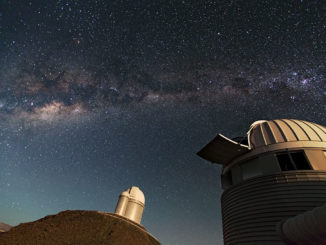
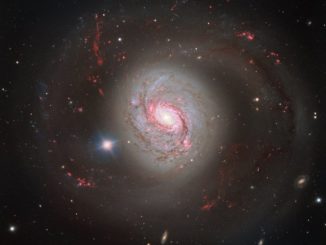
A new treasure trove of planets, ranging from worlds with small masses and short orbital periods of less than 15 days to super-Earth-sized planets that can take up to a year to orbit their star, has been discovered by astronomers using the world’s most successful ground-based planet-finding instrument.
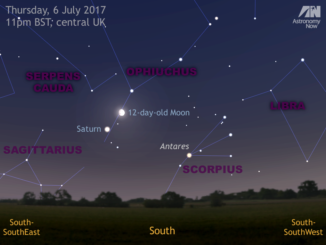
Skywatchers in the UK and Western Europe should cast their gaze low in the southern sky late into the evening of Thursday 6 July to see the 12-day-old waxing gibbous Moon in conjunction with ringed planet Saturn. The pair are separated by just 3½ degrees, nicely framed in a typical 10×50 binocular. For telescope users, the night of 6—7 July is also good for spotting Saturn’s bright moons. We show you what to look for and where.

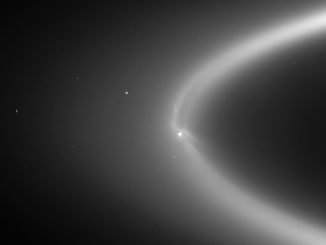
A serendipitous detection of the organic molecule methanol around an intriguing moon of Saturn suggests that material spewed from Enceladus undertakes a complex chemical journey once vented into space. This is the first time that a molecule from Enceladus has been detected with a ground-based telescope.
© 2026 Nebula Press Ltd