
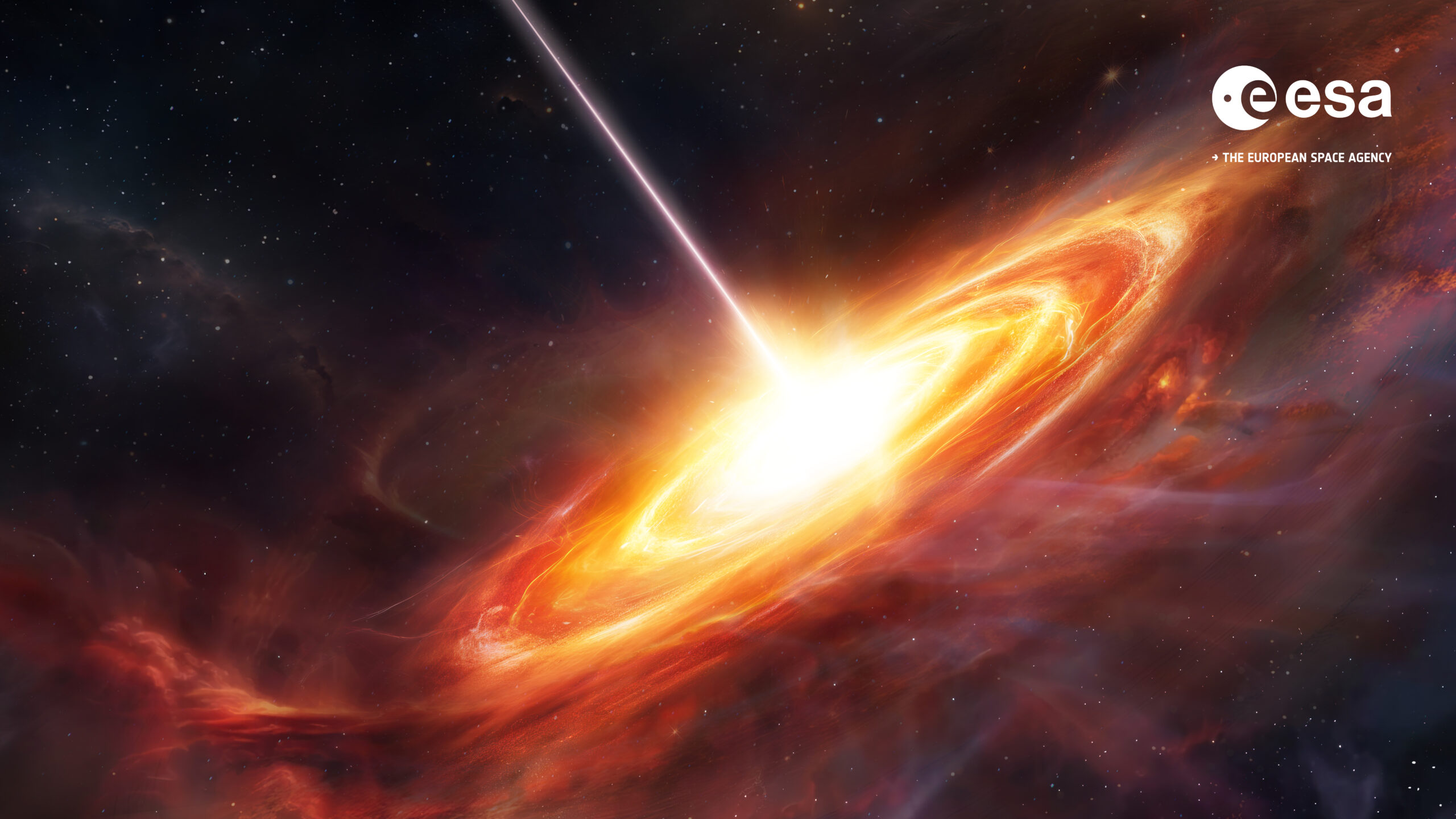
One of the biggest mysteries in modern astronomy is how the Universe managed to grow enormous black holes so quickly.
Less than a billion years after the Big Bang, the Universe already contained quasars powered by supermassive black holes consuming vast amounts of gas. Many of those black holes contain hundreds of millions or even billions of times the mass of the Sun. Astronomers are still trying to understand how they reached such enormous sizes in such a short cosmic time.
One difficulty in investigating these objects is that, beyond their sheer distance, there have simply been too few of them to build up any kind of overall picture. After decades of searching, only nine quasars were known from the Universe’s first 770 million years. With such a meagre handful, it is hard to know whether you are studying general characteristics or individual quirks.
Now ESA’s Euclid space telescope has changed that picture dramatically. In its first 18 months of observations, Euclid has identified 31 quasars dating from between 600 and 800 million years after the Big Bang. Astronomers describe such distances using redshift, a measure of how much the expansion of the Universe has stretched an object’s light, with higher values corresponding to more distant objects seen further back in time. Follow-up observations with some of the world’s largest telescopes have confirmed the candidates as quasars, more than doubling the number known beyond redshift seven and revealing the two most distant quasars yet found.
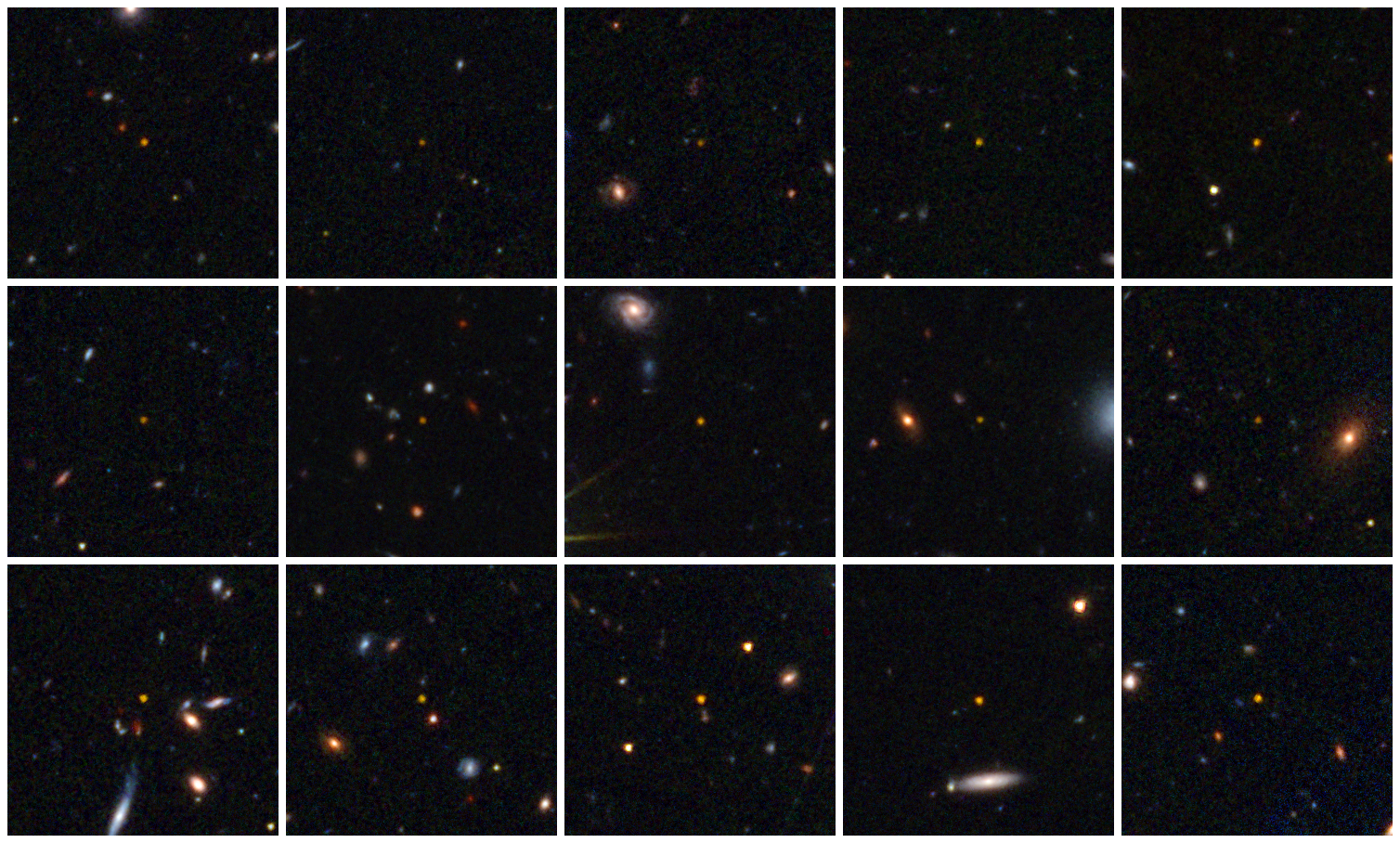
While it is the record-breaking aspect of these discoveries that is capturing the headlines, the real story is that astronomers finally have enough objects to begin studying the earliest quasars as a population rather than as isolated curiosities.
‘With only a few quasars known beyond redshift seven, we simply cannot answer these questions,’ says Daming Yang of Leiden Observatory in the Netherlands, first author of the paper describing the work. ‘Finding more of them at such distances – and pushing to even greater distances – is the only way forward.’
Euclid was designed primarily to investigate dark matter and dark energy by mapping the large-scale structure of the Universe. But its combination of a wide field of view and sensitive near-infrared imaging is also proving remarkably effective at uncovering some of the most distant objects ever seen.
As the Universe expands, light from remote quasars is stretched to longer wavelengths before reaching Earth. By the time light from the earliest quasars arrives, much of it has shifted into the infrared, making these objects difficult to detect with traditional optical surveys. Euclid was built to observe these wavelengths across enormous areas of sky, allowing it to uncover many more candidates than previous searches.
The team first used Euclid’s visible and infrared images to identify promising candidates. Machine-learning techniques and data from other surveys helped refine the sample before astronomers turned to large ground-based observatories, including the W. M. Keck Observatory in Hawaii, the Magellan telescopes in Chile and the Large Binocular Telescope in Arizona, to confirm them spectroscopically.
Those spectra, produced by splitting an object’s light into its individual wavelengths, revealed the so-called ‘Lyman-alpha break’, a sharp drop in brightness caused by neutral hydrogen in the young Universe absorbing light at specific wavelengths. The position of this feature allows astronomers to estimate each quasar’s redshift and hence how far back in cosmic history it is being seen.
The two most distant quasars lie at redshifts of 7.77 and 7.69, meaning astronomers see them as they were only around 670 million years after the Big Bang.
The enlarged sample opens a new route to investigating how the first supermassive black holes formed and grew so quickly because a quasar marks the period during which a galaxy’s central black hole is actively consuming matter. Each new quasar therefore offers a view of a black hole actively growing in the young Universe.
By comparing the quasars’ brightness, accretion properties and host galaxies across a meaningful population, researchers can begin to investigate which characteristics are common and which belong only to exceptional objects.
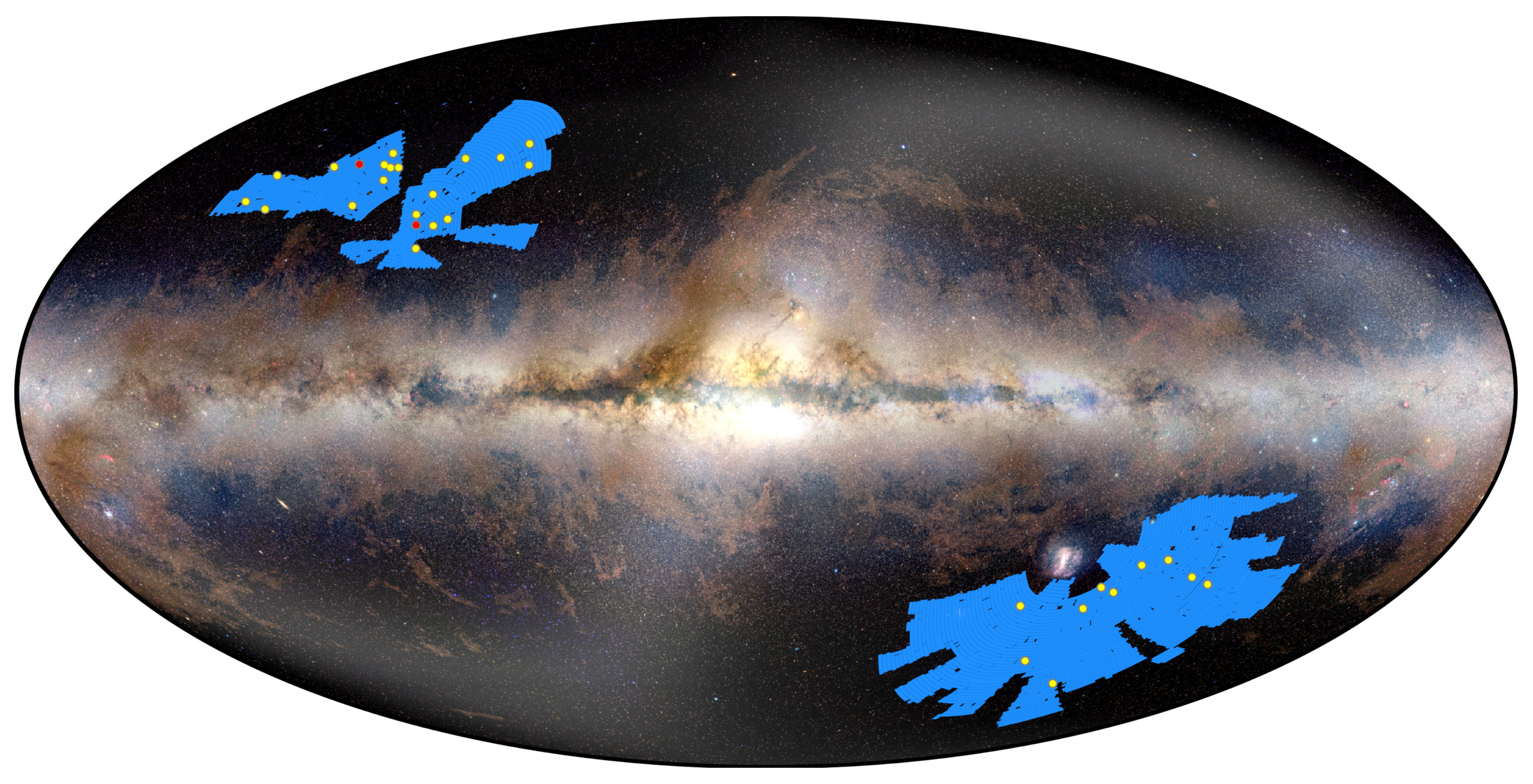
The new discoveries are especially valuable because many are less luminous than the handful of quasars previously known at comparable distances. Those earlier objects may therefore have represented only the brightest and most extreme examples. Euclid is beginning to reveal a broader population, giving astronomers a better chance of tracing how black holes and their host galaxies developed together during the first billion years.
The same quasars can also show how these growing black holes and their host galaxies affected the Universe around them. They existed during the epoch known as reionisation.
After the first atoms formed, most of the hydrogen between galaxies was neutral. As the first stars, galaxies and accreting black holes appeared, their energetic radiation gradually stripped electrons from that hydrogen. By studying how much neutral hydrogen remained along different lines of sight, astronomers can trace when and how this transformation unfolded.
Quasars are among the best tools for performing this investigation. Their intense light acts like a distant searchlight, shining through the hydrogen between galaxies before reaching Earth. The intervening gas leaves subtle absorption signatures in a quasar’s spectrum, allowing astronomers to probe conditions across vast stretches of the young Universe. With only a handful of such quasars, those sightlines have been rare. With dozens now available, researchers can begin building a much more complete picture of how reionisation unfolded.
The discoveries also strengthen Euclid’s role as a general-purpose observatory for studying the distant Universe. Although the mission’s principal goal remains understanding dark matter and dark energy, it is already demonstrating that its survey of more than one-third of the sky will provide an unparalleled resource for many other areas of astrophysics.
And this is only the beginning. The current discoveries come from just the first part of Euclid’s six-year survey. The team expects the completed mission to uncover hundreds more quasars from the first billion years of cosmic history, perhaps even pushing beyond a redshift of eight.
‘We have a real sample at such high redshift for the first time, and we can finally start answering the questions that were unanswerable before,’ says Yang.
By turning rare curiosities into a population, Euclid promises to give astronomers a way to investigate both how the first giant black holes grew and how their radiation changed the Universe around them.
 To read about how astronomers are rethinking their ideas about dark matter, check out our July 2026 issue.