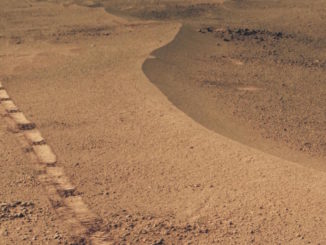
Picture This

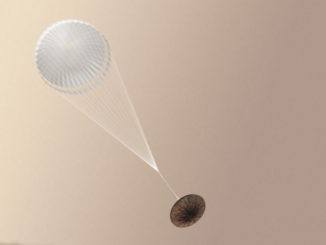
Investigators who studied the crash of the European Space Agency’s Schiaparelli lander on Mars last year have recommended more stringent testing and computer modeling before the launch of a joint European-Russian landing craft in 2020 to avoid a repeat of the mistakes that doomed the probe’s descent through the Martian atmosphere.
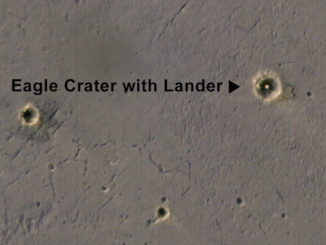
NASA has released the first high-resolution aerial colour image of the Opportunity rover’s landing site on a sprawling Martian plain, where the airbag-cushioned robot fortuitously rolled into a Eagle Crater in January 2004, putting its scientific instruments face-to-face with a block of sedimentary rock that gave ground teams confirmation Mars was once a warmer, wetter, and habitable planet.
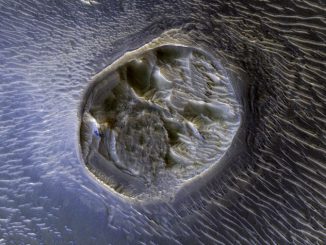
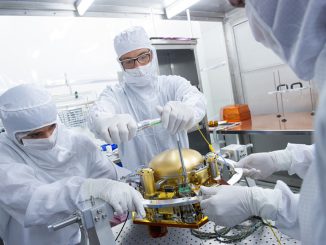
A balky interplanetary seismic instrument that ran into technical problems in 2015, forcing a two-year delay in the launch of NASA’s InSight lander to Mars, cleared a major test last month after engineers redesigned part of the sensor package, boosting confidence that the mission will be ready to blast off in May 2018.
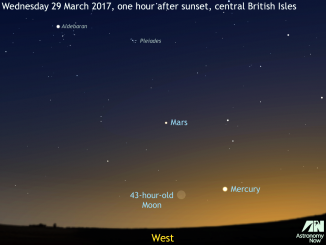
Mercury attains a greatest easterly elongation of 19 degrees from the Sun on 1 April. This solar separation combined with a favourable inclination of the ecliptic to the western horizon an hour after sunset, means that the period 25 March to around 8 April offers the year’s best evening showing of the innermost planet for Northern Hemisphere observers.
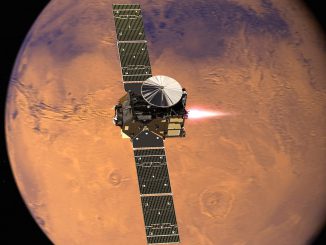
The ExoMars Trace Gas Orbiter, a Russian-launched, European-built spacecraft that arrived at Mars in October, is starting to dip into the upper reaches of the red planet’s atmosphere in a year-long “aerobraking” campaign place the observatory in the right position to hunt for methane, an indicator of potential biological activity.
© 2026 Nebula Press Ltd