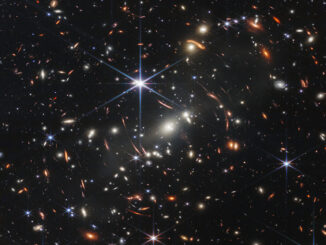
The James Webb Space Telescope has already found distant galaxies that seem uncomfortably large for the young Universe they are seen in. Now astronomers have discovered evidence that such galaxies may contain even more mass in stars than previously estimated, deepening the mystery.
The problem comes from estimating a galaxy’s population of small, faint stars such as red dwarfs. These contribute relatively little to a galaxy’s light, but if there are enough of them they can account for a substantial amount of its mass.
Because the smallest stars are too faint to see individually at enormous distances, their numbers have to be inferred. Until now, astronomers did this by assuming that stars were born in roughly the same proportions as they are in the Milky Way. This distribution of stellar birth masses is known as the initial mass function, or IMF.
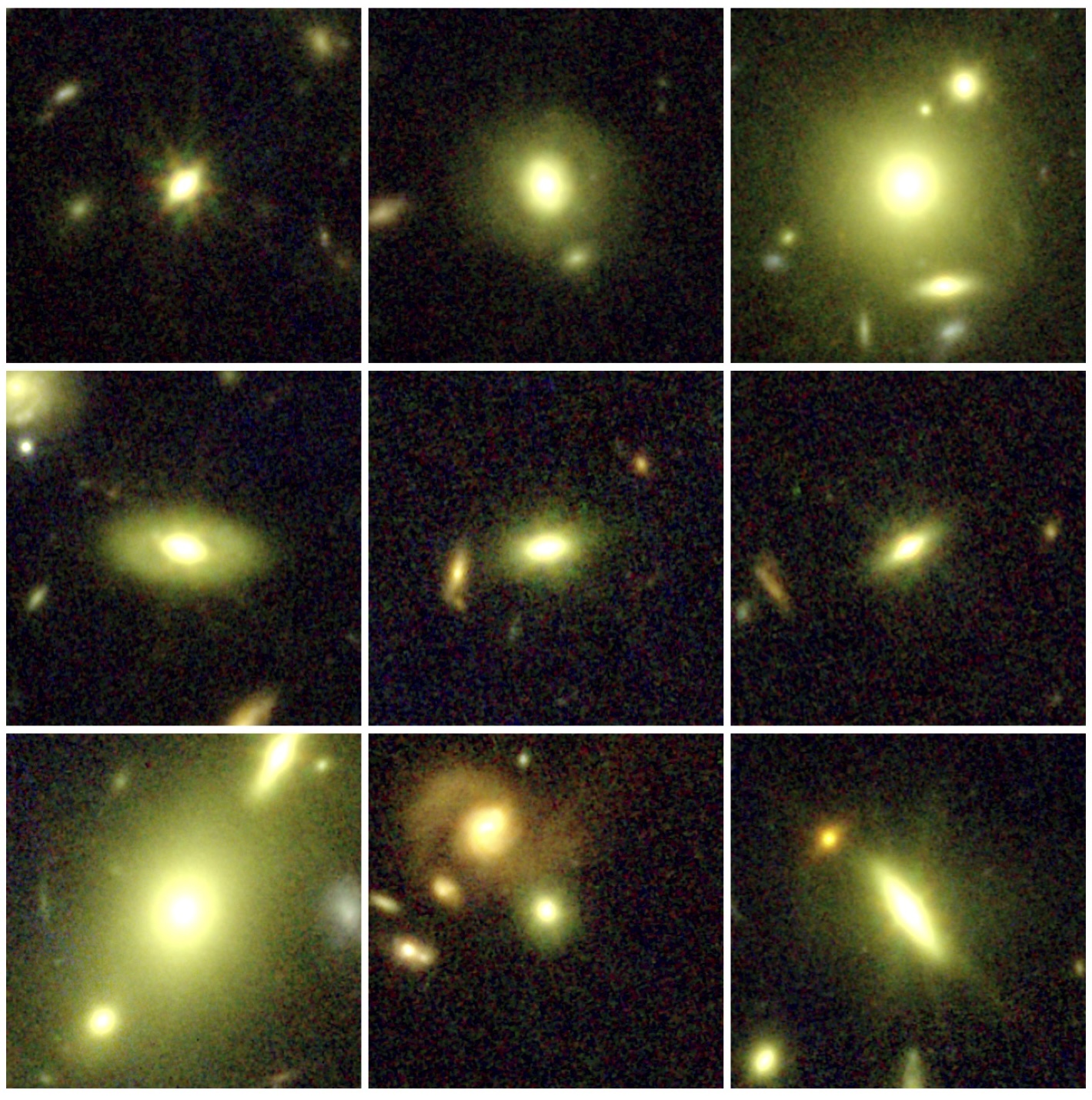
Chloe Cheng of Leiden University in the Netherlands and her colleagues put this assumption to the test. They used JWST to obtain exceptionally deep spectra of nine massive galaxies seen as they were about seven billion years ago, combining them with earlier observations from the European Southern Observatory’s Very Large Telescope in Chile.
Low-mass stars leave subtle fingerprints in a galaxy’s spectrum, absorbing particular wavelengths of light. By measuring these telltale features, the team could estimate how many faint dwarf stars were hiding among the much brighter stars.
They found that several galaxies contained substantially more low-mass stars than expected. Astronomers describe such a population as having a ‘bottom-heavy’ IMF. Instead of following the stellar recipe familiar from the Milky Way, these galaxies appear to have formed disproportionately large numbers of small stars.
‘If a galaxy were a city, the brightest stars would be the skyscrapers that immediately catch your eye from afar,’ says Cheng. ‘Our models demonstrate that a far more numerous population of low-mass stars is concealed by those rare, bright stars, like houses hidden between skyscrapers.’
Two of the oldest galaxies that Cheng studied appear to have formed very early and are likely descendants of the remarkably massive galaxies JWST has discovered within the first billion or so years after the Big Bang. Those early galaxies are already difficult for astronomers to explain because there does not seem to have been enough time for them to grow so large. If they too contain an unexpectedly large population of faint stars, their estimated stellar masses could be three to four times greater, deepening the conundrum of how the young Universe built such enormous galaxies so quickly.
‘This result shows that much more mass than previously thought is hidden in low-mass stars, says Mariska Kriek of Leiden Observatory, who led the research. Because low-mass stars commonly host planets, the result ‘could even indicate that more planets formed in the early universe than we had previously assumed,’ she says.
However, the connection to JWST’s earliest galaxies remains an inference. Cheng’s team has studied their possible descendants, not the early galaxies themselves. Future observations will attempt the much harder task of measuring stellar populations closer to the epoch when those first galaxies actually formed. If the same abundance of faint stars is found there, some of the Universe’s earliest galaxies may turn out to be even more extraordinary than they already appear.
Read more here.