
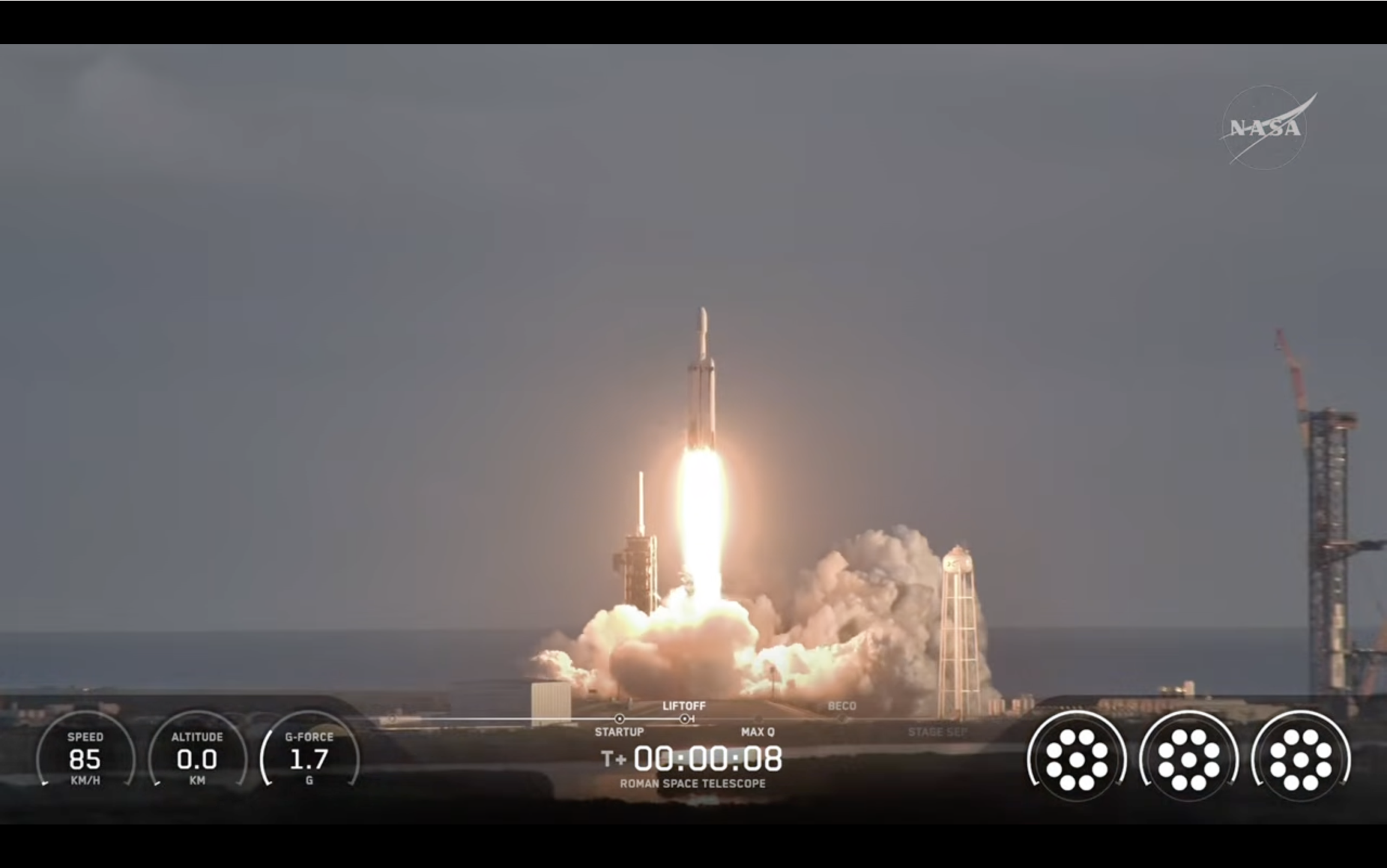
Roman lifted off aboard a SpaceX Falcon Heavy rocket from Launch Complex 39A at NASA’s Kennedy Space Center in Florida at 07:26 local time (12:26 BST) on 30 August. Roman separated from the rocket’s upper stage at 12:58 BST, successfully completing the launch and beginning its journey into deep space.
The launch came around nine months ahead of NASA’s original schedule, an unusual achievement for a major space observatory. Roman is now beginning its journey towards the second Sun–Earth Lagrange point, L2, about 1.5 million kilometres from Earth, where it will operate in the same region of space as the James Webb Space Telescope.
Despite the early hour in Florida, the mood during NASA’s launch coverage was celebratory. ‘This is a mission absolutely worth getting up for,’ said NASA Administrator Jared Isaacman.
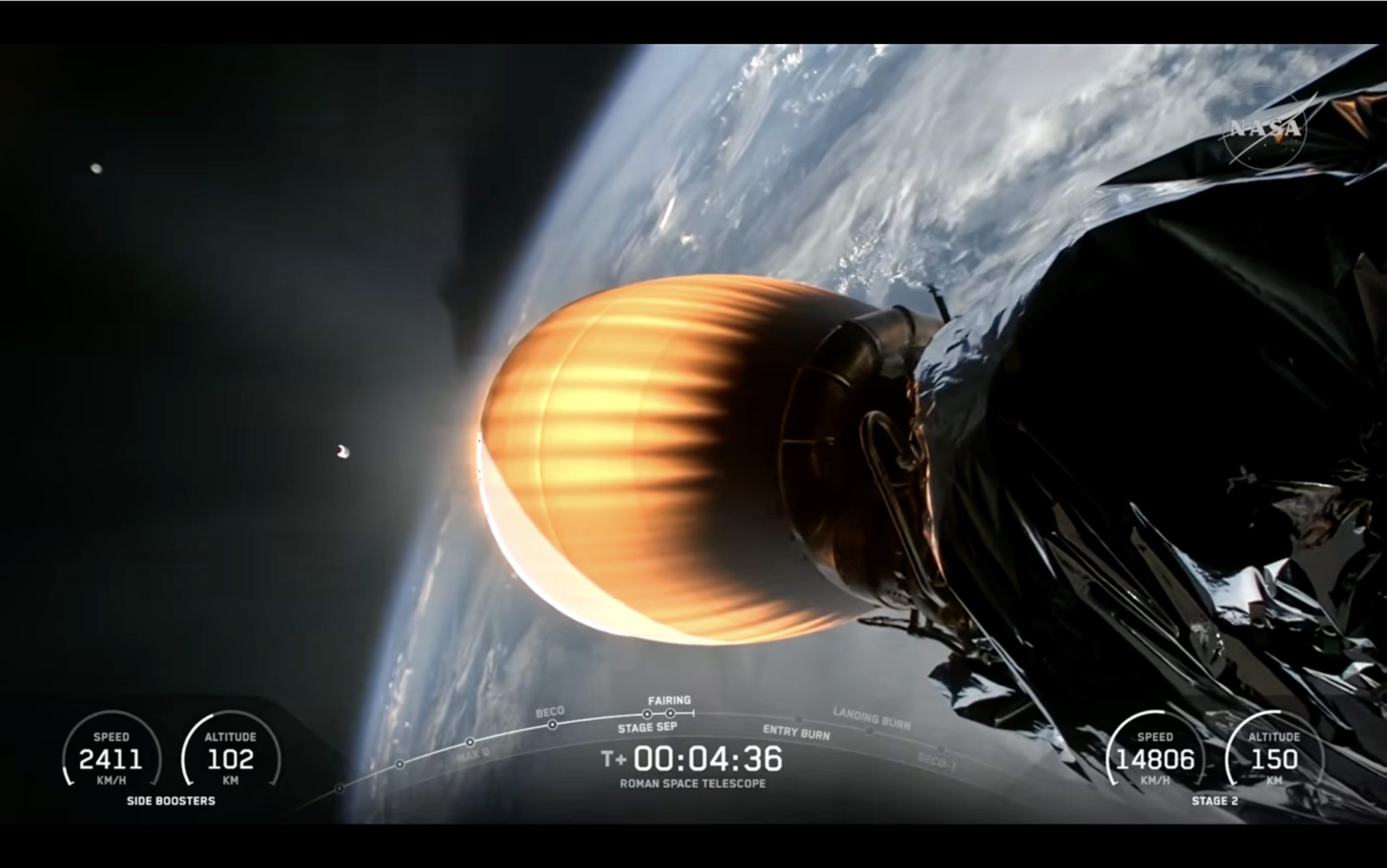
Roman carries a 2.4-metre primary mirror, the same diameter as Hubble’s, but its Wide Field Instrument gives it a radically different view of the Universe. Its 300-megapixel infrared camera can image a field of view around 200 times larger than Hubble’s infrared instrument while retaining comparable sharpness.
Roman has been designed to survey enormous areas, allowing astronomers to study whole populations of galaxies, stars and planets. Among its biggest goals is investigating dark energy, the mysterious phenomenon thought to be driving the accelerating expansion of the Universe. By mapping billions of galaxies across cosmic time, Roman will trace how the Universe has expanded and how its large-scale structure has grown under the influence of dark matter.
Closer to home, Roman will conduct a census of planets throughout the Milky Way using gravitational microlensing. This occurs when the gravity of a foreground star bends and magnifies the light from a more distant star. A planet accompanying the foreground star can produce a distinctive additional signal in that magnification.
NASA estimates that Roman’s surveys could uncover around 100,000 exoplanets, including worlds in orbits that are difficult to detect using other techniques.
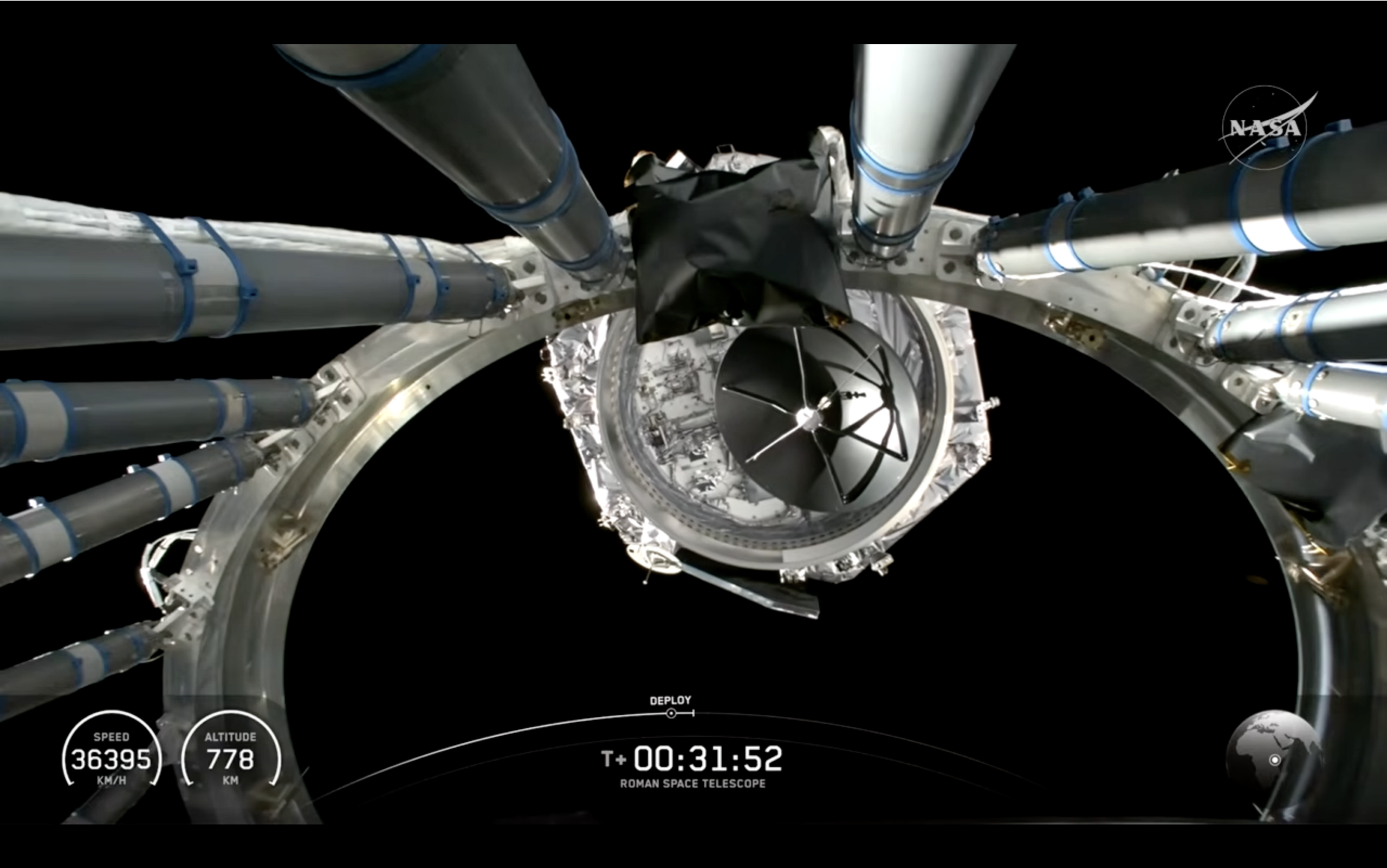
Roman also carries the Coronagraph Instrument, a technology demonstration designed to block the overwhelming glare of a star so that much fainter planets and discs of material around it can be seen directly. The technologies it demonstrates could eventually contribute to future space telescopes capable of directly studying Earth-like planets.
Roman has had a long journey to the launch pad. The mission grew out of the Wide Field Infrared Survey Telescope, or WFIRST, concept and makes use of a 2.4-metre telescope assembly donated to NASA by the US National Reconnaissance Office in 2012. It was renamed in 2020 in honour of Nancy Grace Roman, NASA’s first chief astronomer and one of the driving forces behind the Hubble Space Telescope.
Roman will now spend approximately three months travelling to L2 and undergoing deployments, activation, calibration and testing before beginning science operations. Its primary mission is planned to last five years, with sufficient propellant potentially allowing another five.
Its first science images are expected in early 2027.
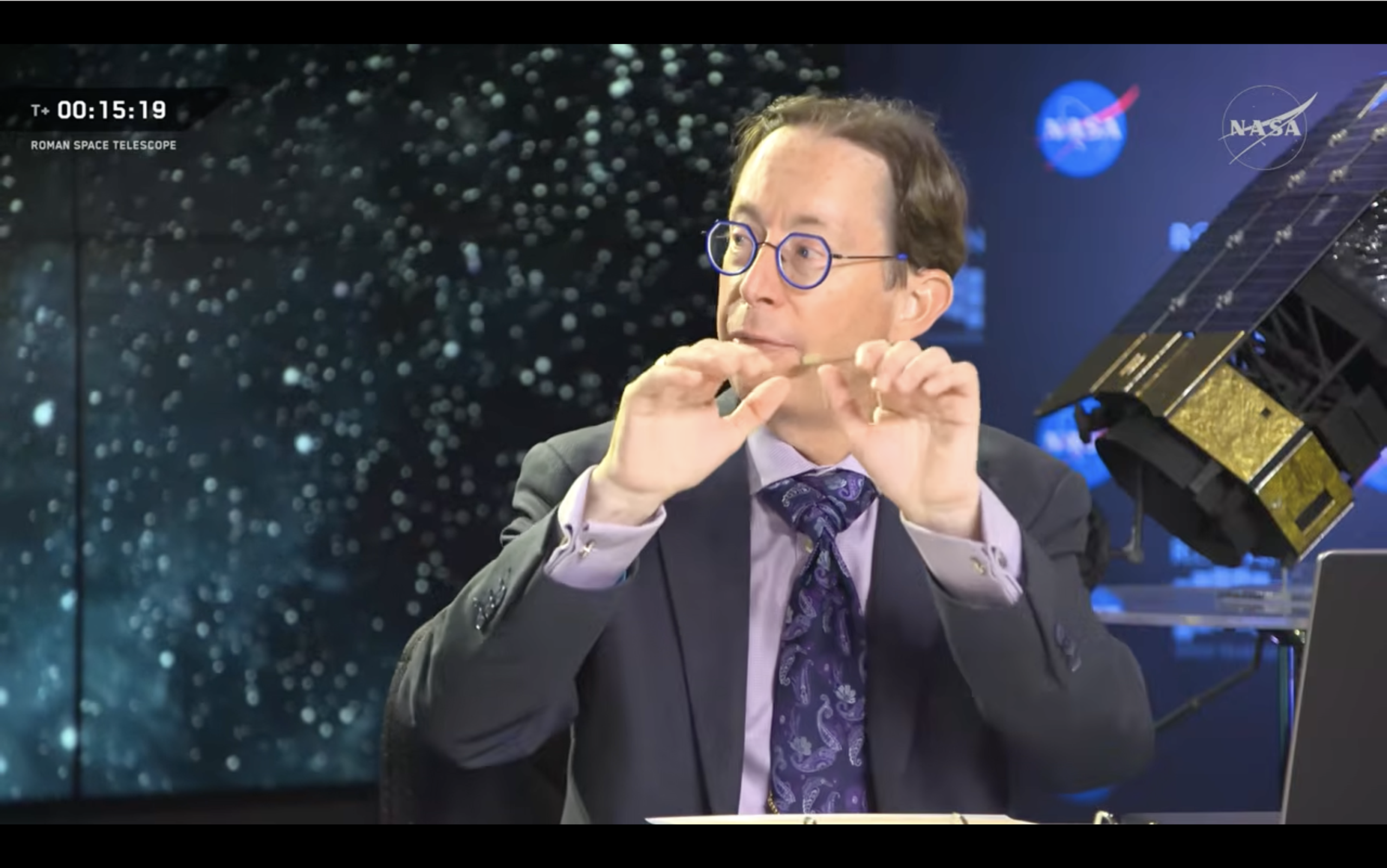
‘I am more thrilled than I can possibly explain,’ said Dr Dominic Benford, programme scientist for the Nancy Grace Roman Space Telescope, during the NASA live stream in the run-up to the launch.
Despite the early hour, Benford’s unusual tie knot was no bleary-eyed mistake. He has previously told The Space Madness Podcast that there are ‘thousands of ways to tie a necktie’.
Read our in-depth feature about the extraordinary science that Roman will be conducting in our September issue.