26 August 2026
Astronomy Now
  • Home
  • The Magazine
    • About
    • Current Issue
    • Subscribe
    • Renew Subscription
  • AstroFest 2026
  • News
  • Observing
    • UK Sky Chart
    • Almanac
    • Scope Calc
    • DSLR Calc
  • Reviews
    • Equipment
    • Book Reviews
  • Spaceflight Now
  • Shop
  • Contact Us
    • Subscriptions
    • Your Views
    • Ask Astronomy Now
    • Editorial
    • Advertising
    • AstroListings
Latest News
  • [ 24 August 2026 ] JWST’s ‘impossible’ early galaxies may be even more massive than we thought News
  • [ 7 August 2026 ] How to observe the 12 August 2026 solar eclipse Eclipse
  • [ 5 August 2026 ] Falcon 9 lunar impact: More than a new crater News
  • [ 25 July 2026 ] Euclid opens a new window on the first billion years of cosmic history News
  • [ 10 June 2026 ] Caught in the act: the wind that could kill a galaxy News
  • Facebook
  • Twitter
  • LinkedIn

X-Headlines

News

Artificial intelligence, NASA data used to discover eighth planet circling distant star

17 December 2017 Astronomy Now

Our solar system now is tied for most number of planets around a single star, with the recent discovery of an eighth planet circling Kepler-90, a Sun-like star 2,545 light-years from Earth. The planet was discovered in data from NASA’s Kepler Space Telescope.

News

Meteorite’s origins point to possible undiscovered asteroid

11 December 2017 Astronomy Now

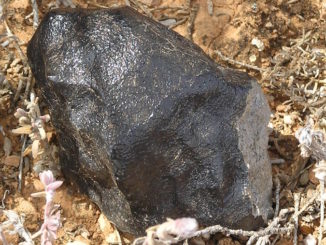
A new analysis of a meteorite called Bunburra Rockhole has revealed that the rock originated from a previously unknown parent asteroid, allowing scientists to understand the geology of the parent body.

News

Hydrothermal vent experiments bring Enceladus to Earth

11 December 2017 Astronomy Now

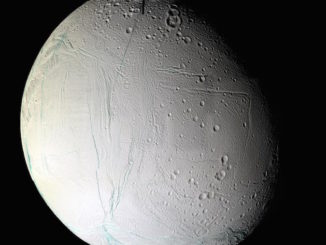
Laboratory experiments on Earth can now simulate the conditions under which life might emerge on Saturn’s moon Enceladus, as well as other icy alien worlds, according to new research published in journal Astrobiology.

News

Found: The most distant supermassive black hole ever observed

6 December 2017 Astronomy Now

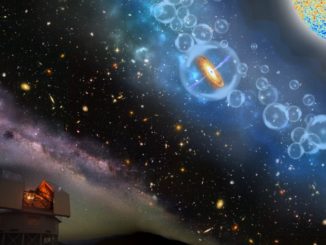
A team of astronomers have discovered the most-distant supermassive black hole ever observed. It resides in a luminous quasar and its light reaches us from when the Universe was only 5 percent of its current age — just 690 million years after the Big Bang.

News

First light achieved for next-generation planet-hunter

6 December 2017 Astronomy Now

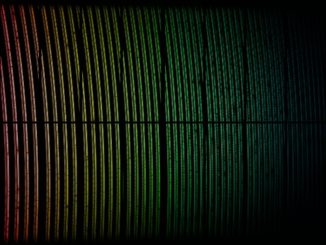
A new planet-seeking instrument installed on the European Southern Observatory’s Very Large Telescope in Chile has made its first observations, beginning a search for exoplanets with unprecedented precision by looking at the minuscule changes in the light of their host stars.

News

Jupiter’s moons, black holes, exoplanets among JWST’s first scientific targets

4 December 2017 Stephen Clark

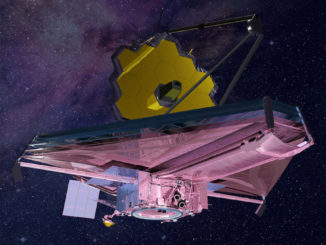
The James Webb Space Telescope should start returning its first scientific results by the end of 2019, and scientists recently announced a slate of observations selected to whet the appetites of astronomers who will use the multibillion-dollar facility well into the 2020s.

News

Voyager 1 probe fires long-dormant thrusters in interstellar space

3 December 2017 Stephen Clark

NASA’s Voyager 1 spacecraft has fired a set of four control thrusters for the first time in 37 years, giving the long-lived probe a new way to point itself on its cruise into interstellar space 13 billion miles from Earth.

News

Stellar motions in nearby galaxy hint at underlying dark matter

1 December 2017 Astronomy Now

By pinning down, for the first time, the three-dimensional motions of individual stars in the nearby Sculptor dwarf galaxy, astronomers have shed new light on the distribution of invisible dark matter that pervades the galaxy.

News

Spectroscopic survey probes uncharted depths of Hubble Ultra Deep Field

1 December 2017 Astronomy Now

Astronomers at the European Southern Observatory have conducted the deepest spectroscopic survey ever. They focused on the Hubble Ultra Deep Field, measuring distances and properties of 1600 very faint galaxies, including 72 galaxies that have never been detected before, even by Hubble itself.

News

Giant black hole pair photobombs Andromeda galaxy

1 December 2017 Astronomy Now

It seems like even black holes can’t resist the temptation to insert themselves unannounced into photographs. A cosmic photobomb found as a background object in images of the nearby Andromeda galaxy has revealed what could be the most tightly coupled pair of supermassive black holes ever seen.

Posts pagination

« 1 … 3 4 5 … 25 »

Latest Issue

Astronomy Now Newsletter

Get the wonders of the Universe delivered to your inbox.
* indicates required
Which elements of Astronomy interest you?

News Headlines

  • JWST’s ‘impossible’ early galaxies may be even more massive than we thought
    24 August 2026
  • How to observe the 12 August 2026 solar eclipse
    7 August 2026
  • Falcon 9 lunar impact: More than a new crater
    5 August 2026
  • Euclid opens a new window on the first billion years of cosmic history
    25 July 2026
  • Caught in the act: the wind that could kill a galaxy
    10 June 2026

© 2026 Nebula Press Ltd

Astronomy Now