17 April 2026
Astronomy Now
  • Home
  • The Magazine
    • About
    • Current Issue
    • Subscribe
    • Renew Subscription
  • AstroFest 2026
  • News
  • Observing
    • UK Sky Chart
    • Almanac
    • Scope Calc
    • DSLR Calc
  • Reviews
    • Equipment
    • Book Reviews
  • Spaceflight Now
  • Shop
  • Contact Us
    • Subscriptions
    • Your Views
    • Ask Astronomy Now
    • Editorial
    • Advertising
    • AstroListings
Latest News
  • [ 14 April 2026 ] Moon dust preserves record of life’s building blocks News
  • [ 11 April 2026 ] Dark matter may come in multiple forms, new model suggests News
  • [ 2 April 2026 ] Witness to history: Artemis II, lunar exploration and hope News
  • [ 25 March 2026 ] Artificial Intelligence uncovers more than 100 new worlds in NASA data News
  • [ 24 March 2026 ] XRISM solves gamma-Cas’s 50-year X-ray mystery News
  • Facebook
  • Twitter
  • LinkedIn

Archive

News

NASA’s Curiosity rover finds clues to how water helped shape Martian landscape

9 December 2014 Astronomy Now

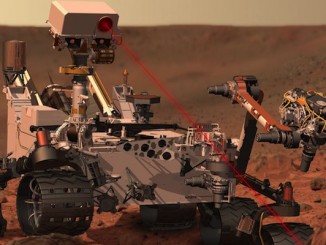
Observations by NASA’s Curiosity Rover indicate Mars’ Mount Sharp was built by sediments deposited in a large lake bed over tens of millions of years, challenging the notion that warm and wet conditions were transient, local, or only underground on the Red Planet.

News

Dunes on Saturn’s moon Titan need firm winds to move

8 December 2014 Astronomy Now

Titan is the only planetary moon known to have fields of wind-blown dunes on its surface. Experiments with the high pressure wind tunnel at Arizona State University’s Planetary Aeolian Laboratory provide key data for understanding dunes on Saturn’s largest moon.

Observing

Double the fun as magnitude-3.6 star λ Geminorum is hidden by the Moon

8 December 2014 Ade Ashford

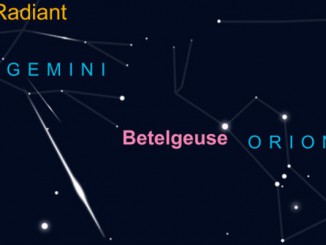
The last lunar occultation of a conspicuous naked-eye star for UK observers in 2014 occurs around 6 am on Tuesday, 9th December. Set your alarm and prepare your telescope for the disappearance and reapparance of λ Geminorum.

Observing

New interactive website tools for observers

8 December 2014 Ade Ashford

Astronomy Now Online brings you a powerful interactive global Almanac and UK-based all-sky star maps — the first of a new suite of tools to help plan your observing sessions and travel.

News

Dawn snaps its best-yet image of dwarf planet Ceres

7 December 2014 Astronomy Now

Launched in 2007, NASA’s Dawn spacecraft is preparing for its encounter with dwarf planet Ceres, imaging the body from a distance of 740,000 miles as a final calibration of the probe’s science camera. Dawn will be captured into Ceres’ orbit in March 2015.

News

Finding infant Earths and potential life just got easier

7 December 2014 Astronomy Now

Two researchers at New York’s Cornell University have found that on infant worlds, the habitable zone is located further away from their young parent star than previously thought. Life could arise on planets in the early phase of the coolest stars.

News

Pulsar with black hole could hold the ‘holy grail’ of gravity

6 December 2014 Astronomy Now

The intermittent light emitted by a pulsar allows scientists to verify Einstein’s theory of relativity, especially when paired up with another neutron star that interferes with its gravity. According to researchers from Spain and India, this theory could be analysed much more effectively if a pulsar with a black hole were found.

News

Green light for construction of European Extremely Large Telescope

5 December 2014 Astronomy Now

The European Southern Observatory’s Council has authorised spending of around one billion euros for the construction of the 39-metre aperture European Extremely Large Telescope (E-ELT) on Cerro Armazones in the Chilean Atacama Desert.

Picture This

Craters Hipparchus and Albategnius

4 December 2014 Mark Armstrong

First or last Quarter Moon is the best time to see some of the magnificent crater chains near the centre of the Earth-turned lunar hemisphere. Marnix Praet from Belgium provides this high-resolution view of the Hipparchus and Albategnius region.

News

Researchers suggest Martian meteorite contains organic carbon of biological origin

4 December 2014 Astronomy Now

An analysis of a Martian meteorite named Tissint, seen to fall in the Moroccan desert on 18th July 2011, revealed small fissures filled with organic carbon that is possibly biological in origin, according to an international research team.

Posts pagination

« 1 … 343 344 345 … 356 »

Latest Issue

Astronomy Now Newsletter

Join our mailing list.
* indicates required
Which elements of Astronomy interest you?

News Headlines

  • Moon dust preserves record of life’s building blocks
    14 April 2026
  • Dark matter may come in multiple forms, new model suggests
    11 April 2026
  • Witness to history: Artemis II, lunar exploration and hope
    2 April 2026
  • Artificial Intelligence uncovers more than 100 new worlds in NASA data
    25 March 2026
  • XRISM solves gamma-Cas’s 50-year X-ray mystery
    24 March 2026

© 2026 Nebula Press Ltd

Astronomy Now