
28 June 2026
Astronomy Now
  • Home
  • The Magazine
    • About
    • Current Issue
    • Subscribe
    • Renew Subscription
  • AstroFest 2026
  • News
  • Observing
    • UK Sky Chart
    • Almanac
    • Scope Calc
    • DSLR Calc
  • Reviews
    • Equipment
    • Book Reviews
  • Spaceflight Now
  • Shop
  • Contact Us
    • Subscriptions
    • Your Views
    • Ask Astronomy Now
    • Editorial
    • Advertising
    • AstroListings
Latest News
  • [ 10 June 2026 ] Caught in the act: the wind that could kill a galaxy News
  • [ 4 June 2026 ] Europe’s Mars rover may land in the remains of a vast ancient water system News
  • [ 14 April 2026 ] Moon dust preserves record of life’s building blocks News
  • [ 11 April 2026 ] Dark matter may come in multiple forms, new model suggests News
  • [ 2 April 2026 ] Witness to history: Artemis II, lunar exploration and hope News
  • Facebook
  • Twitter
  • LinkedIn

Archive

News

Moon impact! NASA’s Lunar Reconnaissance Orbiter finds new craters

17 March 2015 Astronomy Now

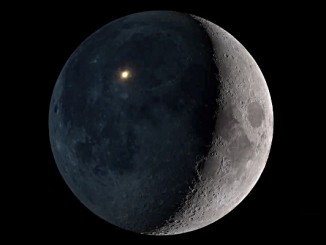
On 17th March 2013, an object hit the Moon’s surface in Mare Imbrium and exploded in a flash of light nearly 10 times as bright as anything ever recorded before. NASA’s Lunar Reconnaissance Orbiter has found the new 19-metre-wide crater plus more than two-dozen others.

News

Chiron may be second minor planet to possess Saturn-like rings

17 March 2015 Astronomy Now

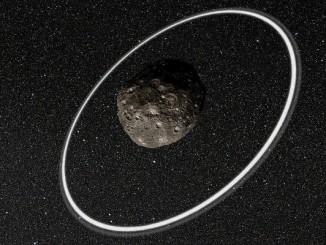
Five bodies in our Solar System are known to bear rings — Saturn, and to a lesser extent, rings of gas and dust also encircle Jupiter, Uranus, and Neptune; then Chariklo was added this haloed group last year, one of a class of minor planets called centaurs — now the progenitor of the centaurs, Chiron, most likely has rings too.

Observing

Bright nova in the heart of Sagittarius — still erratically variable

16 March 2015 Ade Ashford

Australian astronomer John Seach discovered a nova in Sagittarius on March 15th that’s still an easy binocular object for Southern Hemisphere observers and a challenge worth attempting in the dawn twilight of southern counties UK.

News

Download NASA’s Asteroid Data Hunter software and help save the planet

16 March 2015 Astronomy Now

New free software for home computers based on an algorithm created through NASA’s Asteroid Grand Challenge has the potential to increase the number of new asteroid discoveries by enabling amateur astronomers to analyse their own images.

News

OSIRIS detects water ice in the neck of comet 67P/Churyumov-Gerasimenko

16 March 2015 Astronomy Now

The Hapi region of 67P is located between the comet’s two lobes and has proven to be particularly active, displaying a bluish reflectivity spectrum in colour images captured with Rosetta’s OSIRIS camera. This strongly suggests that frozen water is mixed with the dust at the surface.

Uncategorized

Our complete guide to seeing the solar eclipse in safety

15 March 2015 Astronomy Now

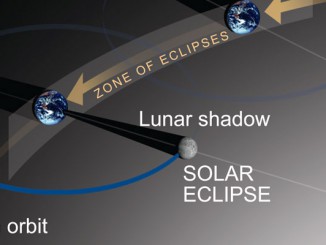
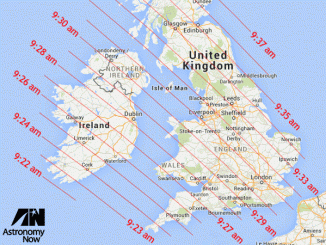
Our complete guide to observing Friday’s large partial eclipse. Find out how observers across the UK and Europe can witness this large partial eclipse in safety.

News

Rosetta begins listening for signs of life from comet lander

14 March 2015 Stephen Clark

Europe’s Rosetta spacecraft is trying to contact the Philae landing probe for the first time since the robot fell silent after a bouncy landing on a comet in November.

Observing

Boldly gone, but we can still see your asteroid, Mr. Spock

13 March 2015 Ade Ashford

As a nice way to celebrate the memory of the late Leonard Nimoy, over the coming week astrophotographers have a chance to image the 13-mile-wide minor planet named after Mr. Spock, the Star Trek character he shall always be most closely associated with.

News

Hubble views of Ganymede’s aurorae suggest a vast salty subsurface ocean

13 March 2015 Astronomy Now

Jupiter’s moon Ganymede is the largest moon in our Solar System and the only moon with its own magnetic field. NASA’s Hubble Space Telescope has the best evidence yet for a 60-mile deep underground saline ocean on Ganymede, believed to contain more water than all the water on Earth’s surface.

News

Rippled Milky Way may be much larger than previously estimated

12 March 2015 Astronomy Now

New research indicates that the Milky Way may be 50 percent larger than previously believed. Furthermore, the Galaxy’s shape is not just a flattened spiral, but contoured into several concentric ripples.

Posts pagination

« 1 … 327 328 329 … 356 »

Latest Issue

Astronomy Now Newsletter

Get the wonders of the Universe delivered to your inbox.
* indicates required
Which elements of Astronomy interest you?

News Headlines

  • Caught in the act: the wind that could kill a galaxy
    10 June 2026
  • Europe’s Mars rover may land in the remains of a vast ancient water system
    4 June 2026
  • Moon dust preserves record of life’s building blocks
    14 April 2026
  • Dark matter may come in multiple forms, new model suggests
    11 April 2026
  • Witness to history: Artemis II, lunar exploration and hope
    2 April 2026

© 2026 Nebula Press Ltd

Astronomy Now