News

Kepler finds tenth transiting ‘Tatooine’ exoplanet

Astronomers have discovered the tenth known ‘transiting circumbinary’ planet, which orbits two stars. Like the fictional planet “Tatooine” from Star Wars, this planet has two suns in its sky. Known as Kepler-453 b, the new planet is a gas-giant six times the diameter of Earth and lies in the habitable zone of its host pair of stars.

Picture This

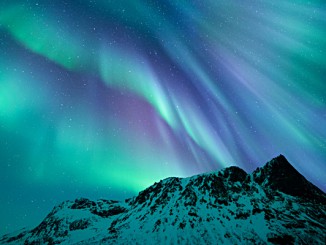
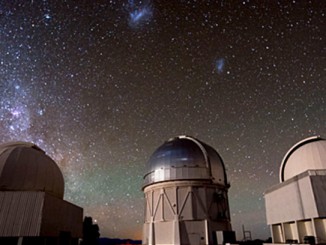
“Ascent of Angels” by Brad Goldpaint

Nomination number seven from the prestigious Insight Astronomy Photographer of the Year competition, an annual celebration of the most beautiful and spectacular visions of the cosmos by astrophotographers worldwide. The 2015 competition received 2700 spectacular entries from over 60 countries and the winners will be announced 17 September.
News

Last vestiges of surface water on Mars indicated by salt flat

Mars turned cold and dry long ago, but scientists have discovered evidence of an ancient lake that likely represents some of the last potentially habitable surface water ever to exist on the Red Planet. University of Colorado Boulder researchers estimate that the lake was only about 8 percent as salty as the Earth’s oceans and therefore may have been hospitable to microbial life.

News

Corrected sunspot history suggests climate change not due to natural solar trends

The Sunspot Number, the longest scientific experiment still ongoing, is a crucial tool used to study the solar dynamo, space weather and climate change. It has now been recalibrated and shows a consistent history of solar activity over the past few centuries. The new record has no significant long-term upward trend in solar activity since 1700, suggesting that rising global temperatures since the industrial revolution cannot be attributed to increased solar activity.

Picture This

Hubble views the Little Gem Nebula

This colourful bubble is a planetary nebula called NGC 6818, also known as the Little Gem Nebula, discovered by William Herschel in 1787. It is located in the constellation of Sagittarius, roughly 6,000 light-years away from us. The rich glow of the cloud is just over half a light-year across.

Observing

Perseid meteors set to light up 12-13 August skies

From the evening of Wednesday, 12 August into the early hours of the following morning, it is the maximum of the annual Perseid meteor shower. This year, a new Moon makes prospects for watching this natural firework display particularly good. So, find somewhere away from the streetlights, settle into a garden lounger facing northeast, and enjoy the show!

News

A new record: Keck Observatory measures most distant galaxy

EGSY8p7 is the most distant confirmed galaxy whose spectrum obtained with the W. M. Keck Observatory places it at a redshift of 8.68, at a time when the universe was less than 600 million years old. Hydrogen emission from EGSY8p7 may indicate it is the first known example of an early generation of young galaxies emitting unusually strong radiation.