
23 September 2026
Astronomy Now
  • Home
  • The Magazine
    • About
    • Current Issue
    • Subscribe
    • Renew Subscription
  • AstroFest 2026
  • News
  • Observing
    • UK Sky Chart
    • Almanac
    • Scope Calc
    • DSLR Calc
  • Reviews
    • Equipment
    • Book Reviews
  • Spaceflight Now
  • Shop
  • Contact Us
    • Subscriptions
    • Your Views
    • Ask Astronomy Now
    • Editorial
    • Advertising
    • AstroListings
Latest News
  • [ 8 September 2026 ] 3I/ATLAS was born in the deep freeze News
  • [ 30 August 2026 ] Roman Space Telescope launches on mission to survey the Universe News
  • [ 24 August 2026 ] JWST’s ‘impossible’ early galaxies may be even more massive than we thought News
  • [ 7 August 2026 ] How to observe the 12 August 2026 solar eclipse Eclipse
  • [ 5 August 2026 ] Falcon 9 lunar impact: More than a new crater News
  • Facebook
  • Twitter
  • LinkedIn

Lander manager provides update on Philae status

12 November 2014 Astronomy Now

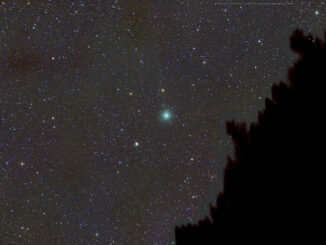
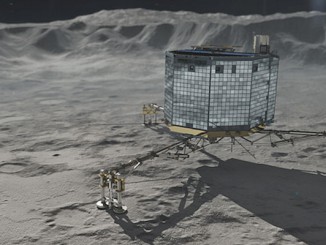
Philae manager Stephan Ulamec provides an update on the status of the lander following it’s arrival on the surface.
  • Comet
  • comet 67P/Churyumov–Gerasimenko
  • Philae
  • Rosetta

Related Articles

Picture This

Top ten Rosetta images from 10km

11 November 2014 Astronomy Now

On the eve of Philae’s landing, the European Space Agency has released its top ten images of comet 67P/Churyumov–Gerasimenko taken by Rosetta’s navigation camera from its lowest orbit just 10 kilometres from the centre of the nucleus.

News

Comet impacts may have led to life on Earth — and perhaps elsewhere

19 August 2015 Astronomy Now

Comet impacts on Earth are synonymous with great extinctions, but now research presented at the Goldschmidt geochemistry conference in Prague shows that early comet collisions would have become a driving force to cause substantial synthesis of peptides — the first building blocks of life. This may have implications for the genesis of life on other worlds.

Observing

See Comet Iwamoto’s dash through Leo, Cancer and Gemini before full Moon

10 February 2019 Ade Ashford

Grab your binoculars to catch a glimpse of speedy Comet C/2018 Y1 Iwamoto over the coming week before the glare from a full Moon on 19 February drowns it out. Potentially attaining magnitude +6, the comet passes closest to Earth on 12 February when it can be found traversing Leo at a rate of 7.2 degrees/day. Don’t miss C/2018 Y1’s close enounter with galaxy NGC 2903 on 13 February – by eye, camera, or live online.

Latest Issue

Astronomy Now Newsletter

Get the wonders of the Universe delivered to your inbox. Sign up before 24 September for a 10% discount code for your Stargazer's Guide 2027!
* indicates required
Which elements of Astronomy interest you?

News Headlines

  • 3I/ATLAS was born in the deep freeze
    8 September 2026
  • Roman Space Telescope launches on mission to survey the Universe
    30 August 2026
  • JWST’s ‘impossible’ early galaxies may be even more massive than we thought
    24 August 2026
  • How to observe the 12 August 2026 solar eclipse
    7 August 2026
  • Falcon 9 lunar impact: More than a new crater
    5 August 2026

© 2026 Nebula Press Ltd

Astronomy Now