10 September 2026
Astronomy Now
  • Home
  • The Magazine
    • About
    • Current Issue
    • Subscribe
    • Renew Subscription
  • AstroFest 2026
  • News
  • Observing
    • UK Sky Chart
    • Almanac
    • Scope Calc
    • DSLR Calc
  • Reviews
    • Equipment
    • Book Reviews
  • Spaceflight Now
  • Shop
  • Contact Us
    • Subscriptions
    • Your Views
    • Ask Astronomy Now
    • Editorial
    • Advertising
    • AstroListings
Latest News
  • [ 8 September 2026 ] 3I/ATLAS was born in the deep freeze News
  • [ 30 August 2026 ] Roman Space Telescope launches on mission to survey the Universe News
  • [ 24 August 2026 ] JWST’s ‘impossible’ early galaxies may be even more massive than we thought News
  • [ 7 August 2026 ] How to observe the 12 August 2026 solar eclipse Eclipse
  • [ 5 August 2026 ] Falcon 9 lunar impact: More than a new crater News
  • Facebook
  • Twitter
  • LinkedIn

Dragonfly Telephoto Array

News

Massive galaxy discovered made almost entirely of dark matter

26 August 2016 Astronomy Now

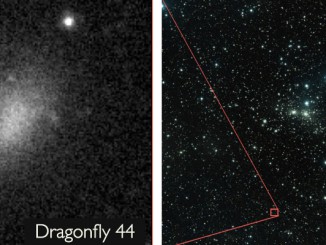
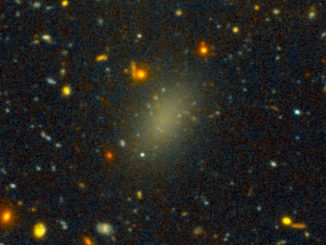
An international team of astronomers has discovered a massive galaxy that consists of 99.99 percent dark matter. Even though it is relatively nearby, astronomers had missed the galaxy, named Dragonfly 44, for decades because it is very dim. The galaxy lies about 300 million light-years away in the constellation Coma.
News

Dragonfly’s compound ‘eye’ reveals very faint galaxy structure

26 May 2015 Astronomy Now

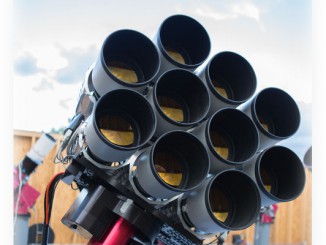
At CASCA 2015, Roberto Abraham from the University of Toronto describes the first results from the Dragonfly Telephoto Array — an innovative, multi-lens system designed to produce digital images of ultra-low surface brightness objects at visible wavelengths — that is at least ten times more efficient than its nearest rival.

News

‘Fluffiest galaxies’ discovered by Keck Observatory

16 May 2015 Astronomy Now

An international team of researchers have used the W. M. Keck Observatory to confirm the existence of the most diffuse class of galaxies known in the universe. These Ultra Diffuse Galaxies (UDGs) are nearly as wide as our own Milky Way galaxy — about 60,000 light-years — yet harbour only one percent as many stars.

Latest Issue

Astronomy Now Newsletter

Get the wonders of the Universe delivered to your inbox. Sign up before 24 September for a 10% discount code for your Stargazer's Guide 2027!
* indicates required
Which elements of Astronomy interest you?

News Headlines

  • 3I/ATLAS was born in the deep freeze
    8 September 2026
  • Roman Space Telescope launches on mission to survey the Universe
    30 August 2026
  • JWST’s ‘impossible’ early galaxies may be even more massive than we thought
    24 August 2026
  • How to observe the 12 August 2026 solar eclipse
    7 August 2026
  • Falcon 9 lunar impact: More than a new crater
    5 August 2026

© 2026 Nebula Press Ltd

Astronomy Now