News

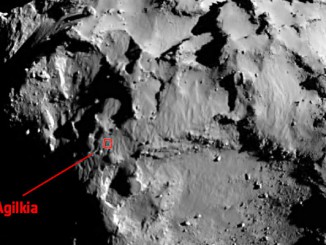
Recently released images compiled into a movie show the descent of the European Space Agency’s Philae lander to its first touchdown site, Agilkia, on Comet 67P/Churyumov–Gerasimenko on 12 November 2014. The image sequence starts just over two miles from the comet, and the final image is from just 9 metres above the landing site.
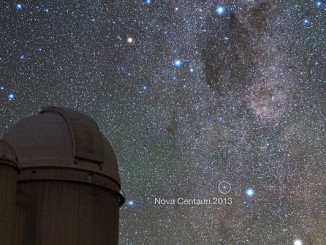
The chemical element lithium is predicted to have been created by the Big Bang, 13.8 billion years ago. Observations of Nova Centauri 2013 show that lithium has been found for the first time in material ejected by a nova, helping to explain the mystery of why many young stars seem to have more of this chemical element than expected.

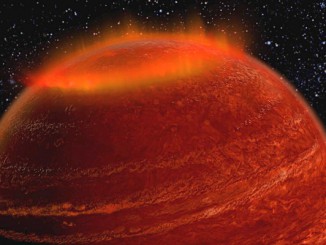
Brown dwarfs are relatively cool, dim objects that are too massive to be planets, yet they are too small to sustain hydrogen fusion reactions. By observing a brown dwarf 20 light-years away, researchers have found another feature that makes these so-called failed stars more like supersized planets — they host powerful aurorae near their magnetic poles.
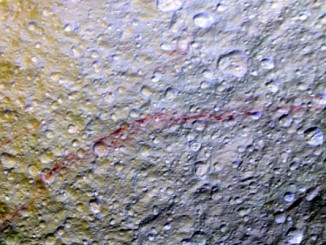
Like graffiti sprayed by an unknown artist, unexplained narrow, arc-shaped, reddish streaks are visible on the surface of Saturn’s icy moon Tethys in new, enhanced-colour images from NASA’s Cassini spacecraft. The red arcs are among the most unusual colour features on Saturn’s moons to be revealed by Cassini’s cameras.

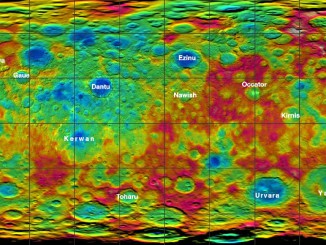
Colourful new maps of Ceres, based on data from NASA’s Dawn spacecraft, showcase a diverse topography, with height differences between crater bottoms and mountain peaks as great as 9 miles (15 kilometres). Some of these craters and other features now have official names, inspired by spirits and deities relating to agriculture from a variety of cultures.
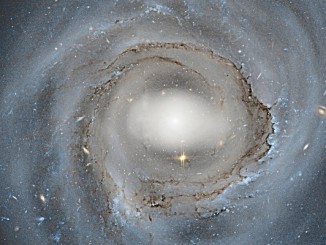
Astronomers have long known that powerful cosmic winds can sometimes blow through galaxies, sweeping out interstellar material and stopping future star formation. A Yale University analysis of one such event in a nearby galaxy provides an unprecedented look at the process, offering a clearer snapshot of how it happens.
© 2026 Nebula Press Ltd