Picture This

“A Celestial Visitor” by George Martin

This picture of Comet C/2014 Q2 Lovejoy was taken from Market Harborough, Leicestershire by 15-year-old George Martin on 18 December 2014 using his new 8-inch f/5 Newtonian telescope and a Nikon D3200 camera — winning image of the Young Competition category in the Insight Astronomy Photographer of the Year competition 2015.

News

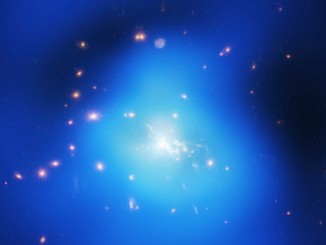
A fresh perspective on the extraordinary Phoenix galaxy cluster

Galaxy clusters are often described by superlatives. After all, they are huge conglomerations of galaxies, hot gas, and dark matter, representing the largest structures in the universe held together by gravity. New observations of the galaxy cluster SPT-CLJ2344-4243 (or Phoenix Cluster) at X-ray, ultraviolet, and optical wavelengths are helping astronomers better understand this extraordinary system.

Observing

Get ready for October’s pre-dawn Moon and planet show

Now that planet Saturn is effectively lost in the dusk twilight for UK-based observers, you may be wondering what has happened to the other four bright naked-eye planets. Far from disappearing, they have just transferred to the morning sky. From 8—11 October, the waning crescent Moon acts as a guide to Venus, Mars, Jupiter then Mercury in the eastern dawn sky.

News

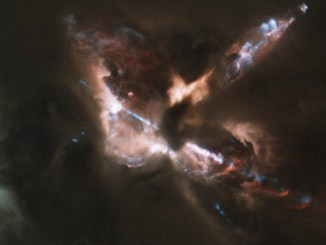
Searching for orphan stars amid starbirth fireworks in Orion

A new Gemini Observatory image reveals the remarkable “fireworks” that accompany the birth of stars. The picture captures in unprecedented clarity the fascinating structures of a gas jet complex emanating from a stellar nursery at supersonic speeds. Researchers believe they have also found a collection of runaway (orphan) stars that result from all this activity.

News

How Rosetta’s comet got its shape

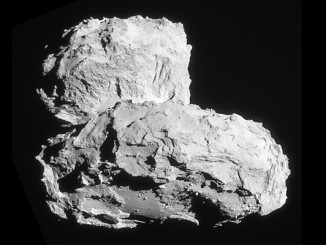
The origin of of Comet 67P/Churyumov-Gerasimenko’s double-lobed form has been a key question since Rosetta first revealed its surprising shape in July 2014. By studying the layers of material seen all over the nucleus, scientists have shown that the shape arose from a low-speed collision between two fully fledged, separately formed comets.