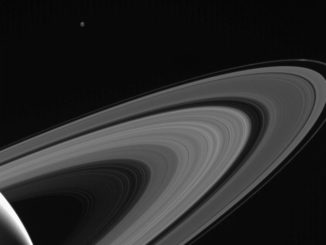
Picture This


While surveying the positions of over a billion stars, ESA’s Gaia mission is also measuring their colour, a key diagnostic to study the physical properties of stars. A new image provides a preview of Gaia’s first full-colour all-sky map, which will be unleashed in its highest resolution with the next data release in 2018.
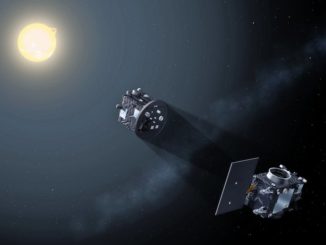
As skywatchers and scientists converge on a transcontinental band of totality for Monday’s solar eclipse in the United States, engineers in Europe are building a unique pair of satellites to create artificial eclipses lasting for hours — a feat that that could be a boon for solar physicists but will escape the view of Earth-bound spectators.
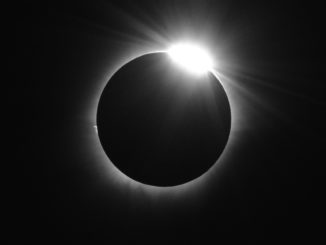
It’s been nicknamed the Great American Eclipse as totality returns to the USA for the first time in twenty-six years. On 21 August 2017, the Moon will move in front of the Sun along a strip cutting diagonally across more than a dozen different states, from Oregon on the west coast to South Carolina.

Dim objects called brown dwarfs, less massive than the Sun but more massive than Jupiter, have powerful winds and clouds — specifically, hot patchy clouds made of iron droplets and silicate dust. Scientists recently realised these giant clouds can move and thicken or thin surprisingly rapidly, in less than an Earth day, but did not understand why.


Scientists now have a good estimate for the age of one of the most intriguing planetary systems discovered to date — TRAPPIST-1, a system of seven Earth-size worlds orbiting an ultra-cool dwarf star about 40 light-years away. Researchers say in a new study that the TRAPPIST-1 star is quite old: between 5.4 and 9.8 billion years. This is up to twice as old as our own Solar System, which formed some 4.5 billion years ago.
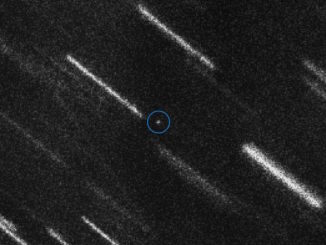
Back in October 2012, the near-Earth asteroid 2012 TC4 had a close encounter with Earth. It passed our planet at a distance only a quarter of that between the Earth and the Moon. In October 2017, this small asteroid, with a size of only about 15 to 30 metres, will return for another very close fly-by, making it the perfect object to test the asteroid detection and tracking network.

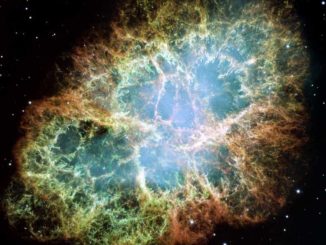
Physicists are gearing up to send a re-engineered science instrument originally designed for lofty balloon flights high in Earth’s atmosphere to the International Space Station next week to broaden their knowledge of cosmic rays, subatomic particles traveling on intergalactic routes that could hold the key to unlocking mysteries about supernovas, black holes, pulsars and dark matter.
© 2019 Pole Star Publications Limited