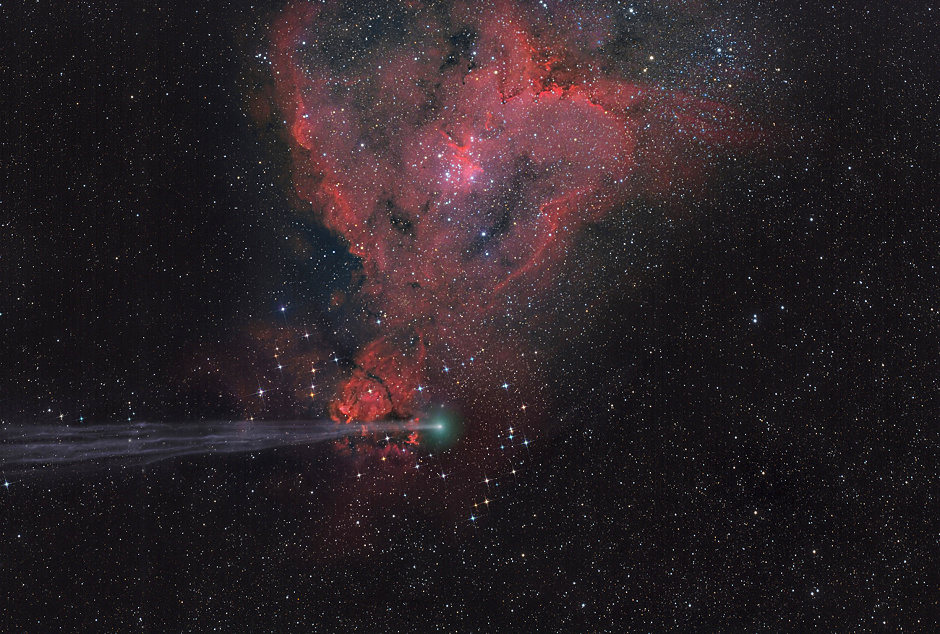
This year’s Insight Astronomy Photographer of the Year competition received a record 2700 entries by astrophotographers from 59 countries around the world. These astonishing pictures reveal fresh perspectives on astrophotography favourites alongside some of the great astronomical events of the last year.
In subsequent weeks we will showcase the winning images from all 11 categories, but if you wish to see them all together, the Royal Observatory Greenwich has an exhibition open 18 September 2015 — 26 June 2016. Hours: 10.00–17.00, entry is free.
Omega (ω) Centauri, or NGC 5139, is the brightest and largest globular cluster. This showpiece object of the southern sky is captured here in all its glory by astrophotographer Ignacio Diaz Bobillo — winning image of the Stars & Nebulae category in the Insight Astronomy Photographer of the Year competition 2015.
To preserve the sense of the Moon caught at exactly at half phase, Hungarian astrophotographer András Papp carefully balanced multiple images of the darkened hemisphere, terminator and illuminated face of the Moon, all recorded on the same night — winning image of the Our Moon category in the Insight Astronomy Photographer of the Year competition 2015.
While NGC 278 may look serene, it is anything but. The galaxy is currently undergoing an immense burst of star formation as revealed in this NASA/ESA Hubble Space Telescope image. However, NGC 278’s star formation is somewhat unusual: why is it only taking place within an inner ring some 6,500 light-years across and not extend to the galaxy’s outer edges?