Observing

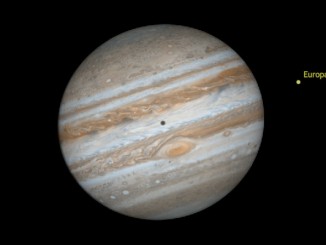
Jupiter continues to delight and amaze observers during April

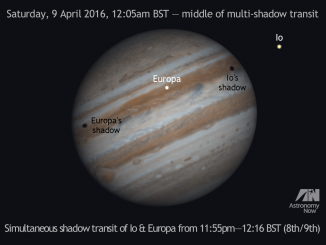
The impact of a small comet or asteroid on Jupiter observed by European amateur astronomers on 17 March has heightened interest in the solar system’s largest planet. While such an event is uncommon, Jupiter and its family of four bright Galilean moons provide a wealth of other interesting phenomena to view with small telescopes during April.
Picture This

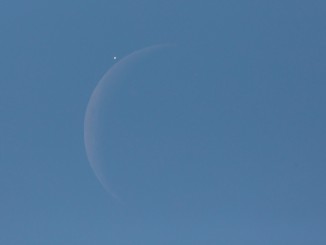
Lunar occultation of Venus

Venus is seen next to the crescent moon during the daytime, prior to the start of occultation, on 7 December 2015 in Washington, D.C. in the United States. The moon occulted, or passed in front of, Venus for the second time this year.

Observing

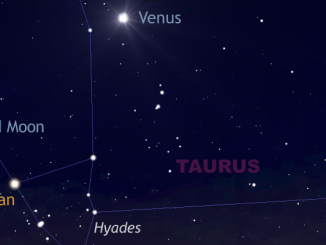
See the Moon score a Bull’s-Eye in Taurus on 29 October

On Thursday, 29 October, observers in the British Isles with clear skies and armed with binoculars or small telescopes can see the waning gibbous 17-day-old Moon occult first-magnitude star Aldebaran, the ‘Eye of the Bull’ in the constellation Taurus. The star slips behind the Moon soon after 9:45pm GMT and reappears at the darkened lunar hemisphere about an hour later.

Observing

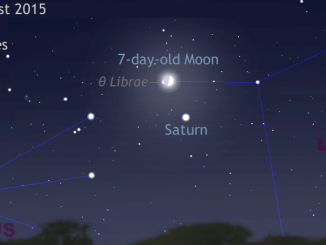
See the Moon meet Saturn and a star disappear on 22 August

As dusk fades to dark on Saturday, 22 August, observers in the British Isles and Western Europe with clear skies can see the first quarter Moon close above planet Saturn low to the southwest. But for those skywatchers with binoculars and small telescopes, an additional treat is in store as the Moon passes in front of (occults) a naked-eye star.