
News

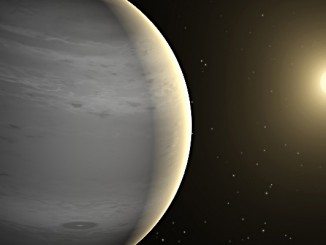


Finding ways to confirm life on planets outside of our Solar System is often at the forefront of exoplanet research. Now a team of graduate students at the University of Washington (UW) have found a way to aid this search by proposing that future telescopes should look for explosive volcanic activity as a potential marker for life on other worlds.
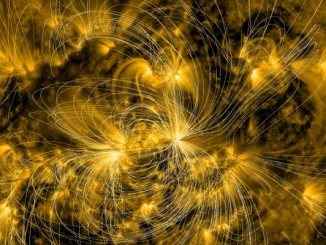
Our Sun is a volatile star, producing giant clouds of solar particles called coronal mass ejections. Now scientists may finally have a tool to predict the magnetic configuration of a CME from afar, enabling forecasters to give utility grid and satellite operators a day’s advance warning to protect their systems.
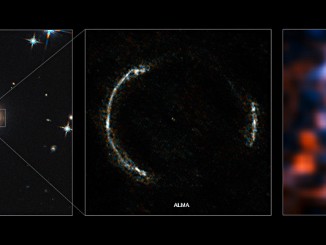
The Atacama Large Millimetre/submillimetre Array has produced a spectacularly detailed image of a distant galaxy known as SDP.81 that is being gravitationally lensed. The image shows a magnified view of the galaxy’s star-forming regions, the likes of which have never been seen before at this level of detail in a galaxy so remote.
© 2026 Nebula Press Ltd