News

Supermassive black holes banish matter into cosmic voids

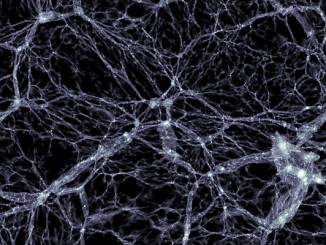
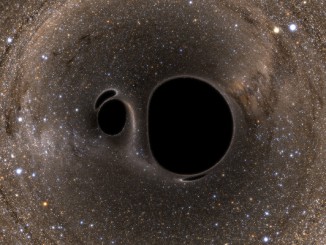
On the largest scales, galaxies and everything they contain are concentrated into filaments that stretch around the edge of enormous voids. Data from the Illustris project, a large computer simulation of the evolution and formation of galaxies, suggests that the black holes at the centre of every galaxy are helping to send matter into the loneliest places in the universe.

News

Surprise discovery of new Southern Hemisphere meteor shower

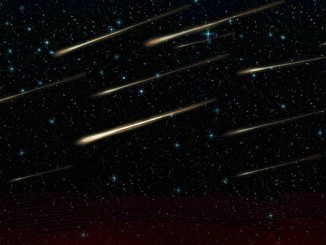
A new network of video surveillance cameras in New Zealand detected a surprise meteor shower on New Year’s Eve. The shower is called the Volantids, named after the constellation Volans, the flying fish, from which the meteoroids appear to stream towards us. The shower was not seen the year before and is not known from past radar observations. It could be an early warning that we should be looking for a potentially hazardous comet in that orbit.

News

ATLASGAL survey of southern Milky Way completed

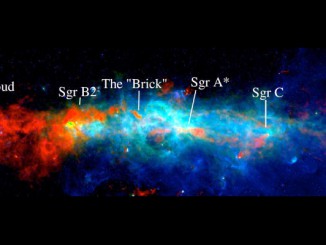
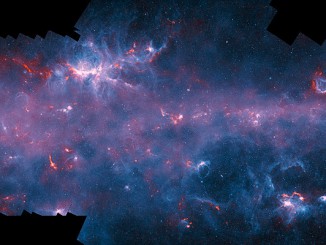
A spectacular new image of the Milky Way has been released to mark the completion of the APEX Telescope Large Area Survey of the Galaxy (ATLASGAL). The APEX telescope in Chile has mapped the full area of the galactic plane visible from the Southern Hemisphere for the first time at submillimetre wavelengths — between infrared light and radio waves.

News

Virgo Cluster galaxy’s stunning gas tail

Astronomers have discovered a spectacular tail of gas more than 300,000 light-years across coming from a galaxy known as NGC 4569, 55 million light-years away in the Virgo Cluster. The plume is made up of hydrogen gas — the material new stars are made of — and is five times longer than the galaxy itself.

News

Introducing WFIRST — NASA’s wider set of eyes on the universe

With a view 100 times bigger than that of the Hubble Space Telescope, NASA’s Wide Field Infrared Survey Telescope (WFIRST) will aid researchers in their efforts to unravel the secrets of dark energy and dark matter, and explore the evolution of the cosmos. It also will discover new worlds outside our solar system and advance the search for worlds that could be suitable for life.