News

Dark energy survey finds eight more galactic neighbours

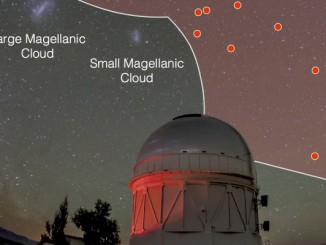
Scientists on the Dark Energy Survey, using one of the world’s most powerful digital cameras, have discovered eight more faint celestial objects hovering near our Milky Way galaxy. Signs indicate that they, like the objects found by the same team earlier this year, are likely dwarf satellite galaxies — the smallest and closest known form of galaxies.

Picture This

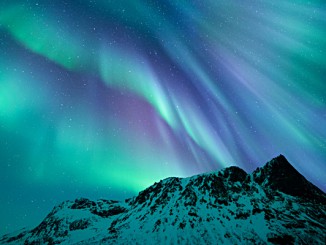
“Star trails over Green Lake” by Dan Barr

Nomination number nine from the prestigious Insight Astronomy Photographer of the Year competition, an annual celebration of the most beautiful and spectacular visions of the cosmos by astrophotographers worldwide. The 2015 competition received 2700 spectacular entries from over 60 countries and the winners will be announced 17 September.

News

Celestial firework marks nearest galaxy collision

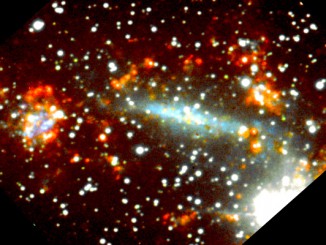
A spectacular galaxy collision has been discovered lurking behind the Milky Way, the closest such system ever found. “Kathryn’s Wheel” was found during a special wide field survey of the Southern Milky Way with the UK Schmidt Telescope in Australia. Such systems are very rare and arise from “bull’s-eye” collisions between two galaxies of similar mass.

Observing

See the return of the Andromeda Galaxy

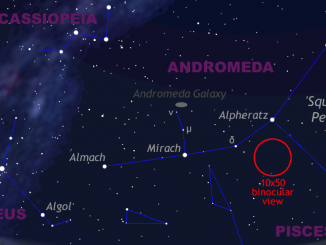
Are you looking for something to whet your observing appetite and celebrate the return of late summer dark skies to the British Isles? Why not welcome back the Andromeda Galaxy to the Northern Hemisphere night sky in this observing guide to one of the annual harbingers of autumnal celestial delights.

News

Rosetta studies Comet 67P at perihelion

ESA’s Rosetta spacecraft has witnessed 67P/Churyumov–Gerasimenko make its closest approach to the Sun (perihelion) at 3:03am BST on 13 August, when the comet came within 116 million miles of our nearest star. Rosetta’s measurements suggest the comet is currently spewing up to 300kg of water vapour and a metric tonne of dust every second, creating dangerous working conditions for the spacecraft.

News

Cassini’s last close flyby of Saturn’s moon Dione

NASA’s Cassini spacecraft will zip within 295 miles of Saturn’s moon Dione on Monday, 17 August — the final close flyby of this icy satellite during the probe’s long mission. After close flybys of other moons in late 2015, Cassini will depart Saturn’s equatorial plane to begin a year-long setup of the mission’s grand finale: repeatedly diving through the space between Saturn and its rings.

Picture This

“Motind” by Rune Engebo

Our eighth nomination from the prestigious Insight Astronomy Photographer of the Year competition, an annual celebration of the most beautiful and spectacular visions of the cosmos by astrophotographers worldwide. Now in its seventh year, the 2015 competition received 2700 spectacular entries from over 60 countries and the winners will be announced 17 September.

News

Researchers explain why the Greenwich prime meridian moved

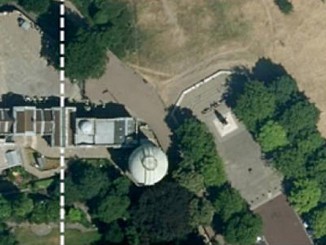
In 1884, a delegation of international representatives convened in Washington, D.C. to recommend that Earth’s prime meridian marking zero degrees longitude should pass through the Airy Transit Circle (ATC) at the Royal Observatory in Greenwich, England. But according to the GPS receivers of surveyors and smartphones of London tourists today, why does the line of zero longitude run 102 metres east of the ATC?