News

Banking X-ray data for the future

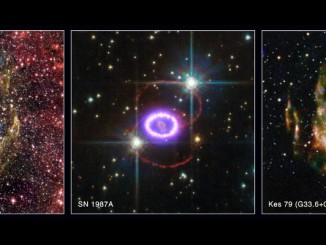
NASA’s Chandra X-ray Observatory has collected data for over sixteen years on thousands of different objects throughout the universe. Once the data is processed, all of the data goes into an archive and is available to the public. To celebrate American Archive Month, a collection of new images from the Chandra archive has just been released.
Picture This

Hubble sees an ageing star wave goodbye

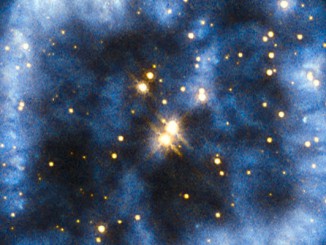
When stars that are around the mass of the Sun reach their final stages of life, they shed their outer layers into space, which appear as glowing clouds of gas called planetary nebulae. In the case of Menzel 2, otherwise known as PK 329-02.2, the nebula forms a winding blue cloud that perfectly aligns with two stars at its centre.

Book Reviews

Beyond: Our Future in Space

With accessible prose and relentless curiosity, Chris Impey’s book reports on China’s plan to launch its own space station by 2020, proves that humans could survive on Mars, and unveils cutting-edge innovations poised to replace rockets at a fraction of the cost. “Beyond is a compelling book with great attention to detail and science that is awe inspiring — it is a stellar read indeed,” says reviewer Alex Green.

Book Reviews

Masters of the Universe

How did our modern picture of the universe come into being? Helge Kragh’s book tells this fascinating story in an unusual format that blends factual and fictional elements. The ‘interviewees’ are a collection of eminent twentieth century cosmologists, among them Einstein, Eddington, De Sitter, Hoyle, Arrhenius, Dirac and Schwarzschild. Reviewed by Ian Welland.

Book Reviews

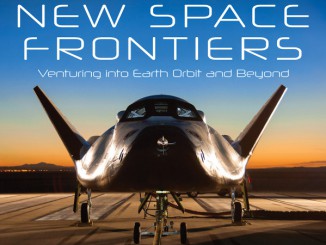
New Space Frontiers

Piers Bizony’s book gives the reader an insight into the twenty-first century’s new era of human spaceflight with Virgin Galactic, SpaceX and more vying with traditional space agencies and emerging space-faring nations such as China. Reviewer Kulvinder Singh Chadha says that Bizony successfully captures what is happening right now in this generously-sized book with lush images aplenty.

News

Understanding pulsating aurorae

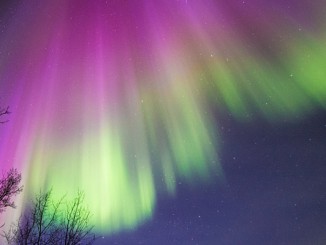
Thanks to a lucky conjunction of two satellites, a ground-based array of all-sky cameras, and some spectacular aurorae boreales, researchers have uncovered evidence for an unexpected role that electrons have in creating the dancing aurorae. Though humans have been seeing aurorae for thousands of years, we have only recently begun to understand what causes them.

News

Exoplanet anniversary: from zero to thousands in 20 years

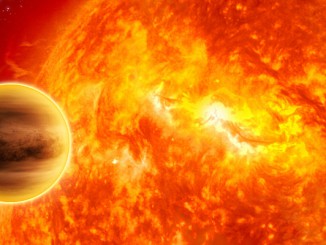
On 6 October 1995, astronomers started a revolution with the discovery of 51 Pegasi b — the first planet found orbiting a Sun-like star beyond our solar system. As we celebrate the 20th anniversary of that momentous discovery, the current total of known exoplanets stands at 5,596. More than 1,000 of these were discovered by NASA’s Kepler mission.