
News

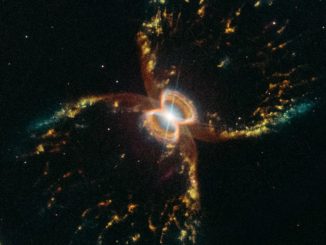
The Hubble Space Telescope celebrates its 29th anniversary on 24 April, an event NASA is marking by the release of a spectacular image of the Southern Crab Nebula in the constellation Centaurus that shows dual cones of gas blown off by a central red giant streaming away into space and giving the appearance of a crab floating in the void.
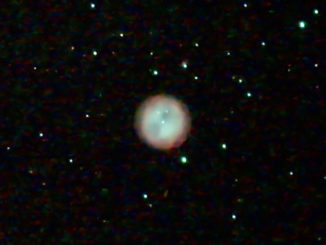
Owls may be scarce near your favourite viewing spot, but the Northern Hemisphere spring sky contains one celestial owl that you can track down in small telescopes – Messier 97 (NGC 3587). Commonly called the Owl Nebula, M97 is a planetary nebula discovered by Pierre Méchain in 1781 that is currently ideally placed for observation almost overhead at nightfall in the constellation of Ursa Major, the Great Bear.



Globular cluster M3 in Canes Venatici was the first object put on Charles Messier’s famous list that was discovered by the French astronomer himself. Messier could not have imagined the splendour revealed by the Hubble Space Telescope, which shows the cluster as a mind-boggling concentration of more than a half million stars some 33,000 light years from Earth.

© 2019 Pole Star Publications Limited