Archive
Impact of cosmic wind on galaxy evolution revealed
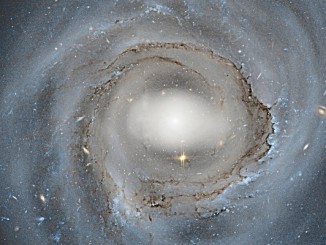
Astronomers have long known that powerful cosmic winds can sometimes blow through galaxies, sweeping out interstellar material and stopping future star formation. A Yale University analysis of one such event in a nearby galaxy provides an unprecedented look at the process, offering a clearer snapshot of how it happens.
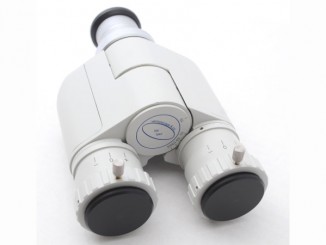
Vernonscope Deluxe 1.25-inch Binoviewer
Microscopists enjoyed the advantages of binocular vision long before someone thought to apply this principle to telescopes. Using both eyes, the brain is able to interpolate both fields, resulting in a gain in contrast and a consequently improved perception of detail. Steve Ringwood appraises a very stylish model from Venonscope aimed at the top end of the twin eyepiece market.
“The Mirrored Night Sky” by Xiaohua Zhao
The prestigious Insight Astronomy Photographer of the Year competition is an annual celebration of the most beautiful and spectacular visions of the cosmos by astrophotographers worldwide. Now in its seventh year, the 2015 competition received 2700 spectacular entries from over 60 countries and the winners will be announced 17 September.
New Horizons discovers flowing ices on Pluto
NASA’s New Horizons mission has found evidence of exotic ices flowing across Pluto’s surface, at the left edge of its bright heart-shaped area. New close-up images from the spacecraft’s Long-Range Reconnaissance Imager (LORRI) reveal signs of recent geologic activity, something scientists hoped to find but didn’t expect.
Simulated map of missing satellite galaxies could answer dark matter puzzle
A ripple in the outskirts of the Milky Way led Rochester Institute of Technology astrophysicist Sukanya Chakrabarti to a previously undetected dwarf galaxy hidden under a veil of dark matter. Now Chakrabarti is refining her technique to uncover dwarf galaxies and understand dark matter by simulating the evolutionary histories of galactic discs and their satellite populations.