News

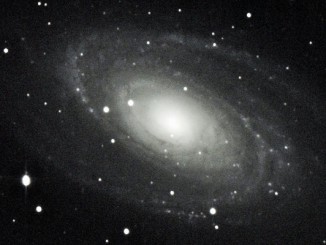
An international team of astronomers has used a highly sensitive instrument on one of the world’s largest telescopes to witness a dominant galaxy, Messier 81 in Ursa Major, ingesting the stars of its near neighbours. The gravitational pull of M81 was shown to distort the shapes of adjacent galaxies, pulling their stars into long tails in a process called tidal stripping.
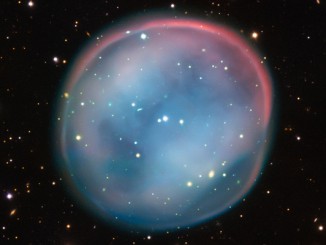
This extraordinary bubble, glowing like the ghost of a star in the haunting darkness of space, may appear supernatural and mysterious, but it is a familiar astronomical object: a planetary nebula, the remnants of a dying star. This is the best view of the little-known object ESO 378-1 yet obtained and was captured by ESO’s Very Large Telescope in northern Chile.

A team of scientists in Australia and the Netherlands has discovered powerful jets blasting out of a star system known as PSR J1023+0038 that consists of a super-dense neutron star in a close orbit with another, more normal star. It was previously thought that the only objects in the universe capable of forming such powerful jets were black holes.

High above the plane of our solar system, near the asteroid-rich abyss between the orbits of Mars and Jupiter, scientists have found a unique family of space rocks. These interplanetary oddballs are the Euphrosyne (pronounced ew-FROZ-i-nee) asteroids, and by any measure they have been distant, dark and mysterious — until now.

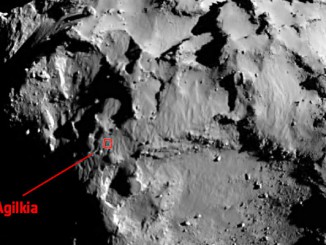
Recently released images compiled into a movie show the descent of the European Space Agency’s Philae lander to its first touchdown site, Agilkia, on Comet 67P/Churyumov–Gerasimenko on 12 November 2014. The image sequence starts just over two miles from the comet, and the final image is from just 9 metres above the landing site.
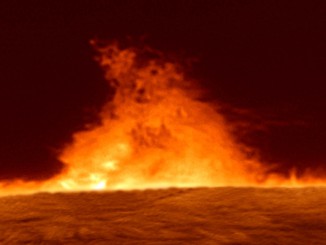
Nomination number five from the prestigious Insight Astronomy Photographer of the Year competition, an annual celebration of the most beautiful and spectacular visions of the cosmos by astrophotographers worldwide. Now in its seventh year, the 2015 competition received 2700 spectacular entries from over 60 countries and the winners will be announced 17 September.
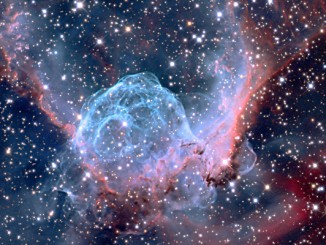
Our fourth nomination from the prestigious Insight Astronomy Photographer of the Year competition, an annual celebration of the most beautiful and spectacular visions of the cosmos by astrophotographers worldwide. Now in its seventh year, the 2015 competition received 2700 spectacular entries from over 60 countries and the winners will be announced 17 September.
© 2026 Nebula Press Ltd