Picture This

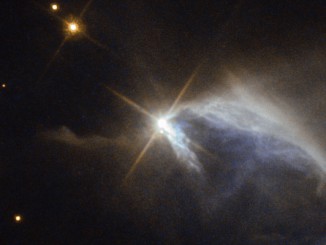
Hubble sees a diamond in the dust

Surrounded by an envelope of dust, the subject of this NASA/ESA Hubble Space Telescope image is a young pre-main-sequence star known as HBC 1. The star is in an immature and adolescent phase of life, hence its classification — most of a Sun-like star’s life is spent in a stage comparable to human adulthood dubbed the main sequence.

Picture This

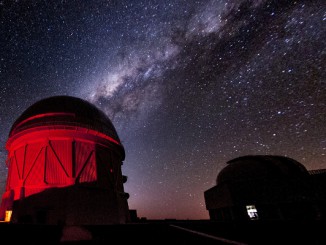
Visualising the 9 March total solar eclipse

The total solar eclipse of Wednesday, 9 March 2016 is of relatively long duration — 4m 9s at greatest eclipse — which occurs at 1:57 UT. Totality is visible from Sumatra, Borneo, Sulawesi and the North Pacific Ocean, while the partial phases can be seen from East Asia, Australia and the Pacific Ocean. See the event unfold in these new NASA timelapse visualisations.

News

Astronomers find a rare supernova ‘impostor’ in a nearby galaxy

In May 2010, a South African amateur astronomer pointed his telescope toward nearby galaxy NGC 300 and discovered what appeared to be a supernova — a massive star ending its life in a blaze of glory. However, SN 2010da is what we call a ‘supernova impostor’ — something initially thought to be a supernova, but later releaved as a massive star showing an enormous flare of activity.

Picture This

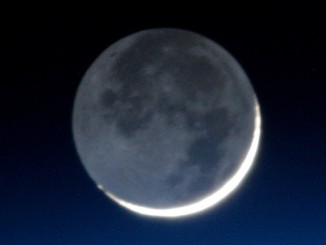
Tim Peake’s ISS view of the waxing Moon

In this image we see the young lunar crescent as seen from the International Space Station by ESA astronaut Tim Peake on 9 February 2016. At the time of the photograph the Moon was just 1.2 days old. Features on the Earth-facing side of the Moon not directly illuminated by the Sun are glowing softly due to earthshine, light reflected onto the Moon from our planet.

News

Putting Pluto’s geology on the map

To help mission scientists understand the diversity of Pluto’s terrain and to piece together how the dwarf planet’s surface has formed and evolved over time, NASA’s New Horizons mission scientists have started constructing geological maps. The base map for this interpretation is a mosaic of 12 images obtained by the spacecraft’s Long Range Reconnaissance Imager (LORRI).

Picture This

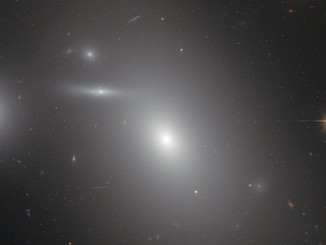
The sleeping giant in elliptical galaxy NGC 4889

The placid appearance of NGC 4889 can fool the unsuspecting observer. But the elliptical galaxy, pictured here in front of hundreds of background galaxies, and deeply embedded within the Coma galaxy cluster in this new image from the NASA/ESA Hubble Space Telescope, harbours a dark secret. At its heart lurks one of the most massive black holes ever discovered.