Observing

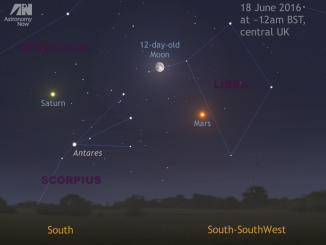
See the Moon’s midnight rendezvous with Mars and Saturn

We may be losing Jupiter in the west at dusk, but two other planets are well placed in the late evening. Skywatchers in the UK and Western Europe should look low in the southern sky around 12am local time on 17, 18 and 19 June to see the waxing gibbous Moon in the vicinity of planets Mars and Saturn, plus first-magnitude star Antares in the constellation of Scorpius.

Observing

See the Moon and Jupiter get close on 11 June

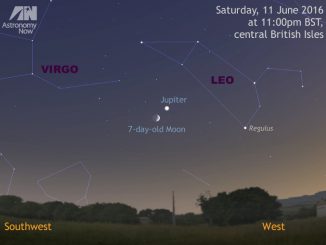
As dusk fades to dark on Saturday, 11 June, observers in the British Isles should look low in the western sky to see the 7-day-old waxing crescent Moon and Jupiter less than 3 degrees apart, within the same binocular field of view. Get your observations in now as the solar system’s largest planet is poised to leave the celestial stage during the summer.

News

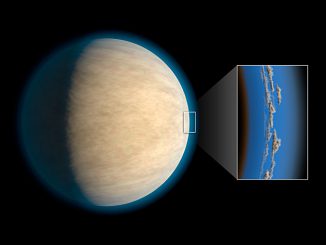
Cloudy days on exoplanets may hide atmospheric water

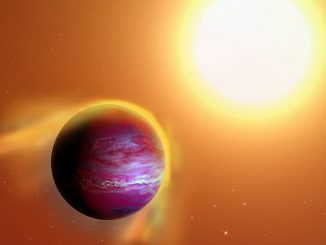
Water is a hot topic in the study of exoplanets, including “hot Jupiters” close to their parent stars that can reach a scorching 1,100 °C, meaning any water they host would take the form of vapour. Hot Jupiters have been found with water in their atmospheres, but others appear to have none. NASA scientists wanted to find out what the atmospheres of these giant worlds have in common.

Uncategorized

LISA Pathfinder success paves way for space-based gravitational wave detection

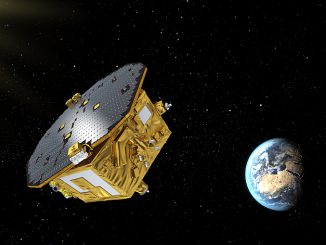
LISA Pathfinder, a mission led by the European Space Agency with contributions from NASA, has successfully tested key technology needed to build a space-based observatory for detecting gravitational waves. These tiny ripples in the fabric of space, predicted by Albert Einstein a century ago, were first seen last year by the ground-based Laser Interferometer Gravitational-Wave Observatory (LIGO).