7 December 2025
Astronomy Now
  • Home
  • The Magazine
    • About
    • Current Issue
    • Subscribe
    • Renew Subscription
      • September last issue
      • August last issue
      • July last issue
  • AstroFest 2026
  • News
  • Observing
    • UK Sky Chart
    • Almanac
    • Scope Calc
    • DSLR Calc
  • Reviews
    • Equipment
    • Book Reviews
  • Spaceflight Now
  • Shop
  • Contact Us
    • Subscriptions
    • Your Views
    • Ask Astronomy Now
    • Editorial
    • Advertising
    • AstroListings
Latest News
  • [ 29 October 2025 ] How to see Comet Lemmon News
  • [ 25 October 2025 ] Hubble revisits a cosmic yardstick News
  • [ 21 October 2025 ] Europe’s planet hunting spacecraft complete and ready for final testing News
  • [ 24 September 2025 ] Nova outburst in Centaurus News
  • [ 12 September 2025 ] Astronomy Now relaunches digital platform News
  • Twitter
  • Facebook

Rosetta flight director says Philae ready for release

11 November 2014 Astronomy Now

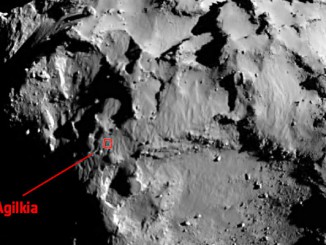
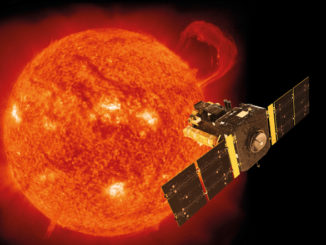
ESA flight director Andrea Accomazzo, says the Philae lander is ready to separate from the Rosetta mothership and touchdown on comet 67P/Churyumov–Gerasimenko.

  • comet 67P/Churyumov–Gerasimenko
  • ESOC
  • European Space Agency
  • Philae
  • Rosetta

Related Articles

News

Europe’s Philae comet lander phones home

14 June 2015 Astronomy Now

The European Space Agency reports it has received signals from the Philae lander on the surface of comet 67P/Churyumov–Gerasimenko.

Picture This

The icy blue wings of a bipolar planetary nebula

8 February 2016 Astronomy Now

Planetary nebulae such as Hen 2-437 form when an ageing low-mass star — such as the Sun — reaches the final stages of life. The star swells to become a red giant, before casting off its gaseous outer layers into space. Hen 2-437 is a bipolar nebula — the material ejected by the dying star has streamed out into space to create the two icy blue lobes pictured here.

Picture This

Hubble resolves globular cluster in the Large Magellanic Cloud

20 June 2016 Astronomy Now

This NASA/ESA Hubble Space Telescope image shows the globular cluster NGC 1854, a gathering of white and blue stars in the southern constellation of Dorado. NGC 1854 is located about 135,000 light-years away, in the Large Magellanic Cloud (LMC), one of our closest cosmic neighbours and a satellite galaxy of the Milky Way.

Astronomy Now NewsAlert

Get the latest astronomical news and stargazing tips delivered to your inbox.

News Headlines

  • How to see Comet Lemmon
    29 October 2025
  • Hubble revisits a cosmic yardstick
    25 October 2025
  • Europe’s planet hunting spacecraft complete and ready for final testing
    21 October 2025
  • Nova outburst in Centaurus
    24 September 2025
  • Astronomy Now relaunches digital platform
    12 September 2025
  • Home
  • The Magazine
    • About
    • Current Issue
    • Subscribe
    • Renew Subscription
      • September last issue
      • August last issue
      • July last issue
  • AstroFest 2026
  • News
  • Observing
    • UK Sky Chart
    • Almanac
    • Scope Calc
    • DSLR Calc
  • Reviews
    • Equipment
    • Book Reviews
  • Spaceflight Now
  • Shop
  • Contact Us
    • Subscriptions
    • Your Views
    • Ask Astronomy Now
    • Editorial
    • Advertising
    • AstroListings

© 2019 Pole Star Publications Limited

Astronomy Now