
The European Space Agency (ESA)’s Hera spacecraft has returned its first close-up view of the Didymos asteroid system, setting the stage for a major reveal on 25 November, when detailed images of both asteroids are set to be released. The observations mark the beginning of an ‘asteroid autopsy’ to examine what NASA’s Double Asteroid Redirection Test (DART) impact really did to the asteroid moon Dimorphos in 2022.
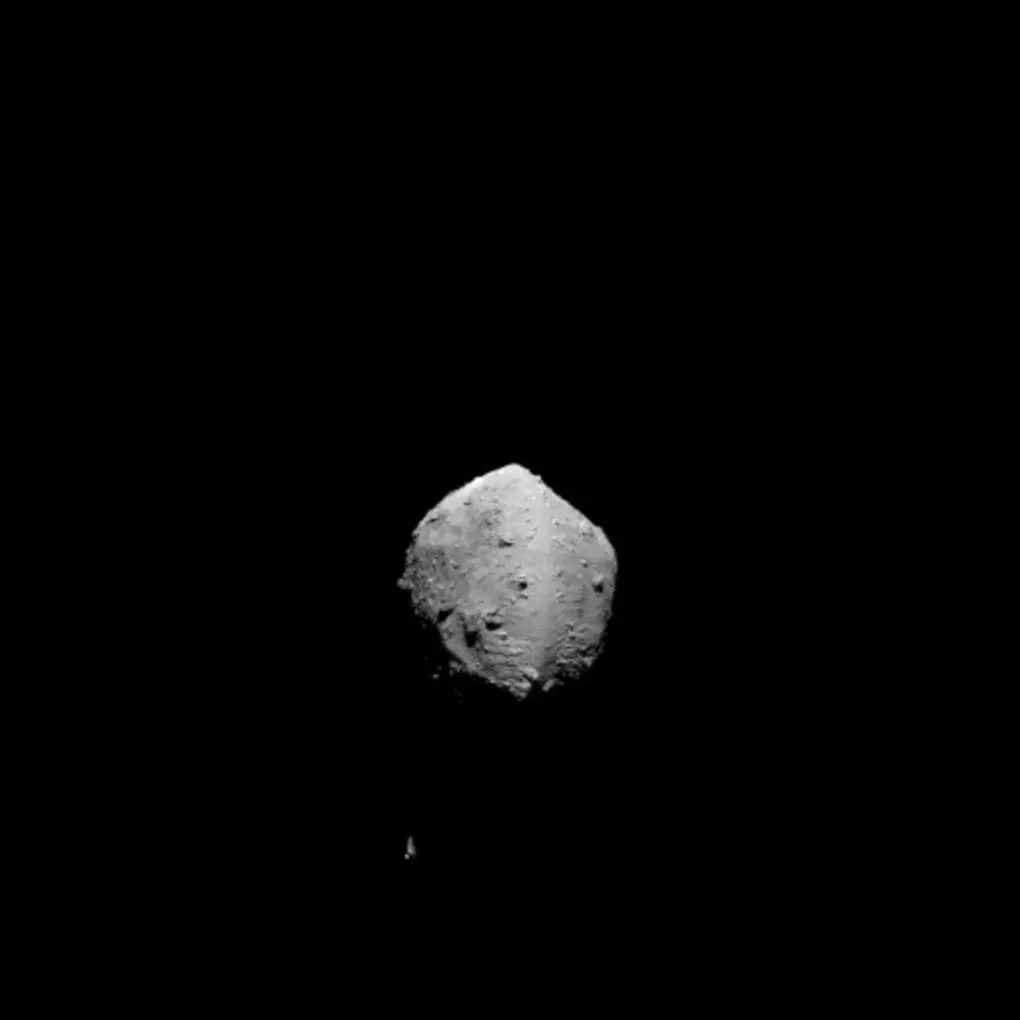
The newly released image, taken by Hera’s monochromatic Asteroid Framing Camera from 60 km away, shows the 780 metre-wide parent asteroid Didymos clearly, while much of the 151 metre-wide Dimorphos is concealed in shadow. The image does, however, reveal a previously unseen hemisphere of Didymos, with boulders, craters and what may be grooves or ridges across its surface.
“The first thing we said was wow!” said Hera principal investigator Patrick Michel of CNRS and the Observatoire de la Côte d’Azur, in a press statement from ESA. “This is the other side of Didymos from the one that DART’s camera showed us shortly before impact, so this feels like looking at a whole new world.”
After a two year journey, the Hera spacecraft is preparing to inspect the aftermath of DART’s deliberate collision with Dimorphos.
We already know that the impact shortened Dimorphos’s orbit around Didymos by about 33 minutes – a larger change than anticipated, and the first time humanity had measurably altered the orbit of another Solar System body.
This was a key result for the grand-scale planetary defence experiment, proving that we can indeed change the orbit of a small asteroid. However, significant data is still needed to understand the bigger picture.
The wait is almost over, thanks to Hera’s imminent close-up investigation.
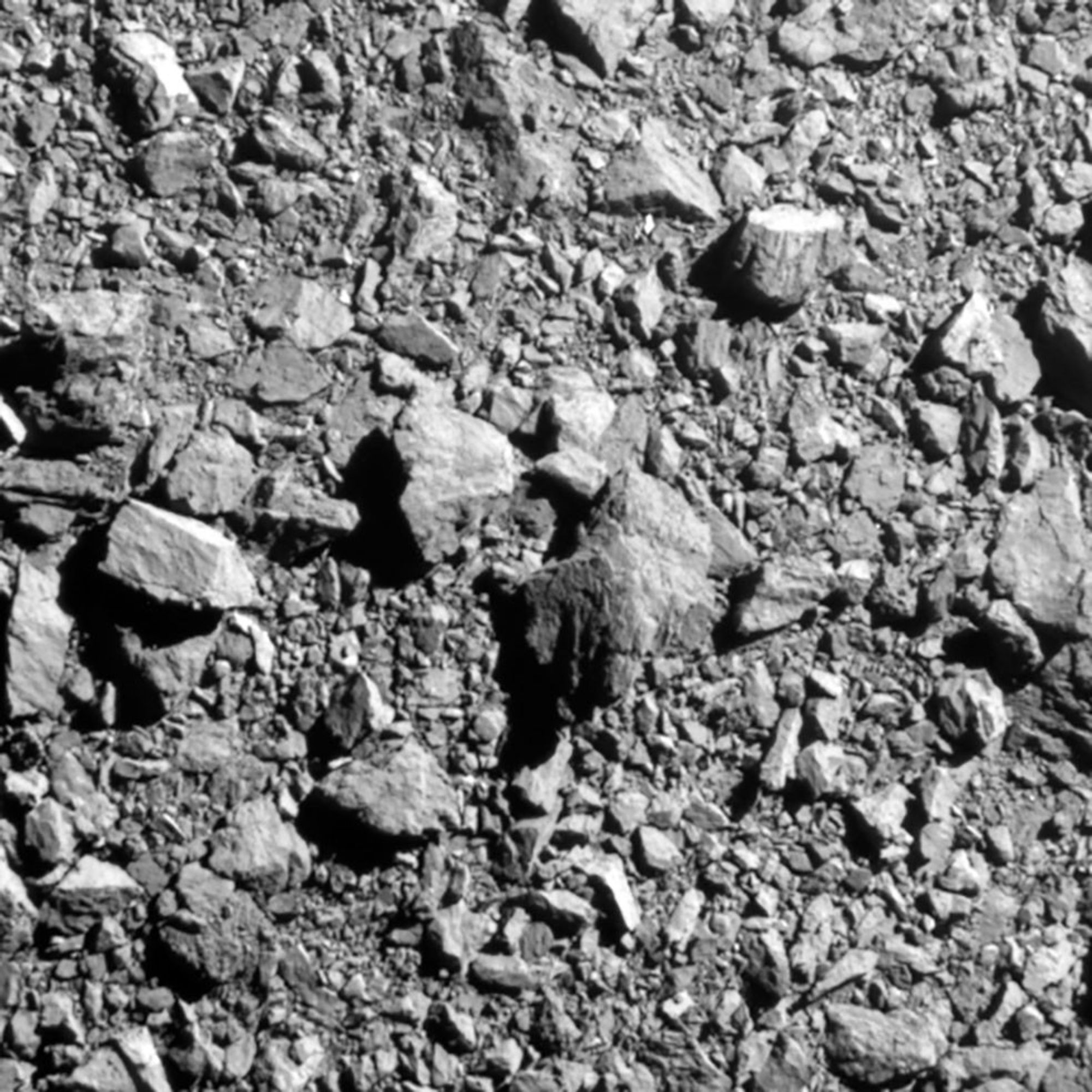
One open question is whether DART merely excavated a crater or reshaped Dimorphos more profoundly. The asteroid is believed to be a weakly bound rubble pile, meaning an impact could have rearranged its constituent rocks rather than simply blasting a hole in its surface.
The collision also ejected material into space, potentially giving the asteroid an additional recoil. Some researchers have raised the possibility that the asteroid is now tumbling rather than rotating synchronously with Didymos.
One of Hera’s most important measurements will be the mass of Dimorphos.
“This could not be determined by the impact. With this we will know how efficient the impact was,” Michael Küppers, ESA’s Hera Project Scientist, told Astronomy Now in an interview last month. “The secondary effect may even have been stronger than the direct impact effect. But to really know this, we need to know the mass.”
If Dimorphos was pushed close to the point at which it could break apart, the implications for planetary defence would be significant. A deflection mission needs to move an asteroid onto a safer course; it must not accidentally create a swarm of hazardous fragments.
“Something a bit heavier or faster than DART may have destroyed the asteroid, which is not a desirable outcome for planetary defence,” Küppers tells Astronomy Now.
Whether DART reshaped Dimorphos – and by how much – should become clearer on 25 November, when ESA releases detailed images of both asteroids.
But even then, the work is far from complete. After its initial survey, Hera will release two shoebox-sized CubeSats, Milani and Juventas. Milani will study Dimorphos’s surface, composition and dust environment, while Juventas will use radar to probe beneath the asteroid’s surface and search for signs of large internal blocks, voids or finer debris.
Together, the spacecraft will measure Dimorphos’s shape, volume, mass and internal structure. That combination should reveal how loosely packed the asteroid is – a crucial clue to how it responded to DART’s high-speed impact.
In turn, those findings will help shape how humanity approaches planetary defence, should an asteroid ever pose a genuine threat to Earth.
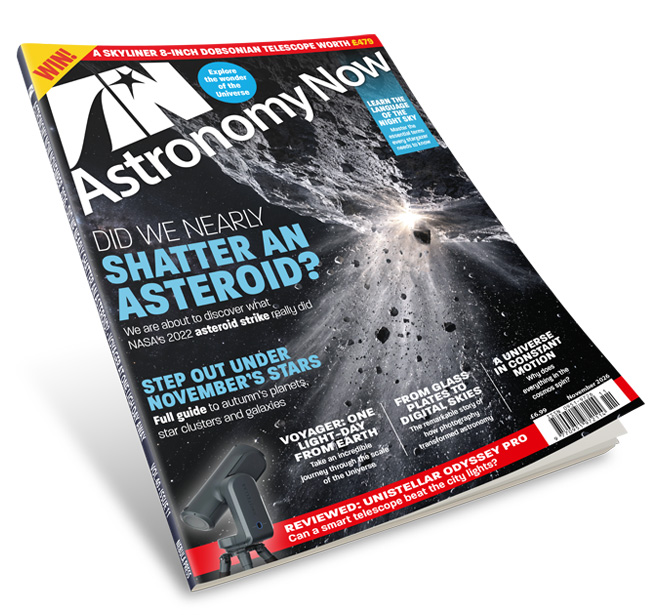
Dive deeper into the ‘Asteroid Autopsy’
The November 2026 issue of Astronomy Now takes a deep dive into planetary defence, where Editor Stuart Clark investigates the evidence that Dimorphos may have been globally deformed rather than merely cratered, and explores what Hera’s findings could mean for future efforts to defend Earth from a hazardous asteroid. Order online or take out a digital subscription for instant access.
And be sure to come back on 25 November as the new images are released!