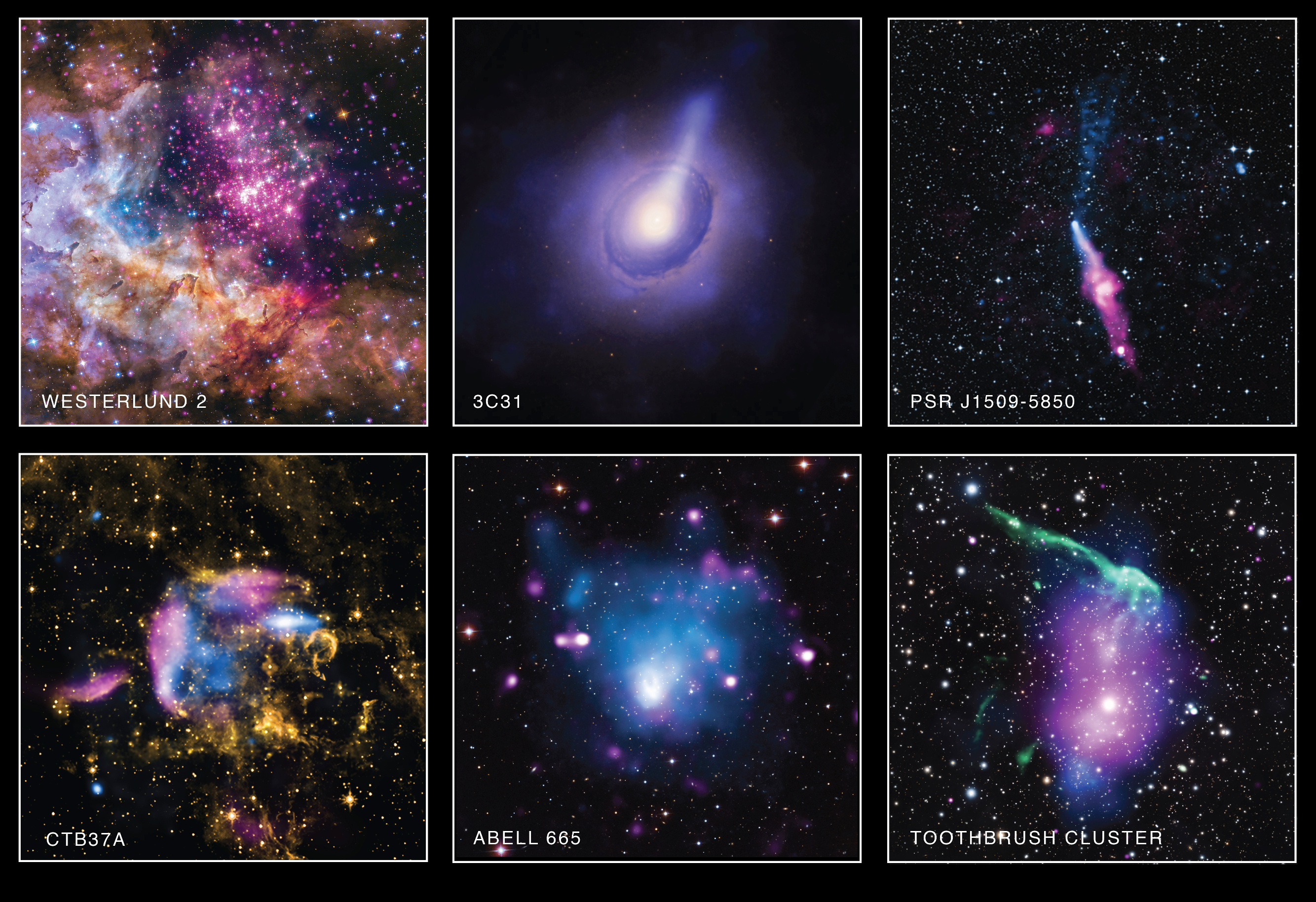
Each of these six new images from NASA’s Chandra X-ray Observatory also includes data from telescopes covering other parts of the electromagnetic spectrum, such as visible and infrared light. This collection of images represents just a small fraction of the treasures that reside in Chandra’s unique X-ray archive. For descriptions of all six images, see below. Image credits: NASA/CXC et al.Each year, NASA’s Chandra X-ray Observatory helps celebrate American Archive Month by releasing a collection of images using X-ray data in its archive.
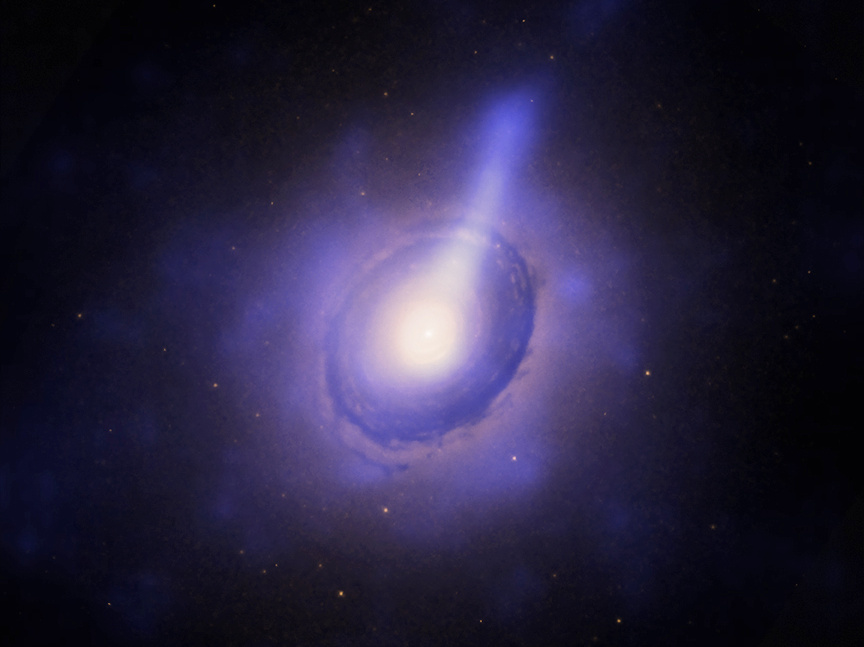
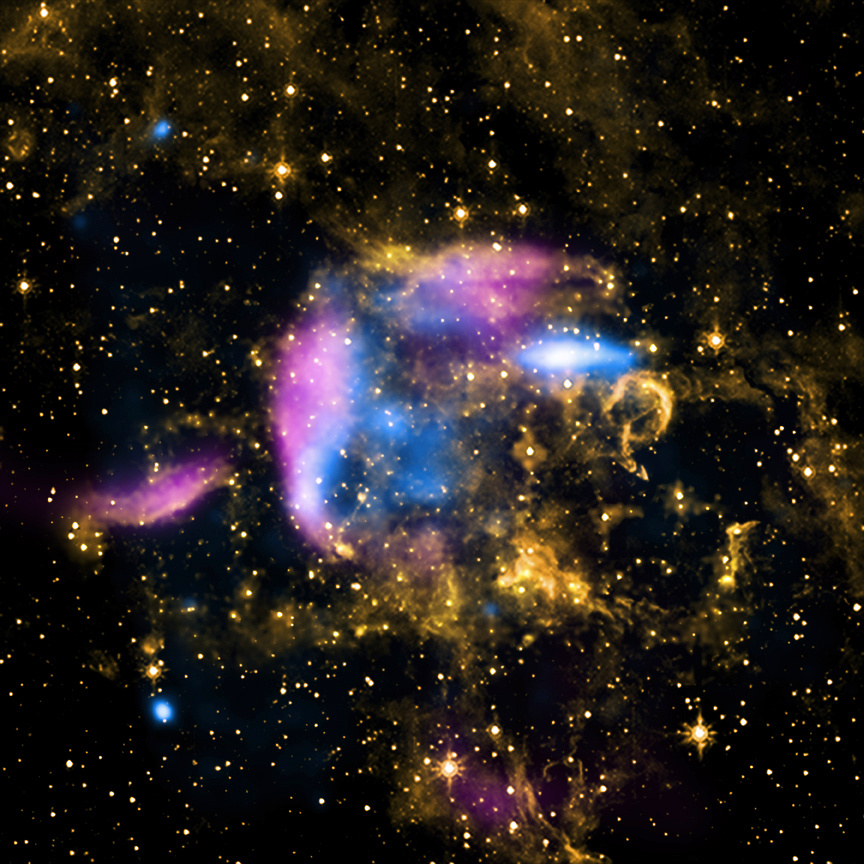
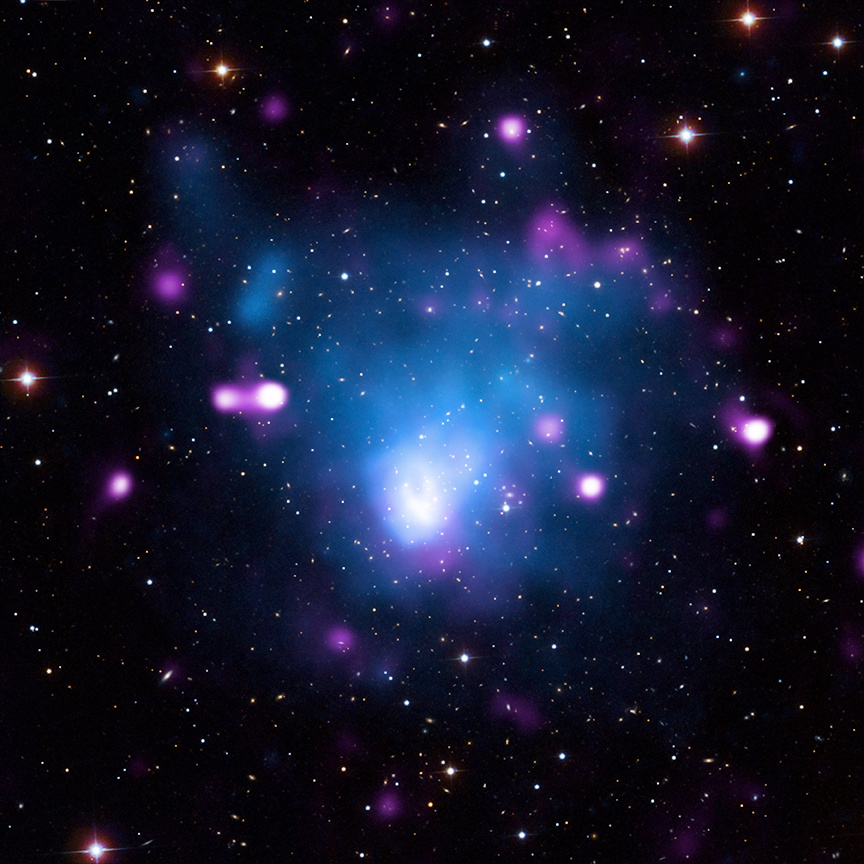
The Chandra Data Archive is a sophisticated digital system that ultimately contains all of the data obtained by the telescope since its launch into space in 1999. Chandra’s archive is a resource that makes these data available to the scientific community and the general public for years after they were originally obtained. Westerlund 2 is a cluster of young stars — about one to two million years old — located about 20,000 light-years from Earth in the southern constellation of Carina. Data in visible light from the NASA/ESA Hubble Space Telescope (green and blue) reveal thick clouds where the stars are forming. High-energy radiation in the form of X-rays, however, can penetrate this cosmic haze and are detected by Chandra (purple). Image credit: X-ray: NASA/CXC/SAO/Sejong Univ./Hur et al; Optical: NASA/STScI.X-rays from the radio galaxy 3C31 (blue), located 240 million light-years from Earth in the constellation of Pisces, allow astronomers to probe the density, temperature, and pressure of this galaxy, long known to be a powerful emitter of radio waves. The Chandra data also reveal a jet blasting away from one side of the central galaxy, which also is known as NGC 383. Here, the Chandra X-ray image has been combined with Hubble’s visible light data (yellow). Image credit: X-ray: NASA/CXC/Univ. of Bristol/M.Hardcastle et al; Optical: NASA/STScI.Pulsars were first discovered in 1967 and today astronomers know of over a thousand such objects. The pulsar PSR J1509-5850, appearing as the bright white spot in the centre of this picture, has generated a long tail of X-ray emission trailing behind it, as seen in the lower part of the image. This pulsar has also generated an outflow of particles in approximately the opposite direction. PSR J1509-5850 lies about 12,400 light-years from Earth in the constellation of Circinus. In this image, X-rays detected by Chandra (blue) and radio emission (pink) have been overlaid on a visible light image from the Digitised Sky Survey of the field of view. Image credit: X-ray: NASA/CXC/George Washington Univ./N.Klingler et al; Optical: DSS; Radio: CSIRO/ATNF/ATCA.Astronomers estimate that a supernova explosion should occur about every 50 years on average in the Milky Way galaxy. The object known as CTB37A is a supernova remnant located in our Galaxy about 26,000 light-years from Earth in the constellation of Scorpius. This image shows that the debris field glowing in X-rays (blue) and radio waves (pink) may be expanding into a cooler cloud of gas and dust seen in infrared light (orange). Image credit: X-ray: NASA/CXC/Morehead State Univ/T.Pannuti et al; Radio: Molonglo Obs. Synthesis Tel.; Infrared: NASA/JPL-Caltech.Merging galaxy clusters can generate enormous shock waves, similar to cold fronts in weather on Earth. This system, known as Abell 665 in the constellation of Ursa Major, has an extremely powerful shockwave, second only to the famous Bullet Cluster. Here, X-rays from Chandra (blue) show hot gas in the cluster, which lies about 2.2 billion light-years from Earth. The bow wave shape of the shock is shown by the large white region near the centre of the image. The Chandra image has been added to radio emission (purple) and visible light data from the Sloan Digital Sky Survey showing galaxies and stars (white). Image credit: X-ray: NASA/CXC/Univ. of Alabama/S.Dasadia et al; Radio: NSF/NRAO/VLA; Optical: SDSS.The phenomenon of pareidolia is when people see familiar shapes in images. This galaxy cluster, which is known as RX J0603.3+4214, has invoked the nickname of the “Toothbrush Cluster” because of its resemblance to the dental tool. In fact, the stem of the brush is due to radio waves (green) while the diffuse emission where the toothpaste would go is produced by X-rays observed by Chandra (purple). Visible light data from the Subaru telescope show galaxies and stars (white) and a map from gravitational lensing (blue) shows the concentration of the mass, which is mostly (about 80 precent) dark matter. RX J0603.3+4214 lies about 2.7 billion light-years away in the constellation of Auriga. Image credit: X-ray: NASA/CXC/SAO/R. van Weeren et al; Radio: NCRA/TIFR/GMRT; Optical: NAOJ/Subaru.
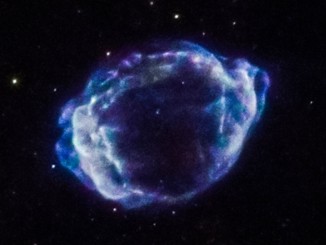
Astronomers have used data from NASA’s Chandra X-ray Observatory and the VLA to determine the likely trigger for the most recent supernova in the Milky Way. They applied a new technique that could have implications for understanding other Type Ia supernovae, a class of stellar explosions that scientists use to determine the expansion rate of the universe.
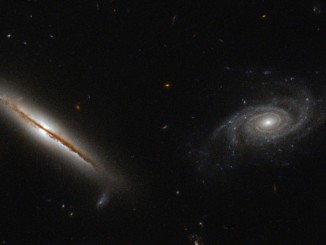
The edge-on spiral galaxy captured in this NASA/ESA Hubble Space Telescope image lies about one billion light-years away in the constellation of Eridanus. In 2003, the galaxy was discovered to possess giant jets of superheated gas emitting in the radio part of the spectrum. These jets have long been associated with the cores of giant elliptical galaxies, but are rare in spirals.
Supermassive holes are generally stationary objects, sitting at the centers of most galaxies. However, using data from NASA’s Chandra X-ray Observatory and other telescopes, astronomers recently hunted down what could be a supermassive black hole that may be on the move.