3 July 2026
Astronomy Now
  • Home
  • The Magazine
    • About
    • Current Issue
    • Subscribe
    • Renew Subscription
  • AstroFest 2026
  • News
  • Observing
    • UK Sky Chart
    • Almanac
    • Scope Calc
    • DSLR Calc
  • Reviews
    • Equipment
    • Book Reviews
  • Spaceflight Now
  • Shop
  • Contact Us
    • Subscriptions
    • Your Views
    • Ask Astronomy Now
    • Editorial
    • Advertising
    • AstroListings
Latest News
  • [ 10 June 2026 ] Caught in the act: the wind that could kill a galaxy News
  • [ 4 June 2026 ] Europe’s Mars rover may land in the remains of a vast ancient water system News
  • [ 14 April 2026 ] Moon dust preserves record of life’s building blocks News
  • [ 11 April 2026 ] Dark matter may come in multiple forms, new model suggests News
  • [ 2 April 2026 ] Witness to history: Artemis II, lunar exploration and hope News
  • Facebook
  • Twitter
  • LinkedIn

Video: Pluto scientist’s biggest surprise so far

13 July 2015 Astronomy Now

Alan Stern, principal investigator for the New Horizon mission, reveals his biggest surprise so far as the probe closes in on Pluto. (Recorded 12 July 2015.)
  • Alan Stern
  • flyby
  • New Horizons
  • Pluto

Related Articles

News

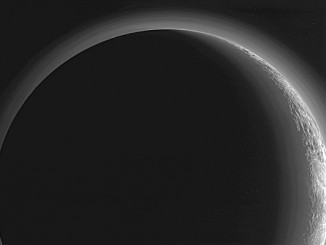
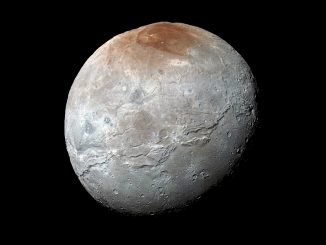
Pluto and Charon as never seen before

15 July 2015 Stephen Clark

A spectacular sampling of imagery from NASA’s New Horizons spacecraft reveals mountains and water ice bedrock on Pluto, an active crust on its largest moon Charon and the first resolved views of the icy world’s tiny mini-moons.

News

Evidence found for ‘giant comet’ theory of Pluto’s origin

26 May 2018 William Harwood

Data collected by NASA’s New Horizons probe and ESA’s Rosetta mission suggest Pluto might have formed from the accretion of a billion or so smaller bodies similar to Comet 67P/Churyumov-Gerasimenko and other Kuiper Belt objects.

Picture This

View Pluto’s bladed terrain in 3-D

2 April 2016 Astronomy Now

One of the strangest landforms spotted by NASA’s New Horizons spacecraft when it flew past Pluto was the “bladed” terrain formally named Tartarus Dorsa. The blades reach hundreds of feet high and are typically spaced a few miles apart. No geology degree is necessary to see why the terrain is so interesting — just grab your red and green 3-D spectacles.

Latest Issue

Astronomy Now Newsletter

Get the wonders of the Universe delivered to your inbox.
* indicates required
Which elements of Astronomy interest you?

News Headlines

  • Caught in the act: the wind that could kill a galaxy
    10 June 2026
  • Europe’s Mars rover may land in the remains of a vast ancient water system
    4 June 2026
  • Moon dust preserves record of life’s building blocks
    14 April 2026
  • Dark matter may come in multiple forms, new model suggests
    11 April 2026
  • Witness to history: Artemis II, lunar exploration and hope
    2 April 2026

© 2026 Nebula Press Ltd

Astronomy Now