
9 June 2026
Astronomy Now
  • Home
  • The Magazine
    • About
    • Current Issue
    • Subscribe
    • Renew Subscription
  • AstroFest 2026
  • News
  • Observing
    • UK Sky Chart
    • Almanac
    • Scope Calc
    • DSLR Calc
  • Reviews
    • Equipment
    • Book Reviews
  • Spaceflight Now
  • Shop
  • Contact Us
    • Subscriptions
    • Your Views
    • Ask Astronomy Now
    • Editorial
    • Advertising
    • AstroListings
Latest News
  • [ 4 June 2026 ] Europe’s Mars rover may land in the remains of a vast ancient water system News
  • [ 14 April 2026 ] Moon dust preserves record of life’s building blocks News
  • [ 11 April 2026 ] Dark matter may come in multiple forms, new model suggests News
  • [ 2 April 2026 ] Witness to history: Artemis II, lunar exploration and hope News
  • [ 25 March 2026 ] Artificial Intelligence uncovers more than 100 new worlds in NASA data News
  • Facebook
  • Twitter
  • LinkedIn

Juno Post-Arrival News Conference

5 July 2016 Astronomy Now

Juno programme officials hold a news conference at NASA’s Jet Propulsion Laboratory following the successful orbital insertion of the space probe around the gas giant Jupiter.

  • JPL
  • Juno
  • Jupiter
  • NASA
  • NASA's Juno mission
  • NASA's Juno spacecraft

Related Articles

Observing

See the Moon’s close encounter with Jupiter on 21 March

21 March 2016 Ade Ashford

As darkness falls, observers in Western Europe and the British Isles fortunate to have clear skies can view a naked-eye conjunction between largest planet Jupiter and the Moon. For telescope owners, Jupiter’s Great Red Spot will be on show, while Galilean moons Io and Europa partake in a close orbital dance.
News

See Jupiter’s Galilean moons in motion from Juno’s camera

6 July 2016 Stephen Clark

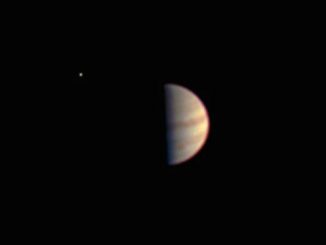
Juno’s visible camera had a bird’s-eye view of Jupiter’s four largest moons over the last few weeks, recording the satellites in their orbital ballet around the giant planet as the spacecraft approached from above Jupiter’s north pole.

News

Origin of minor planets’ rings revealed

19 September 2016 Astronomy Now

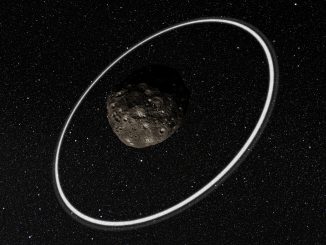
Chariklo is the largest confirmed centaur, a minor planet orbiting the Sun between Saturn and Uranus. In 2014, two rings were discovered around Chariklo. Soon after, scientists discovered that rings likely exist around another centaur, Chiron, but the origin of these rings remained a mystery — until now.

Latest Issue

Astronomy Now Newsletter

Join our mailing list.
* indicates required
Which elements of Astronomy interest you?

News Headlines

  • Europe’s Mars rover may land in the remains of a vast ancient water system
    4 June 2026
  • Moon dust preserves record of life’s building blocks
    14 April 2026
  • Dark matter may come in multiple forms, new model suggests
    11 April 2026
  • Witness to history: Artemis II, lunar exploration and hope
    2 April 2026
  • Artificial Intelligence uncovers more than 100 new worlds in NASA data
    25 March 2026

© 2026 Nebula Press Ltd

Astronomy Now