
17 March 2026
Astronomy Now
  • Home
  • The Magazine
    • About
    • Current Issue
    • Subscribe
    • Renew Subscription
  • AstroFest 2026
  • News
  • Observing
    • UK Sky Chart
    • Almanac
    • Scope Calc
    • DSLR Calc
  • Reviews
    • Equipment
    • Book Reviews
  • Spaceflight Now
  • Shop
  • Contact Us
    • Subscriptions
    • Your Views
    • Ask Astronomy Now
    • Editorial
    • Advertising
    • AstroListings
Latest News
  • [ 16 March 2026 ] Molten lava world points to new class of planet Focus on
  • [ 26 January 2026 ] Dr Allan Chapman (1946-2026) News
  • [ 16 January 2026 ] Potentially bright ‘sungrazing’ comet discovered News
  • [ 17 December 2025 ] Thank you from the editor News
  • [ 25 October 2025 ] Hubble revisits a cosmic yardstick News
  • Facebook
  • Twitter
  • LinkedIn

transit spectroscopy

News

Hubble tests techniques for finding biosignatures in exoplanet atmospheres

7 August 2020 Astronomy Now

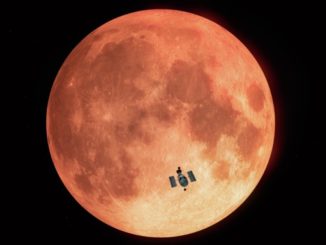
Hubble uses sunlight reflected from the moon during an eclipse to detect ozone in Earth’s atmosphere, testing methods needed to assess exoplanet atmospheres.

News

Royal Astronomical Society’s National Astronomy Meeting 2015 – report 3

8 July 2015 Astronomy Now

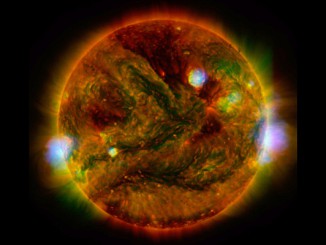
In his third report from the Royal Astronomical Society’s NAM2015, Kulvinder Singh Chadha examines the Sun in X-ray and ultraviolet wavelengths from three different spacecraft, dons a virtual reality planetarium headset, and investigates if the proposed James Webb Space Telescope (JWST) could discern Earth-sized worlds that are habitable.

Latest Issue

Astronomy Now Newsletter

Join our mailing list.
* indicates required
Which elements of Astronomy interest you?

News Headlines

  • Molten lava world points to new class of planet
    16 March 2026
  • Dr Allan Chapman (1946-2026)
    26 January 2026
  • Potentially bright ‘sungrazing’ comet discovered
    16 January 2026
  • Thank you from the editor
    17 December 2025
  • Hubble revisits a cosmic yardstick
    25 October 2025

© 2019 Pole Star Publications Limited

Astronomy Now