
12 April 2026
Astronomy Now
  • Home
  • The Magazine
    • About
    • Current Issue
    • Subscribe
    • Renew Subscription
  • AstroFest 2026
  • News
  • Observing
    • UK Sky Chart
    • Almanac
    • Scope Calc
    • DSLR Calc
  • Reviews
    • Equipment
    • Book Reviews
  • Spaceflight Now
  • Shop
  • Contact Us
    • Subscriptions
    • Your Views
    • Ask Astronomy Now
    • Editorial
    • Advertising
    • AstroListings
Latest News
  • [ 11 April 2026 ] Dark matter may come in multiple forms, new model suggests News
  • [ 2 April 2026 ] Witness to history: Artemis II, lunar exploration and hope News
  • [ 25 March 2026 ] Artificial Intelligence uncovers more than 100 new worlds in NASA data News
  • [ 24 March 2026 ] XRISM solves gamma-Cas’s 50-year X-ray mystery News
  • [ 16 March 2026 ] Molten lava world points to new class of planet Focus on
  • Facebook
  • Twitter
  • LinkedIn

Spectral and Photometric Imaging Receiver

News

New research shows quasars slowed pace of star formation

24 March 2016 Astronomy Now

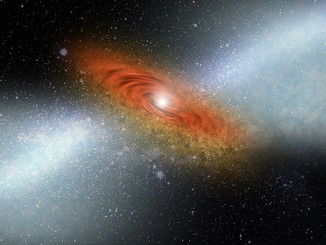
Galaxies reached their busiest star-making pace about 11 billion years ago, then slowed down. Scientists have puzzled for years over the question of what happened. Now researchers have found evidence supporting the argument that the answer was energy feedback from quasars within the galaxies where stars are born.

Latest Issue

Astronomy Now Newsletter

Join our mailing list.
* indicates required
Which elements of Astronomy interest you?

News Headlines

  • Dark matter may come in multiple forms, new model suggests
    11 April 2026
  • Witness to history: Artemis II, lunar exploration and hope
    2 April 2026
  • Artificial Intelligence uncovers more than 100 new worlds in NASA data
    25 March 2026
  • XRISM solves gamma-Cas’s 50-year X-ray mystery
    24 March 2026
  • Molten lava world points to new class of planet
    16 March 2026

© 2019 Pole Star Publications Limited

Astronomy Now