
25 August 2026
Astronomy Now
  • Home
  • The Magazine
    • About
    • Current Issue
    • Subscribe
    • Renew Subscription
  • AstroFest 2026
  • News
  • Observing
    • UK Sky Chart
    • Almanac
    • Scope Calc
    • DSLR Calc
  • Reviews
    • Equipment
    • Book Reviews
  • Spaceflight Now
  • Shop
  • Contact Us
    • Subscriptions
    • Your Views
    • Ask Astronomy Now
    • Editorial
    • Advertising
    • AstroListings
Latest News
  • [ 24 August 2026 ] JWST’s ‘impossible’ early galaxies may be even more massive than we thought News
  • [ 7 August 2026 ] How to observe the 12 August 2026 solar eclipse Eclipse
  • [ 5 August 2026 ] Falcon 9 lunar impact: More than a new crater News
  • [ 25 July 2026 ] Euclid opens a new window on the first billion years of cosmic history News
  • [ 10 June 2026 ] Caught in the act: the wind that could kill a galaxy News
  • Facebook
  • Twitter
  • LinkedIn

Hooman Davoudiasl

News

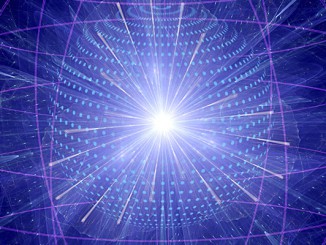
New cosmological theory of secondary inflation avoids excess of dark matter

16 January 2016 Astronomy Now

The Big Bang Theory with its early period of exponential growth known as inflation is the prevailing scientific model for our universe, in which the entirety of space and time ballooned out from a very hot, very dense point into a homogeneous and ever-expanding vastness. This theory accounts for many of the physical phenomena we observe, but what if that’s not all there was to it?

Latest Issue

Astronomy Now Newsletter

Get the wonders of the Universe delivered to your inbox.
* indicates required
Which elements of Astronomy interest you?

News Headlines

  • JWST’s ‘impossible’ early galaxies may be even more massive than we thought
    24 August 2026
  • How to observe the 12 August 2026 solar eclipse
    7 August 2026
  • Falcon 9 lunar impact: More than a new crater
    5 August 2026
  • Euclid opens a new window on the first billion years of cosmic history
    25 July 2026
  • Caught in the act: the wind that could kill a galaxy
    10 June 2026

© 2026 Nebula Press Ltd

Astronomy Now