
24 April 2026
Astronomy Now
  • Home
  • The Magazine
    • About
    • Current Issue
    • Subscribe
    • Renew Subscription
  • AstroFest 2026
  • News
  • Observing
    • UK Sky Chart
    • Almanac
    • Scope Calc
    • DSLR Calc
  • Reviews
    • Equipment
    • Book Reviews
  • Spaceflight Now
  • Shop
  • Contact Us
    • Subscriptions
    • Your Views
    • Ask Astronomy Now
    • Editorial
    • Advertising
    • AstroListings
Latest News
  • [ 14 April 2026 ] Moon dust preserves record of life’s building blocks News
  • [ 11 April 2026 ] Dark matter may come in multiple forms, new model suggests News
  • [ 2 April 2026 ] Witness to history: Artemis II, lunar exploration and hope News
  • [ 25 March 2026 ] Artificial Intelligence uncovers more than 100 new worlds in NASA data News
  • [ 24 March 2026 ] XRISM solves gamma-Cas’s 50-year X-ray mystery News
  • Facebook
  • Twitter
  • LinkedIn

ammoniated phyllosilicates

News

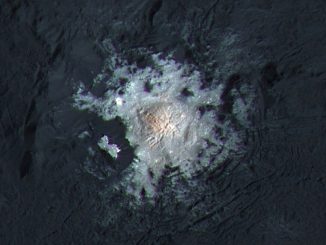
Recent hydrothermal activity may explain Ceres’ brightest area

30 June 2016 Astronomy Now

The brightest area on Ceres, located in the mysterious Occator Crater, has the highest concentration of carbonate minerals ever seen outside Earth, according to a new study from scientists on NASA’s Dawn mission. The results suggest that liquid water may have existed beneath the surface of Ceres in recent geological time.

Latest Issue

Astronomy Now Newsletter

Join our mailing list.
* indicates required
Which elements of Astronomy interest you?

News Headlines

  • Moon dust preserves record of life’s building blocks
    14 April 2026
  • Dark matter may come in multiple forms, new model suggests
    11 April 2026
  • Witness to history: Artemis II, lunar exploration and hope
    2 April 2026
  • Artificial Intelligence uncovers more than 100 new worlds in NASA data
    25 March 2026
  • XRISM solves gamma-Cas’s 50-year X-ray mystery
    24 March 2026

© 2026 Nebula Press Ltd

Astronomy Now