31 March 2026
Astronomy Now
  • Home
  • The Magazine
    • About
    • Current Issue
    • Subscribe
    • Renew Subscription
  • AstroFest 2026
  • News
  • Observing
    • UK Sky Chart
    • Almanac
    • Scope Calc
    • DSLR Calc
  • Reviews
    • Equipment
    • Book Reviews
  • Spaceflight Now
  • Shop
  • Contact Us
    • Subscriptions
    • Your Views
    • Ask Astronomy Now
    • Editorial
    • Advertising
    • AstroListings
Latest News
  • [ 25 March 2026 ] Artificial Intelligence uncovers more than 100 new worlds in NASA data News
  • [ 24 March 2026 ] XRISM solves gamma-Cas’s 50-year X-ray mystery News
  • [ 16 March 2026 ] Molten lava world points to new class of planet Focus on
  • [ 26 January 2026 ] Dr Allan Chapman (1946-2026) News
  • [ 16 January 2026 ] Potentially bright ‘sungrazing’ comet discovered News
  • Facebook
  • Twitter
  • LinkedIn

News

News

Smallest-ever star discovered by astronomers

12 July 2017 Astronomy Now

The smallest star yet measured has been discovered by a team of astronomers led by the University of Cambridge. With a size just a sliver larger than that of Saturn, the gravitational pull at its stellar surface is about 300 times stronger than what humans feel on Earth.

News

Eight planetary systems found hosting 20 super-Earth & Neptune-mass companions 

12 July 2017 Alex Green

A new treasure trove of planets, ranging from worlds with small masses and short orbital periods of less than 15 days to super-Earth-sized planets that can take up to a year to orbit their star, has been discovered by astronomers using the world’s most successful ground-based planet-finding instrument.
News

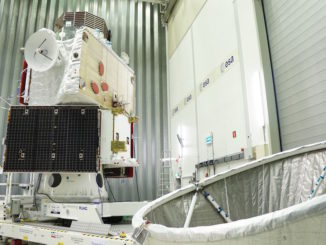
BepiColombo Mercury mission tested for journey into ‘pizza oven’

10 July 2017 Stephen Clark

Three spacecraft built in Europe and Japan have completed their final joint tests to ensure they are ready for departure to Mercury on an Ariane 5 rocket late next year on the nearly £1.5 billion BepiColombo mission to survey the Solar System’s innermost planet.

News

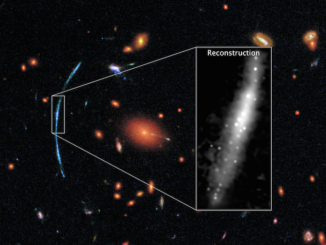
Hubble pushed beyond limits to spot clumps of new stars in distant galaxy

10 July 2017 Astronomy Now

When it comes to the distant Universe, even the keen vision of NASA’s Hubble Space Telescope can only go so far. Teasing out finer details requires clever thinking and a little help from a cosmic alignment with a gravitational lens.

News

JAXA, NASA approve replacement for failed Hitomi astronomy satellite

6 July 2017 Stephen Clark

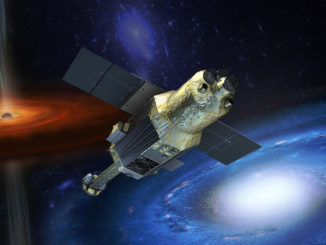
The Japanese space agency is moving ahead with a smaller-scale X-ray astronomy satellite to replace the failed Hitomi observatory, which spun out of control about a month-and-a-half after its launch last year.

News

NASA marks 20 years of continuous Mars exploration

4 July 2017 Stephen Clark

NASA’s Mars Pathfinder probe dropped to the surface of Mars for an airbag-cushioned landing 20 years ago Tuesday, bouncing 15 times across an ancient flood plain before deploying a mobile robot to usher in two decades of uninterrupted Martian exploration.

News

Surprise methanol detection points to evolving story of Enceladus’s plumes

4 July 2017 Astronomy Now

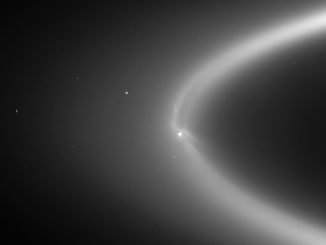
A serendipitous detection of the organic molecule methanol around an intriguing moon of Saturn suggests that material spewed from Enceladus undertakes a complex chemical journey once vented into space. This is the first time that a molecule from Enceladus has been detected with a ground-based telescope.
News

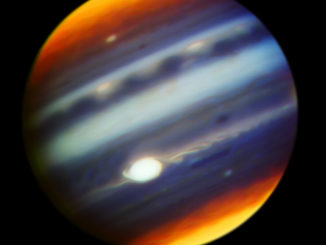
Earth-based views of Jupiter to enhance Juno flyby

30 June 2017 Astronomy Now

Telescopes in Hawaii have obtained new images of Jupiter and its Great Red Spot, which will assist the first-ever close-up study of the Great Red Spot, planned for July 10.

News

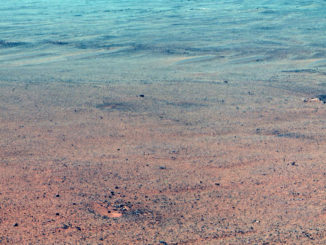
Mars rover Opportunity on walkabout near crater rim

28 June 2017 Astronomy Now

NASA’s senior Mars rover, Opportunity, is examining rocks at the edge of Endeavour Crater for signs that they may have been either transported by a flood or eroded in place by wind.

News

Astronomers detect orbital motion in pair of supermassive black holes

28 June 2017 Astronomy Now

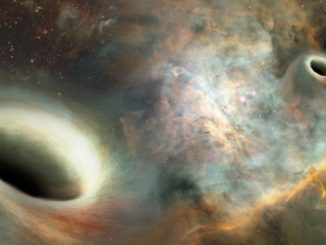
Using the supersharp radio “vision” of the National Science Foundation’s Very Long Baseline Array, astronomers have made the first detection of orbital motion in a pair of supermassive black holes in a galaxy some 750 million light-years from Earth.

Posts pagination

« 1 … 94 95 96 … 218 »

Latest Issue

Astronomy Now Newsletter

Join our mailing list.
* indicates required
Which elements of Astronomy interest you?

News Headlines

  • Artificial Intelligence uncovers more than 100 new worlds in NASA data
    25 March 2026
  • XRISM solves gamma-Cas’s 50-year X-ray mystery
    24 March 2026
  • Molten lava world points to new class of planet
    16 March 2026
  • Dr Allan Chapman (1946-2026)
    26 January 2026
  • Potentially bright ‘sungrazing’ comet discovered
    16 January 2026

© 2019 Pole Star Publications Limited

Astronomy Now