News
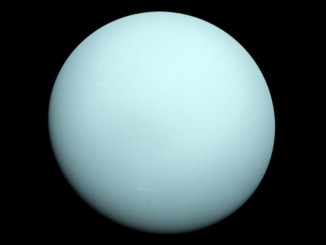
Thirtieth anniversary of Voyager 2’s encounter with Uranus
Humanity has visited Uranus only once, and that was exactly 30 years ago. NASA’s Voyager 2 spacecraft got its closest look at the mysterious, distant, gaseous planet on 24 January 1986. The probe sent back stunning images of the coldest planet known in our solar system and its moons during the flyby, which allowed for about 5½ hours of close study.
Join Brian May for a Stereoscopic Adventure in Space
Dr Brian May will bring a new dimension to the conference programme at European AstroFest this year when he takes the audience on a stereoscopic adventure into space. Using cutting-edge 3D projection technology, Brian will explain how stereo photography has been used to capture the wonders of the Universe, from Victorian-era images of the Moon to present day space probes exploring the far-flung regions of our Solar System.
Volunteer programmers help astronomers find mysterious black holes
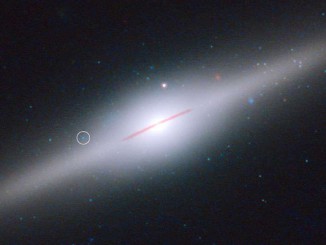
An international team of astronomers led by Ivan Zolotukhin from Lomonosov Moscow State University is close to understanding one of the most important mysteries of modern astronomy — so-called intermediate-mass black holes. The researchers acknowledge the invaluable assistance of volunteer Russian computer programmers in the search.
Ancient star provides insight into stellar origins in early universe
A team of researchers has observed the brightest, ultra metal-poor star ever discovered. (To astronomers, metals are elements heavier than hydrogen and helium.) The star is therefore a rare relic from the Milky Way’s formative years. As such, it offers astronomers a precious opportunity to explore the origin of the first stars that sprung to life within our galaxy.
Noodle-shaped plasma lenses may lurk in the Milky Way
According to a team of astronomers led by Dr. Keith Bannister of CSIRO Astronomy and Space Science Division in Australia, invisible noodle- or shell-shaped plasma structures could be floating around in the Milky Way. These structures, which focus and defocus radio waves from distant sources such as quasars, could radically change our ideas about the Galaxy’s interstellar gas.
Are aliens silent because they are all extinct?
Life on other planets would likely be brief and become extinct very quickly, say astrobiologists from The Australian National University (ANU). In research aiming to understand how life might develop, the scientists realised new life would commonly die out due to runaway heating or cooling on their fledgling planets.
NASA’s Van Allen probes revolutionise view of radiation belts
About 600 miles from Earth’s surface is the first of two doughnut-shaped electron swarms, known as the Van Allen Belts. Understanding the shape and size of the belts, which can shrink and swell in response to incoming radiation from the Sun, is crucial for protecting technology in space. A new study of data from NASA’s Van Allen Probes reveals that the story is a complex one.
A Milky Way twin swept by an ultrafast X-ray wind
ESA’s XMM-Newton X-ray space observatory has found a wind of high-speed gas streaming from the centre of a bright spiral galaxy like our own that may be reducing its ability to produce new stars. The Seyfert galaxy, known as IRAS17020+4544 and located 800 million light-years from Earth, has a supermassive black hole at its core with a mass of nearly six million Suns.