News

Scientists find evidence of ice age at Mars’ north pole

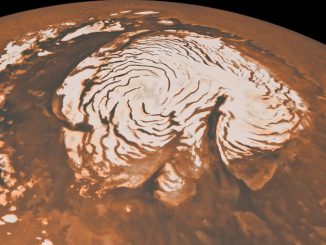
Using radar data collected by NASA’s Mars Reconnaissance Orbiter, researchers have found evidence of an ice age recorded in the polar deposits of Mars. Measurements show that about 87,000 cubic kilometres of ice have accumulated at the poles since the end of the last ice age about 370,000 years ago; the majority of the material accumulated at the Martian north pole.
News

Sun’s adolescent storms may have been key to life on Earth

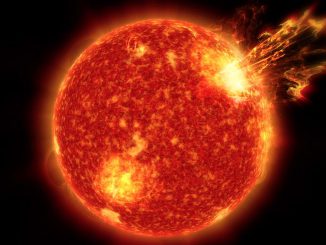
Some 4 billion years ago, the Sun shone with only about three-quarters the brightness we see today, but its surface roiled with giant eruptions spewing enormous amounts of radiation into space. These powerful solar explosions may have provided the crucial energy needed to create greenhouse gas in Earth’s atmosphere, warming the planet and incubating life.

News

Radioactive fuel boosts supernovae explosions

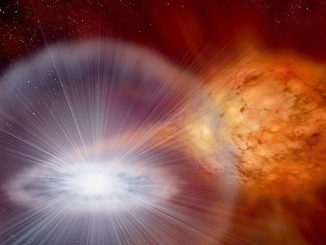
Some supernovae have a reserve tank of radioactive cobalt-57 fuel that cuts in and powers their explosions for three times longer than astronomers had previously thought. The discovery by Australian and US researchers gives important new clues about the causes of Type Ia supernovae, which astronomers use to measure vast distances across the universe.