News

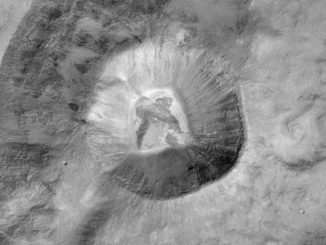
The Mars Camera, CaSSIS (Colour and Stereo Surface Imaging System), on ESA’s ExoMars Trace Gas Orbiter captured its first high-resolution images of the Red Planet last week. Developed by a team at the University of Bern in Switzerland, CaSSIS is providing spectacular views, including the Hebes Chasma region at a resolution of 2.8 metres per pixel.
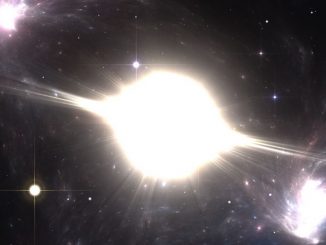
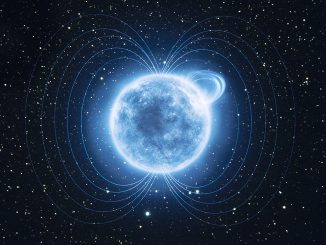
About 4.6 billion years ago, a cloud of gas and dust that eventually formed our solar system was disturbed. The ensuing gravitational collapse formed the proto-Sun with a surrounding disc where the planets were born. Now, forensic evidence from meteorites provides conclusive evidence that a low-mass supernova was the trigger.
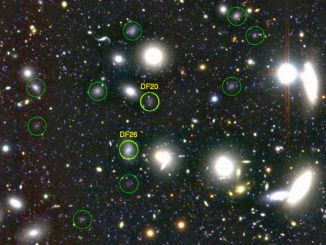
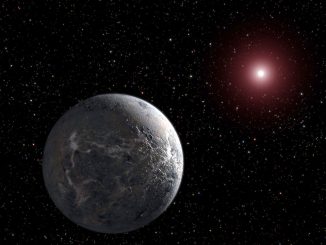
A group of researchers has observed the first ground-based transit observation of K2-3d — a potentially Earth-like extrasolar planet supposedly within the habitable zone around a bright M-dwarf host star 147 light-years away — using the multi-band imager MuSCAT on the Okayama Astrophysical Observatory’s 1.88-metre telescope.
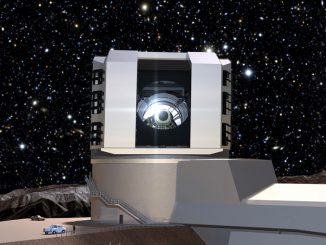

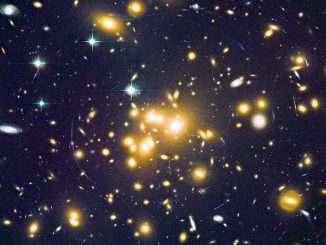
Researchers have found a large population of distant dwarf galaxies that could reveal important details about a productive period of star formation in the universe billions of years ago. It is believed that dwarf galaxies played a significant role during the so-called reionisation era in transforming the dark early universe into one that is bright, ionised and transparent.
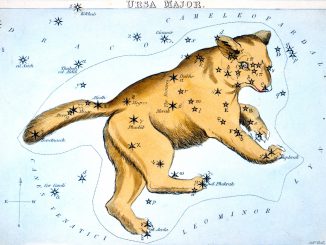
The creation of a specialised IAU Working Group, the Working Group on Star Names (WGSN), was approved by the IAU Executive Committee in May 2016 to formalise star names that have been used colloquially for centuries. WGSN has now established a new catalogue of IAU star names, with the first set of 227 approved names published on the IAU website.
© 2026 Nebula Press Ltd