
News

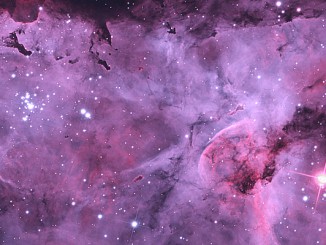
Our tenth nomination from the prestigious Insight Astronomy Photographer of the Year competition, an annual celebration of the most beautiful and spectacular visions of the cosmos by astrophotographers worldwide. The 2015 competition received 2700 spectacular entries from over 60 countries and the winners will be announced 17 September.
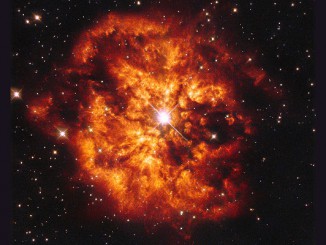
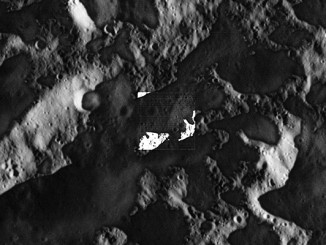
A pockmarked, icy landscape looms beneath NASA’s Cassini spacecraft in new images of Saturn’s moon Dione taken during the mission’s last close approach to the small, frozen world. Two of the new images show the surface of Dione at the best resolution ever. Cassini passed 295 miles (474 kilometres) above Dione’s surface at 7:33pm BST on 17 August 2015.
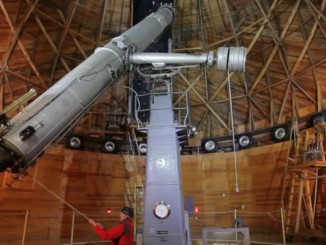
Lowell Observatory in Flagstaff, Arizona is famous as the place where dwarf planet Pluto was discovered by Clyde Tombaugh in 1930, but it has an illustrious 121-year-old record of astronomical research and discovery. After a 20-month-long restoration project, Lowell’s historic 24-inch Alvan Clark refractor is poised to reopen for public observing sessions.
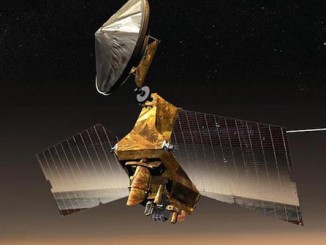
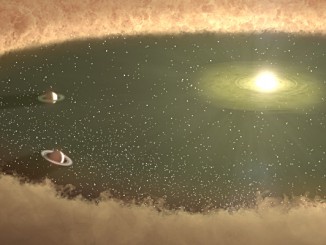
Researchers at Southwest Research Institute (SwRI) and Queen’s University in Canada have unravelled the mystery of how Jupiter and Saturn likely formed using computer simulations. The discovery, which changes our view of how all planets might have formed, also suggests that the gas giants in the solar system probably formed before the terrestrial planets.
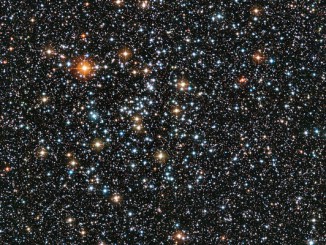
Most stars form within clusters and these clusters can be used by astronomers as laboratories to study how stars evolve and die. The cluster captured here by the Wide Field Imager (WFI) at ESO’s La Silla Observatory is known as IC 4651, and the stars born within it now display a wide variety of characteristics.
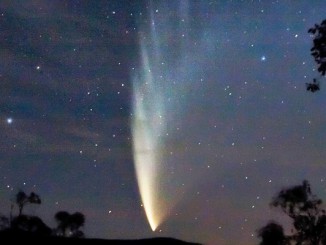
Comet impacts on Earth are synonymous with great extinctions, but now research presented at the Goldschmidt geochemistry conference in Prague shows that early comet collisions would have become a driving force to cause substantial synthesis of peptides — the first building blocks of life. This may have implications for the genesis of life on other worlds.
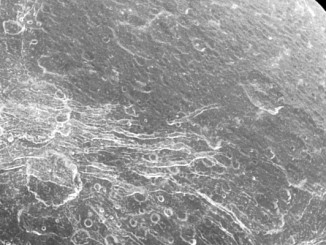
While not bursting with activity like its sister moon Enceladus, the surface of Saturn’s moon Dione is definitely not boring. Some parts of the surface are covered by linear features, called chasmata — bright icy cliffs among myriad fractures — which provide dramatic contrast to the round impact craters that typically cover moons.
© 2019 Pole Star Publications Limited