
News


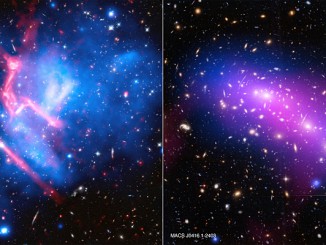
Galaxy clusters are enormous collections of hundreds or even thousands of galaxies and vast reservoirs of hot gas embedded in massive clouds of dark matter. To learn more about clusters, including how they grow via collisions, astronomers have used some of the world’s most powerful X-ray, optical and radio telescopes. The name for this galaxy cluster project is the “Frontier Fields”.
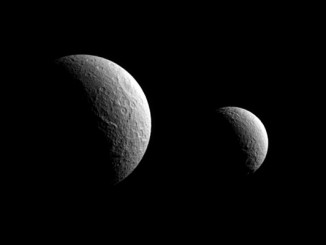
Similar in many ways, Saturn’s moons Tethys and Rhea (left and right, respectively) even share a discoverer: Giovanni Cassini, namesake of the NASA spacecraft that captured this view. Although somewhat different in size, Rhea (949 miles across) and Tethys (660 miles) are both composed largely of ices and are generally thought to be geologically inactive today.
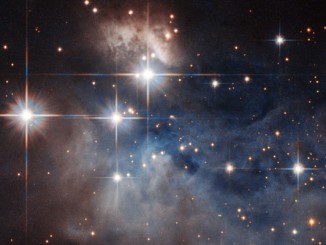
Showcased at the centre of this NASA/ESA Hubble Space Telescope image is an emission-line star known as IRAS 12196-6300 that lies some 2,300 light-years from Earth in the southern constellation of Crux. Under 10 million years old and not yet burning hydrogen at its core — unlike the Sun — this star is still in its infancy.
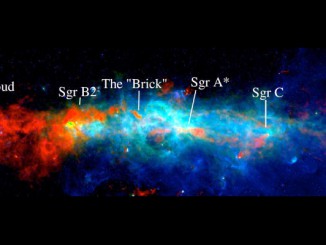
Surrounding the black hole at the centre of our Milky Way galaxy and stretching out to about 700 light-years, is a dense zone of activity called the Central Molecular Zone (CMZ). It contains many dense molecular clouds that would normally be expected to produce new stars, but which are instead eerily desolate. Where did the CMZ come from? No place else in the Milky Way is remotely like it.
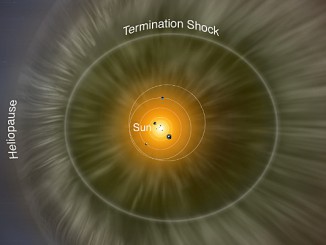
Immediately after its 2008 launch, NASA’s Interstellar Boundary Explorer, or IBEX, spotted a curiosity in a thin slice of space: More particles streamed in through a long, skinny swath in the sky than anywhere else. The origin of the so-called IBEX ribbon was unknown — but its very existence opened doors to observing what lies outside our solar system.

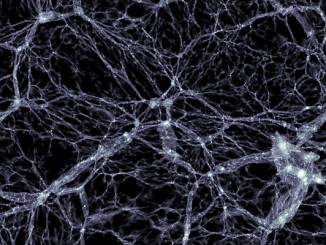
On the largest scales, galaxies and everything they contain are concentrated into filaments that stretch around the edge of enormous voids. Data from the Illustris project, a large computer simulation of the evolution and formation of galaxies, suggests that the black holes at the centre of every galaxy are helping to send matter into the loneliest places in the universe.
© 2019 Pole Star Publications Limited