Picture This

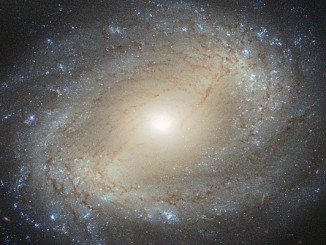
Elegant spiral galaxy hides a hungry monster

NGC 4639 is a beautiful example of a type of galaxy known as a barred spiral. It lies over 70 million light-years away in the constellation of Virgo and is one of about 1500 galaxies that make up the Virgo Cluster. But NGC 4639 also conceals a dark secret in its core — a massive black hole that is consuming the surrounding gas and known as an active galactic nucleus (AGN).

News

Closest northern views of Enceladus, Saturn’s cracked moon

NASA’s Cassini spacecraft has begun returning its best-ever views of the northern extremes of Saturn’s icy, ocean-bearing moon Enceladus. Scientists expected the north polar region of Enceladus to be heavily cratered, based on low-resolution images from the Voyager mission, but the new high-resolution Cassini images show a landscape of stark contrasts.

News

ALMA unveils rapid star formation in distant galaxies

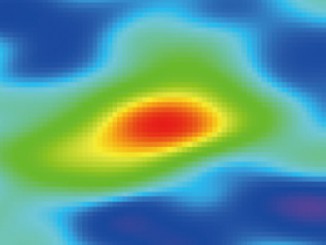
In general, the larger a galaxy’s mass, the higher its rate of forming new stars. However, every now and then a galaxy will display a burst of newly-formed stars that shine brighter than the rest. Researchers using the Atacama Large Millimetre Array (ALMA) have found that galaxies forming stars at extreme rates 9 billion years ago were more efficient than average galaxies today.

Picture This

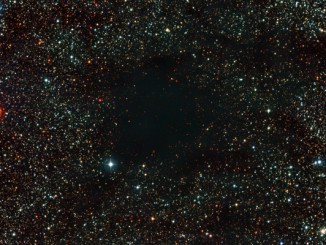
Zooming into the Coalsack Nebula

Dark smudges almost block out a rich star field in this new image of the Coalsack Nebula captured by the 2.2-metre telescope at ESO’s La Silla Observatory in Chile. This huge, dusky object forms a conspicuous silhouette against the bright, starry band of the Milky Way and has been known to people in the Southern Hemisphere for as long as our species has existed.

News

Comet’s tail may shed light on solar wind heating

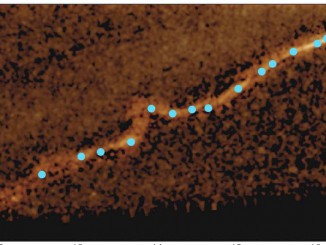
We can’t see the wind, but we can learn about it by observing things that are being blown about. And by studying changes in a comet’s bright tail of gas and ions, scientists are on the trail to solving two big mysteries about the solar wind — the supersonic outflow of electrically charged gas from the Sun’s million-degree upper atmosphere, or corona.

News

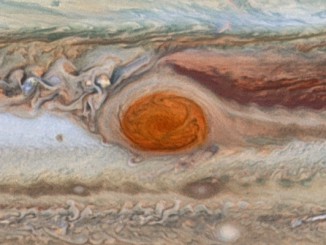
Hubble portrait captures changes in Jupiter’s Great Red Spot

Scientists using the NASA/ESA Hubble Space Telescope have produced new maps of Jupiter that show the continuing changes in its famous Great Red Spot. The images also reveal a rare wave structure in the planet’s atmosphere that has not been seen for decades. This is the first in a series of annual portraits of the solar system’s outer planets which will help researchers study how they change over time.

News

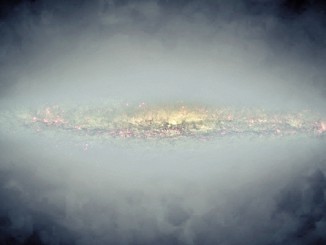
VLA reveals spectacular “haloes” of spiral galaxies

An international team of astronomers used the Karl G. Jansky Very Large Array (VLA) to investigate 35 edge-on spiral galaxies at distances from 11 million to 137 million light-years from Earth. The study has revealed that “haloes” of cosmic rays and magnetic fields above and below the galaxies’ discs are much more common than previously thought.

News

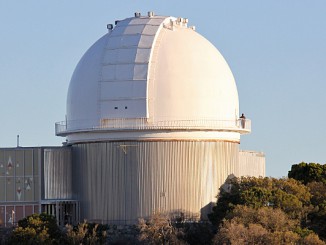
A sharp-eyed future for historic Kitt Peak telescope

The 2.1-metre telescope at Kitt Peak National Observatory will be transformed into the first dedicated adaptive optics (AO) observatory for astronomy. This system, named Robo-AO KP, will allow astronomers to study large numbers of astronomical objects in high resolution, spanning science from planetary to stellar, and exoplanetary to extragalactic.