Equipment

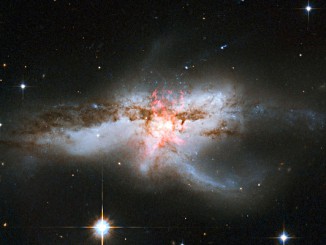
Not all galaxies are neatly shaped, as this new NASA/ESA Hubble Space Telescope image of NGC 6240 clearly demonstrates. Hubble previously released an image of this galaxy in 2008, but the knotted region was only revealed in these new observations from Hubble’s Wide Field Camera 3 and Advanced Camera for Surveys.
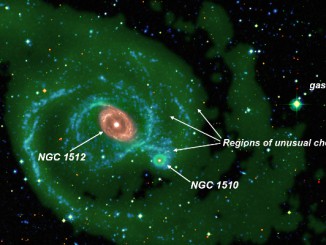
A team of Australian and Spanish astronomers have caught a greedy galaxy gobbling on its neighbours and leaving crumbs of evidence about its dietary past. Their successful and novel approach to investigating how galaxies grow is being used in a new program to further refine the best models of galaxy evolution.

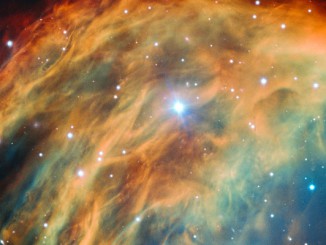

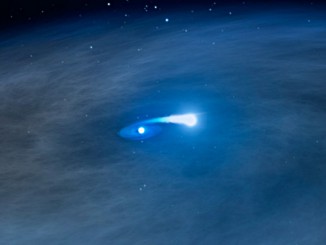
Type Ia supernovae are violent stellar explosions that shine as some of the brightest objects in the universe, but there are still many mysteries surrounding their origin. Now a team of astronomers have witnessed a supernova smashing into a nearby star, shocking it, and creating an ultraviolet glow that reveals the size of the companion.
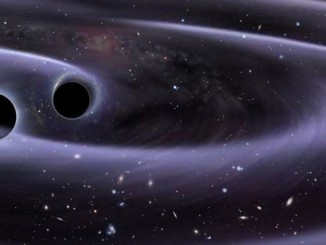
Seeking to expand how we observe and understand phenomena such as supernovae and colliding black holes that generate gravitational waves, the National Science Foundation has just dedicated the Advanced Laser Gravitational Wave Observatories (Advanced LIGO) in Richland, Washington and Livingston, Louisiana.
© 2026 Nebula Press Ltd