News

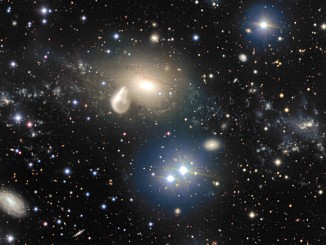
The spectacular aftermath of a 360 million year old cosmic collision is revealed in great detail in new images from ESO’s Very Large Telescope. Among the debris is a rare and mysterious young dwarf galaxy. This galaxy is providing astronomers with an excellent opportunity to learn more about similar galaxies that are expected to be common in the early universe, but are normally too faint and distant to be observed by current telescopes.

NASA’s Cassini spacecraft spied details on the pockmarked surface of Saturn’s moon Prometheus (86 kilometres, or 53 miles across) during a moderately close flyby on 6 December 2015. This is one of Cassini’s highest resolution views of Prometheus, a moon which orbits Saturn just interior to the narrow F ring, which is seen here at top.
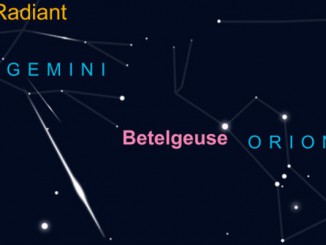
The Geminids of 8—17 December are widely regarded as the most active and consistent annual meteor shower, with peak predicted rates of 100 shooting stars per hour under dark skies. With new Moon occurring on Friday, 11 December, prospects for this year’s Geminid display are therefore expected to be very favourable — UK weather permitting!

Reviewer Steve Ringwood appraises a headband flashlight that enables night vision with due respect to the needs of astronomy. White and dark-adaption red illumination is provided by one white and three red LEDs, respectively, in a 83g low-profile unit that does not protrude like some that aspire to Dalek-like proportions.

Stephen Petranek’s book does not deal with the reasons for exploring the Red Planet, but does outline many of the problems that will be encountered getting to Mars and overcome in order to live on its surface. Reviewer Greg Smye-Rumsby states that the book touches on many aspects of space travel and independent living on Mars, but does so at the cost of detail. “However … it certainly has crammed a great deal in. A worthwhile read,” he says.
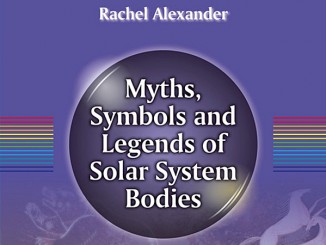
The history of astronomy and how ancient peoples interpreted the Sun, Moon and planets through mythology, legends, art and popular culture is a fascinating one. However, reviewer I. Fontaine finds some serious errors in Rachel Alexander’s book. “It’s a rare example of reading something that overwhelms and disappoints in equal measure,” says Fontaine.
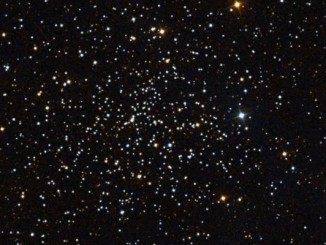
University of Texas astronomer Natalie Gosnell has used the Hubble Space Telescope to better understand why some stars aren’t evolving as predicted. These so-called “blue stragglers” look hotter and bluer than they should for their advanced age. It’s almost as it they were somehow reinvigorated to look much younger than they really are.
© 2019 Pole Star Publications Limited