Over the coming weeks we will feature, in no particular order, each of the final 16 selected images and winners will be announced by Royal Museums Greenwich on 17 September. The winning images are to be showcased at the Royal Observatory Greenwich in an exhibition opening 18 September.
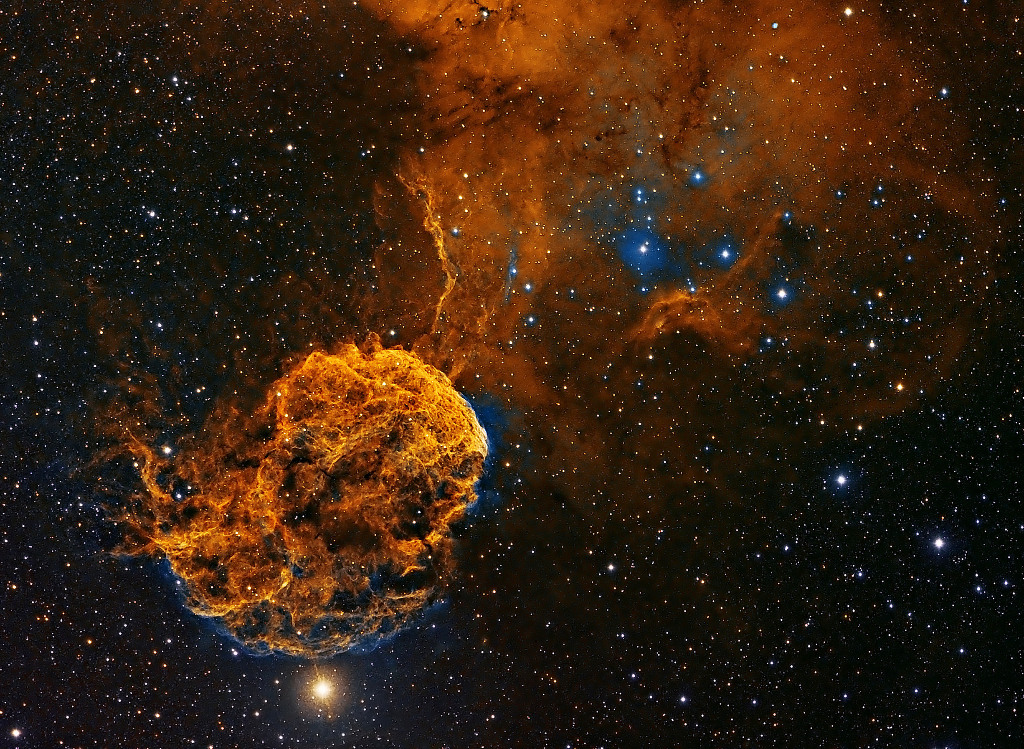
Omega (ω) Centauri, or NGC 5139, is the brightest and largest globular cluster. This showpiece object of the southern sky is captured here in all its glory by astrophotographer Ignacio Diaz Bobillo — winning image of the Stars & Nebulae category in the Insight Astronomy Photographer of the Year competition 2015.
Our eighth nomination from the prestigious Insight Astronomy Photographer of the Year competition, an annual celebration of the most beautiful and spectacular visions of the cosmos by astrophotographers worldwide. Now in its seventh year, the 2015 competition received 2700 spectacular entries from over 60 countries and the winners will be announced 17 September.
With the Moon past Last Quarter and rising after midnight, prospects are good for observing the closing stages of the Geminid meteor shower — now the richest shooting stars display of the year.