
14 September 2026
Astronomy Now
  • Home
  • The Magazine
    • About
    • Current Issue
    • Subscribe
    • Renew Subscription
  • AstroFest 2026
  • News
  • Observing
    • UK Sky Chart
    • Almanac
    • Scope Calc
    • DSLR Calc
  • Reviews
    • Equipment
    • Book Reviews
  • Spaceflight Now
  • Shop
  • Contact Us
    • Subscriptions
    • Your Views
    • Ask Astronomy Now
    • Editorial
    • Advertising
    • AstroListings
Latest News
  • [ 8 September 2026 ] 3I/ATLAS was born in the deep freeze News
  • [ 30 August 2026 ] Roman Space Telescope launches on mission to survey the Universe News
  • [ 24 August 2026 ] JWST’s ‘impossible’ early galaxies may be even more massive than we thought News
  • [ 7 August 2026 ] How to observe the 12 August 2026 solar eclipse Eclipse
  • [ 5 August 2026 ] Falcon 9 lunar impact: More than a new crater News
  • Facebook
  • Twitter
  • LinkedIn

University of Delaware

News

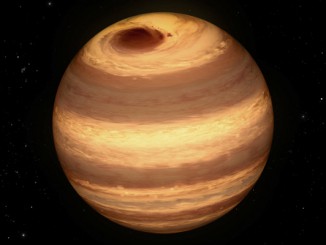
NASA telescopes detect Jupiter-like storm on small, cool star

10 December 2015 Astronomy Now

Astronomers using data from NASA’s Spitzer and Kepler space telescopes have discovered what appears to be a Jupiter-sized star with a colossal, cloudy storm with a diameter that could hold three Earths. The storm rotates around the L-dwarf star known as W1906+40 about every 9 hours and has lasted at least two years, probably longer.

Latest Issue

Astronomy Now Newsletter

Get the wonders of the Universe delivered to your inbox. Sign up before 24 September for a 10% discount code for your Stargazer's Guide 2027!
* indicates required
Which elements of Astronomy interest you?

News Headlines

  • 3I/ATLAS was born in the deep freeze
    8 September 2026
  • Roman Space Telescope launches on mission to survey the Universe
    30 August 2026
  • JWST’s ‘impossible’ early galaxies may be even more massive than we thought
    24 August 2026
  • How to observe the 12 August 2026 solar eclipse
    7 August 2026
  • Falcon 9 lunar impact: More than a new crater
    5 August 2026

© 2026 Nebula Press Ltd

Astronomy Now