
13 August 2026
Astronomy Now
  • Home
  • The Magazine
    • About
    • Current Issue
    • Subscribe
    • Renew Subscription
  • AstroFest 2026
  • News
  • Observing
    • UK Sky Chart
    • Almanac
    • Scope Calc
    • DSLR Calc
  • Reviews
    • Equipment
    • Book Reviews
  • Spaceflight Now
  • Shop
  • Contact Us
    • Subscriptions
    • Your Views
    • Ask Astronomy Now
    • Editorial
    • Advertising
    • AstroListings
Latest News
  • [ 7 August 2026 ] How to observe the 12 August 2026 solar eclipse Eclipse
  • [ 5 August 2026 ] Falcon 9 lunar impact: More than a new crater News
  • [ 25 July 2026 ] Euclid opens a new window on the first billion years of cosmic history News
  • [ 10 June 2026 ] Caught in the act: the wind that could kill a galaxy News
  • [ 4 June 2026 ] Europe’s Mars rover may land in the remains of a vast ancient water system News
  • Facebook
  • Twitter
  • LinkedIn

multiple-star systems

News

VLA reveals dramatic new evidence about star and planet formation

5 January 2016 Astronomy Now

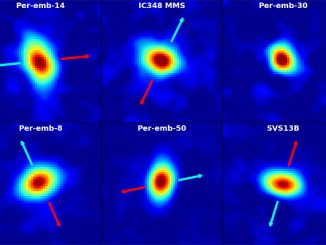
A detailed study of young stars and their surroundings has produced dramatic new evidence about how multiple-star systems form and how the dusty discs that are the raw material for planets grow around young stars. Scientists used the Very Large Array (VLA) radio telescope to study nearly 100 newborn stars in a cloud of gas and dust about 750 light-years from Earth.

Latest Issue

Astronomy Now Newsletter

Get the wonders of the Universe delivered to your inbox.
* indicates required
Which elements of Astronomy interest you?

News Headlines

  • How to observe the 12 August 2026 solar eclipse
    7 August 2026
  • Falcon 9 lunar impact: More than a new crater
    5 August 2026
  • Euclid opens a new window on the first billion years of cosmic history
    25 July 2026
  • Caught in the act: the wind that could kill a galaxy
    10 June 2026
  • Europe’s Mars rover may land in the remains of a vast ancient water system
    4 June 2026

© 2026 Nebula Press Ltd

Astronomy Now