13 August 2026
Astronomy Now
  • Home
  • The Magazine
    • About
    • Current Issue
    • Subscribe
    • Renew Subscription
  • AstroFest 2026
  • News
  • Observing
    • UK Sky Chart
    • Almanac
    • Scope Calc
    • DSLR Calc
  • Reviews
    • Equipment
    • Book Reviews
  • Spaceflight Now
  • Shop
  • Contact Us
    • Subscriptions
    • Your Views
    • Ask Astronomy Now
    • Editorial
    • Advertising
    • AstroListings
Latest News
  • [ 7 August 2026 ] How to observe the 12 August 2026 solar eclipse Eclipse
  • [ 5 August 2026 ] Falcon 9 lunar impact: More than a new crater News
  • [ 25 July 2026 ] Euclid opens a new window on the first billion years of cosmic history News
  • [ 10 June 2026 ] Caught in the act: the wind that could kill a galaxy News
  • [ 4 June 2026 ] Europe’s Mars rover may land in the remains of a vast ancient water system News
  • Facebook
  • Twitter
  • LinkedIn

Meteor shower

News

Don’t miss the Quadrantid meteor shower

2 January 2015 Mark Armstrong

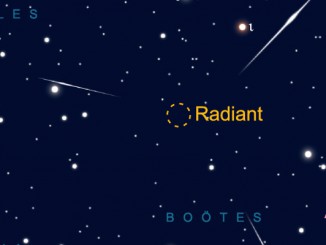
The first shooting stars of 2015 belong to the the Quadrantids, a shower that peaks on the night of 3rd/4th January. Despite the interference of a gibbous Moon, expect some bright, sometimes blue and yellow coloured meteors that may leave glowing trails.

Observing

Geminid meteor shower reaches its peak

11 December 2014 Mark Armstrong

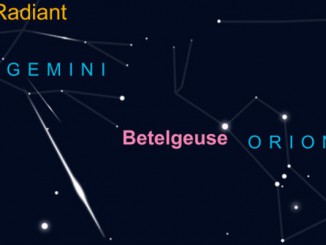
With the Moon past Last Quarter and rising after midnight, prospects are good for observing the closing stages of the Geminid meteor shower — now the richest shooting stars display of the year.

Observing

Leonids meteor shower reaches its peak

17 November 2014 Mark Armstrong

The Leonid meteor shower has been active for a few days now and reaches its peak on the night of 17/18 November. We can expect around 20 meteors per hour at best, with the radiant rising in the UK after 9pm.

Observing

Taurid meteors put on celestial fireworks show this month

3 November 2014 Mark Armstrong

The Taurids meteor shower is active throughout November with a double radiant and a double peak. Observers can usually expect around 10 meteors per hour from dark sky locations.

Posts pagination

« 1 2

Latest Issue

Astronomy Now Newsletter

Get the wonders of the Universe delivered to your inbox.
* indicates required
Which elements of Astronomy interest you?

News Headlines

  • How to observe the 12 August 2026 solar eclipse
    7 August 2026
  • Falcon 9 lunar impact: More than a new crater
    5 August 2026
  • Euclid opens a new window on the first billion years of cosmic history
    25 July 2026
  • Caught in the act: the wind that could kill a galaxy
    10 June 2026
  • Europe’s Mars rover may land in the remains of a vast ancient water system
    4 June 2026

© 2026 Nebula Press Ltd

Astronomy Now