
2 February 2026
Astronomy Now
  • Home
  • The Magazine
    • About
    • Current Issue
    • Subscribe
    • Renew Subscription
      • September last issue
      • August last issue
      • July last issue
  • AstroFest 2026
  • News
  • Observing
    • UK Sky Chart
    • Almanac
    • Scope Calc
    • DSLR Calc
  • Reviews
    • Equipment
    • Book Reviews
  • Spaceflight Now
  • Shop
  • Contact Us
    • Subscriptions
    • Your Views
    • Ask Astronomy Now
    • Editorial
    • Advertising
    • AstroListings
Latest News
  • [ 26 January 2026 ] Dr Allan Chapman (1946-2026) News
  • [ 16 January 2026 ] Potentially bright ‘sungrazing’ comet discovered News
  • [ 17 December 2025 ] Thank you from the editor News
  • [ 25 October 2025 ] Hubble revisits a cosmic yardstick News
  • [ 21 October 2025 ] Europe’s planet hunting spacecraft complete and ready for final testing News
  • Facebook
  • Twitter
  • LinkedIn

Dordt College

News

Scientists explain why Moon rocks contain fewer volatiles than Earth’s

10 November 2015 Astronomy Now

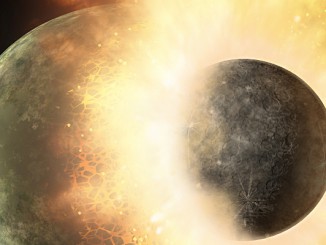
Astronomers believe that the Earth-Moon system was created in a giant impact 4.5 billion years ago. Southwest Research Institute scientists combined dynamical, thermal, and chemical models of the Moon’s formation to explain the relative lack of volatile elements like potassium, sodium, and zinc in lunar rocks, when compared to those of Earth.

Astronomy Now NewsAlert

Get the latest astronomical news and stargazing tips delivered to your inbox.

News Headlines

  • Dr Allan Chapman (1946-2026)
    26 January 2026
  • Potentially bright ‘sungrazing’ comet discovered
    16 January 2026
  • Thank you from the editor
    17 December 2025
  • Hubble revisits a cosmic yardstick
    25 October 2025
  • Europe’s planet hunting spacecraft complete and ready for final testing
    21 October 2025

© 2019 Pole Star Publications Limited

Astronomy Now