8 December 2025
Astronomy Now
  • Home
  • The Magazine
    • About
    • Current Issue
    • Subscribe
    • Renew Subscription
      • September last issue
      • August last issue
      • July last issue
  • AstroFest 2026
  • News
  • Observing
    • UK Sky Chart
    • Almanac
    • Scope Calc
    • DSLR Calc
  • Reviews
    • Equipment
    • Book Reviews
  • Spaceflight Now
  • Shop
  • Contact Us
    • Subscriptions
    • Your Views
    • Ask Astronomy Now
    • Editorial
    • Advertising
    • AstroListings
Latest News
  • [ 29 October 2025 ] How to see Comet Lemmon News
  • [ 25 October 2025 ] Hubble revisits a cosmic yardstick News
  • [ 21 October 2025 ] Europe’s planet hunting spacecraft complete and ready for final testing News
  • [ 24 September 2025 ] Nova outburst in Centaurus News
  • [ 12 September 2025 ] Astronomy Now relaunches digital platform News
  • Twitter
  • Facebook

X-Highlight

News

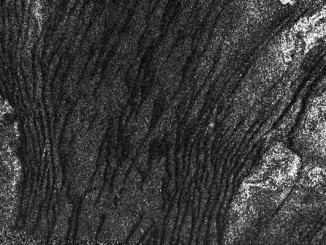
Dunes on Saturn’s moon Titan need firm winds to move

8 December 2014 Astronomy Now

Titan is the only planetary moon known to have fields of wind-blown dunes on its surface. Experiments with the high pressure wind tunnel at Arizona State University’s Planetary Aeolian Laboratory provide key data for understanding dunes on Saturn’s largest moon.

News

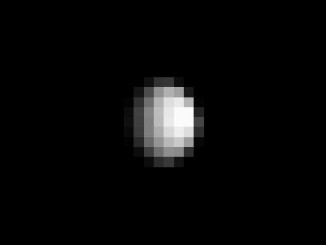
Dawn snaps its best-yet image of dwarf planet Ceres

7 December 2014 Astronomy Now

Launched in 2007, NASA’s Dawn spacecraft is preparing for its encounter with dwarf planet Ceres, imaging the body from a distance of 740,000 miles as a final calibration of the probe’s science camera. Dawn will be captured into Ceres’ orbit in March 2015.

News

Finding infant Earths and potential life just got easier

7 December 2014 Astronomy Now

Two researchers at New York’s Cornell University have found that on infant worlds, the habitable zone is located further away from their young parent star than previously thought. Life could arise on planets in the early phase of the coolest stars.

News

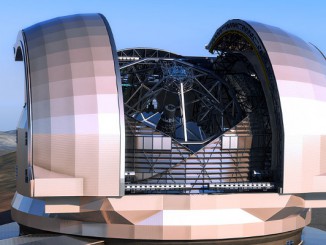
Green light for construction of European Extremely Large Telescope

5 December 2014 Astronomy Now

The European Southern Observatory’s Council has authorised spending of around one billion euros for the construction of the 39-metre aperture European Extremely Large Telescope (E-ELT) on Cerro Armazones in the Chilean Atacama Desert.

News

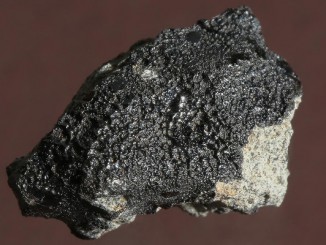
Researchers suggest Martian meteorite contains organic carbon of biological origin

4 December 2014 Astronomy Now

An analysis of a Martian meteorite named Tissint, seen to fall in the Moroccan desert on 18th July 2011, revealed small fissures filled with organic carbon that is possibly biological in origin, according to an international research team.


News

Hayabusa 2 launches on audacious asteroid adventure

3 December 2014 Stephen Clark

A Japanese H-2A launcher blasted off from an idyllic island spaceport Tuesday, dispatching a daring six-year expedition to bring a piece of an asteroid back to Earth.

News

US-UK press conference declaration calls for awareness of dangerous asteroids

2 December 2014 Astronomy Now

Experts and luminaries in science, business and entertainment will assemble at simultaneous press conferences in San Francisco & London on 3rd December to officially unveil Asteroid Day 2015, a global day of public awareness about asteroids and the threat they pose to humanity.

News

Ground team ready to rouse Pluto probe for historic flyby

1 December 2014 Stephen Clark

On the final stretch of a speedy nine-year trek through the solar system, NASA’s New Horizons spacecraft will be awakened from hibernation Dec. 6 for an encounter with Pluto, a mysterious world that has captured imaginations and will soon be revealed in reality.

News

Ground-based detection of super-Earth transit

1 December 2014 Astronomy Now

A team of astronomers has measured the passing of a super-Earth in front of a bright, nearby Sun-like star using a ground-based telescope for the first time. Exoplanet 55 Cancri e, some 40 light-years away, is about twice as big and eight times as massive as the Earth.

News

Japanese “ATERUI” becomes world’s fastest astronomical supercomputer

1 December 2014 Astronomy Now

Capable of performing one thousand trillion calculations per second, the National Astronomical Observatory of Japan’s upgraded “ATERUI” Cray XC30 supercomputer now offers the world’s best performance for astronomical simulations.

Posts pagination

« 1 … 96 97 98 … 103 »

Astronomy Now NewsAlert

Get the latest astronomical news and stargazing tips delivered to your inbox.

News Headlines

  • How to see Comet Lemmon
    29 October 2025
  • Hubble revisits a cosmic yardstick
    25 October 2025
  • Europe’s planet hunting spacecraft complete and ready for final testing
    21 October 2025
  • Nova outburst in Centaurus
    24 September 2025
  • Astronomy Now relaunches digital platform
    12 September 2025
  • Home
  • The Magazine
    • About
    • Current Issue
    • Subscribe
    • Renew Subscription
      • September last issue
      • August last issue
      • July last issue
  • AstroFest 2026
  • News
  • Observing
    • UK Sky Chart
    • Almanac
    • Scope Calc
    • DSLR Calc
  • Reviews
    • Equipment
    • Book Reviews
  • Spaceflight Now
  • Shop
  • Contact Us
    • Subscriptions
    • Your Views
    • Ask Astronomy Now
    • Editorial
    • Advertising
    • AstroListings

© 2019 Pole Star Publications Limited

Astronomy Now