News

Amateur astronomers video impact on Jupiter

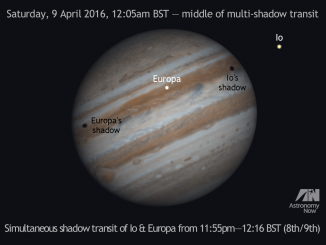
Unbeknown to two European amateur astronomers 1000 miles apart capturing video of Jupiter through their telescopes in the early hours of Thursday, 17 March, their digital footage would subsequently show confirmation of a totally unexpected phenomenon — the likely impact of a small comet or asteroid on the edge of the solar system’s largest planet.

News

A highly eccentric “hot Jupiter” exoplanet

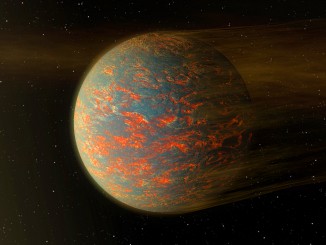
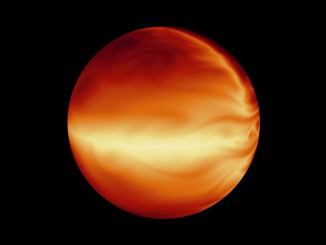
Astronomers have observed the extreme temperature variations of HD 80606 b, a Jupiter-sized exoplanet with a highly eccentric, comet-like orbit that brings it scorchingly close to its parent star every 111 days. The researchers also calculated the planet’s rotation rate — the first exoplanet rotation rate ever obtained.

News

Possible signature of dark matter annihilation detected

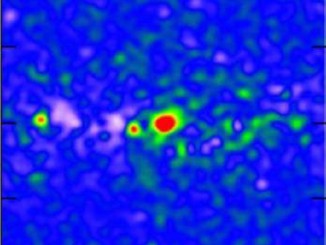
Atoms or their constituents account for a mere 4.9 percent of the universe. The rest is dark matter, so understanding this ubiquitous yet mysterious substance is a prime goal of modern astrophysics. By studying the spatial distribution of gamma-ray emission in the Milky Way, astronomers believe they have now identified a signature of dark matter annihilation.

Observing

See comet 252P emerge in the UK predawn sky

When 252P/LINEAR passed just 14 lunar distances from Earth on 21 March, the comet was galloping across the far southern sky at a rate of almost ten degrees per day. Now rapidly heading north, 252P finally appears in the predawn UK sky. While moonlight will interfere with current observations, the comet is much brighter than predicted.

News

A new view of the X-ray sky

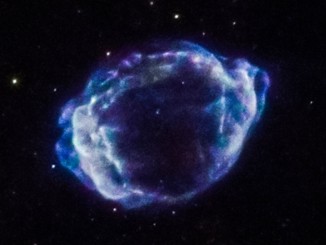
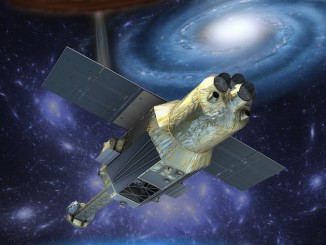
In the 1990s, the ROSAT X-ray satellite performed the first deep all-sky survey. Scientists at the Max Planck Institute for Extraterrestrial Physics (MPE) have revisited the all-sky survey, publishing an extended “2RXS catalogue” — the deepest and cleanest X-ray all-sky survey to date.

News

Moons of Saturn may be younger than the dinosaurs

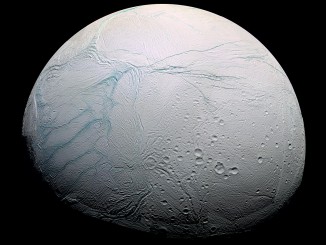
New research suggests that some of Saturn’s icy moons, as well as its famous rings, might be modern adornments. Their dramatic birth may have taken place a mere 100 million years ago. This would date the formation of the major moons of Saturn, with the exception of more distant Titan and Iapetus, to the relatively recent Cretaceous Period — the era of the dinosaurs.